


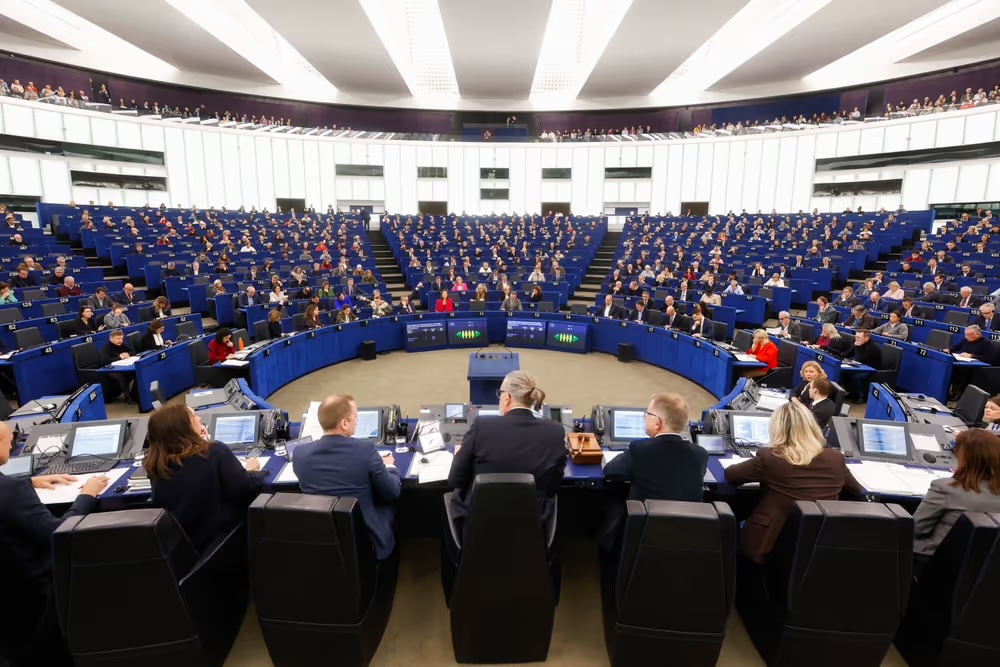
European Union leaders are meeting in Brussels on Thursday and Friday for two days of difficult negotiations over the bloc’s next seven-year budget and continued financial support for Ukraine.
The special European Council, chaired by António Costa, brings together the heads of state and government of the 27 member states, with discussions also touching on the future leadership of the European Central Bank (ECB). The talks are expected to expose deep divisions between countries demanding tighter spending and those defending funding for agriculture, regional development and cohesion.
Spain’s Pedro Sánchez is notably absent, having chosen to remain at home for the final days of campaigning ahead of Sunday’s general election. In his place, French president Emmanuel Macron has been asked to represent Spain’s position and exercise its vote, an unusual diplomatic arrangement that leaves Macron speaking, at least in part, for another country’s interests.
Europe’s expensive ambitions
Financing Europe’s future is becoming increasingly pressing as defence, industrial competitiveness, artificial intelligence and technological sovereignty all demand substantial public investment. Yet the debate remains largely focused on how much national governments should contribute, rather than on whether Europe’s wealthiest individuals and corporations should pay more.
European Council president António Costa’s revised proposal for the 2028-2034 budget, worth €1.582tn, attempts to address this problem through a combination of national contributions and new EU revenue streams. Among them is a proposed 3 per cent levy on certain digital revenues generated by large companies, potentially raising around €5bn annually.
It is a welcome recognition that companies benefiting from Europe’s single market should contribute to financing its future, on the other hand it also exposes the limits of European ambitions as the proposal targets certain corporate revenues, not the enormous personal fortunes accumulated by the individuals who own and control these businesses.
The wealth Europe is reluctant to tax
According to Oxfam’s 2025 analysis, the combined wealth of EU billionaires increased by more than €400bn in the first six months of 2025 alone. Meanwhile, wealth taxes accounted for just 0.4 per cent of total tax revenue across EU countries, compared with 9 per cent from corporate taxation. More than 80 per cent came from taxes falling primarily on ordinary Europeans, including income, payroll and consumption taxes.
This is simply becoming a question of how Europe’s economic model distributes both the costs and rewards of growth.
Most Europeans earn through wages and contribute through taxes on their income and consumption. The wealthiest, by contrast, can accumulate fortunes through appreciating company shares, investments, dividends and holding structures.
Much of this wealth then simply grows without generating taxable income in the same way as a salary does for the avergae European citizen. The result is a system in which those most capable of benefiting from economic growth are not necessarily those making the greatest relative contribution to financing the public institutions and infrastructure that sustain it.
A tax that could change the equation
Economist Gabriel Zucman and researchers at the EU Tax Observatory have proposed a minimum 2 per cent tax on the wealth of individuals holding more than €100mn. Their March 2025 study estimates that such a measure could generate approximately €67bn annually across the EU.
This illustrates the potential scale of an approach that places greater responsibility on those with the greatest financial capacity.
Importantly, the proposal is designed to prevent the wealthiest individuals from avoiding taxation simply because their fortunes are held in company shares, property or other assets rather than cash. It would establish a minimum level of taxation based on total wealth, with existing taxes taken into account. Applying the measure across countries would also make it harder for individuals to escape their obligations by moving their assets or tax residence elsewhere.
Such a tax, if properly designed and executed, could establish a minimum contribution from individuals whose fortunes have grown to extraordinary levels.
Europe’s contradiction
The political obstacles are substantial. Taxation remains largely a national competence, and major EU tax measures generally require unanimity among member states. Governments competing for investment may therefore be reluctant to support common rules that could affect their attractiveness to wealthy individuals and businesses.
Yet this caution sits uneasily alongside Europe’s most recent ambitions.
The EU wants to mobilise private investment, develop its own AI capabilities, establish a strong defence architecture and strengthen its strategic autonomy. It cannot pursue these objectives indefinitely while treating the concentration of private wealth and corporate power as politically untouchable.
As European leaders negotiate the next seven years of spending, they should look beyond the familiar dispute over national contributions. Europe needs investment, but it also needs a fairer way of financing it. Asking ordinary taxpayers and already constrained public budgets to shoulder further burden while extraordinary private fortunes remain comparatively undertaxed is neither economically inevitable nor politically neutral.
If Europe is serious about financing its future, it must also be prepared to ask those who have benefited most from its economic system to contribute more towards sustaining it.

