


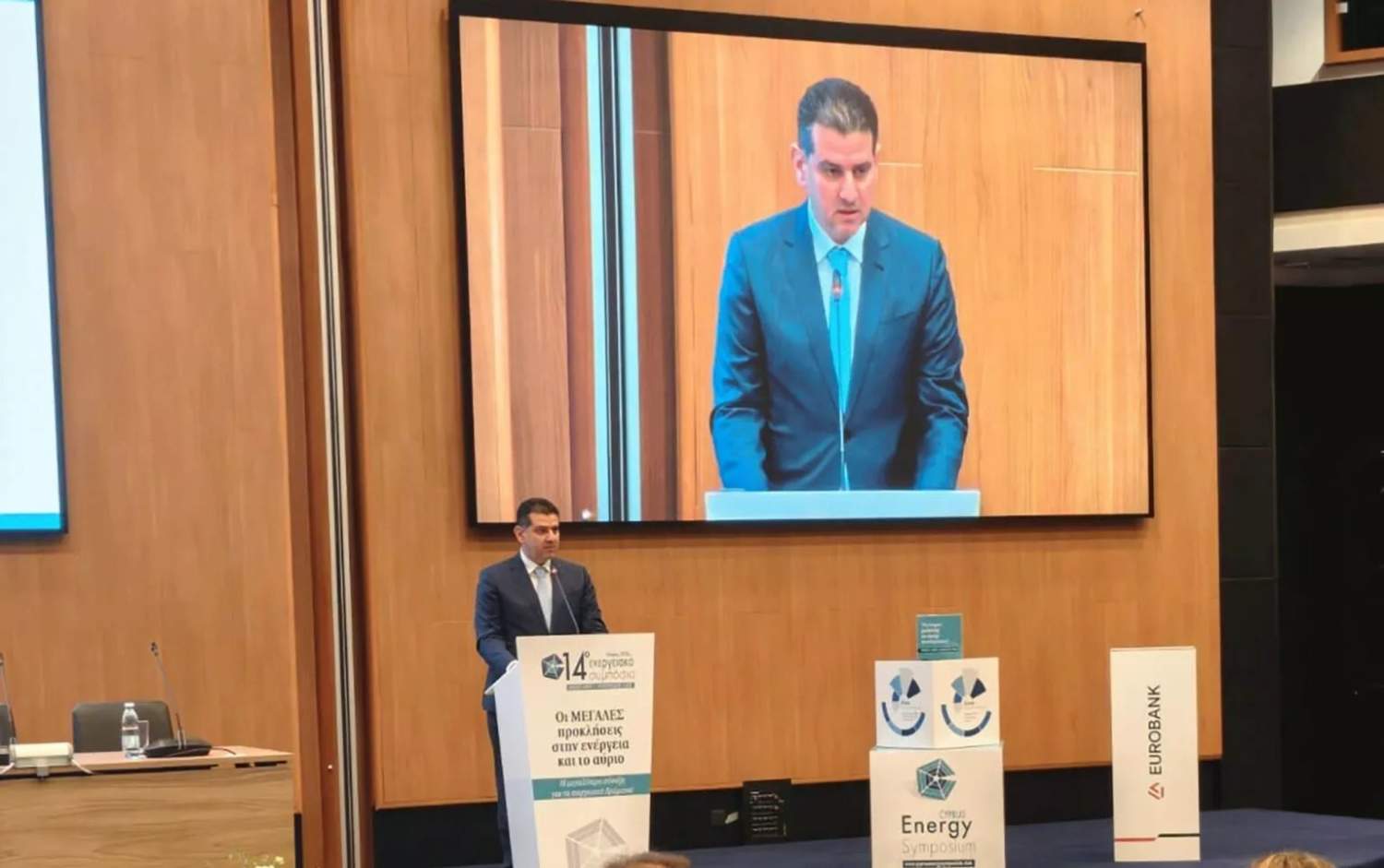
Cyprus is promoting the use of surplus solar power through electric vehicles, heat pumps and smart charging to reduce cuts to renewable output, Energy Minister Michalis Damianos said on Tuesday.
The island has more than 1,040 megawatts of installed solar capacity, against average electricity demand of about 650 megawatts, yet renewable output is still being cut, particularly during peak sunshine hours, and power generation remains dependent on imported oil products, he told the 14th Energy Symposium.
Damianos called it a paradox the government was determined to resolve: “an island with abundant sunshine that cannot yet make full use of it”. He stressed the need for new electricity tariffs that reward flexibility, faster grid connections and significant investment in the networks.
The minister set out three main ways of tackling the problem: energy storage, electricity interconnection and a competitive electricity market.
Storage
The first 120 megawatts of storage capacity is expected to be operating by summer 2027 through the Transmission System Operator of Cyprus (TSOC). The Electricity Authority of Cyprus (EAC) is developing 80 megawatts of storage at Dhekelia for 2027, and a further 100 megawatts is planned at Moni.
Electricity market
The competitive electricity market, which has been operating since October 2025, must deliver real benefits to consumers by making use of storage and demand response, Damianos noted. He also referred to the shift for new household solar installations from net metering to a market-based self-consumption model.
Interconnector
Damianos repeated that the Great Sea Interconnector remains a strategic priority, adding that an electricity link with Greece and Israel could strengthen energy security and make it easier to use renewables.
Vasilikos and gas
Eight companies have expressed interest in the new procurement process for the natural gas import infrastructure at Vasilikos, the minister said. The aim is to award the contract before summer 2027, so that the project can be completed and the use of oil in power generation reduced.
On the Aphrodite, Cronos, Zeus, Glaucus and Pegasus gas fields, he said the priority was to turn the discoveries into commercially viable projects, including by using Egypt’s existing infrastructure.
Energy poverty
About 100 million euros in national and EU funds has been allocated to tackle energy poverty, through energy renovations of buildings, energy-saving measures and the installation of renewable energy systems, Damianos told the symposium. The aim is a permanent cut in energy costs for households and businesses, instead of relying only on temporary relief measures.

