


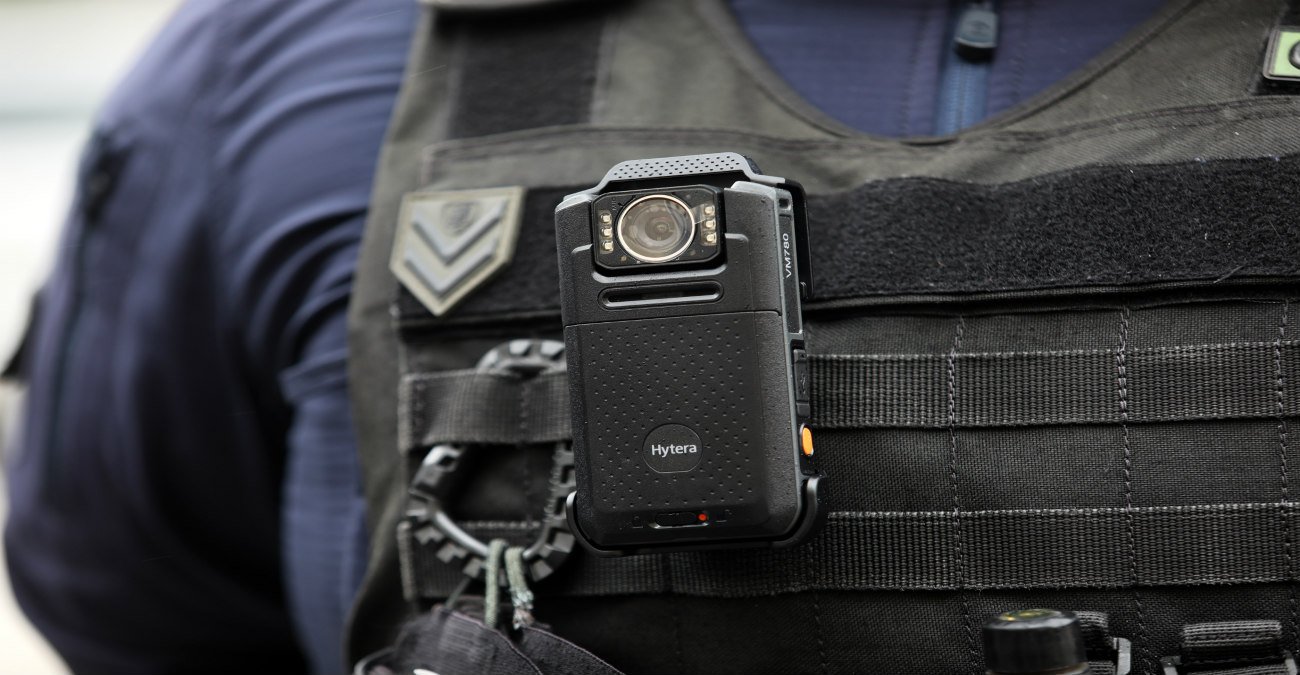
A project to equip police with body cameras is not expected to be completed before the end of 2027, Justice Minister Costas Fytiris has told parliament. In a reply to a question from ALMA parliament member Michalis Paraskeva, he also set out when officers will be allowed to record and how the public can ask for footage to be kept.
The project covers 1,200 body cameras and camera equipment for 500 police vehicles. Its technical specifications are being finalised and are expected to be reviewed by an independent consultancy, and the budget will be set on the basis of market research data and the final specifications. The equipment will be bought through an open tender, which the minister said could cause delays.
Besides the cameras, the system will include the infrastructure and software needed to run it, maintenance, technical support and training for police officers. It will be available to all police services carrying out duties for which the law allows cameras to be used.
When cameras can be used
The law sets out the specific situations in which officers may switch on body cameras to record images and sound. These include arresting or searching a person, pursuing a person or vehicle, and stopping people or vehicles for checks or to report offences.
Officers will also be able to use the cameras when entering premises or other places to carry out searches, when arriving at crime scenes and when dealing with public disorder and mass outbreaks of violence.
Operational instructions for police officers have not yet been issued. The minister said the process was at an early stage and the instructions would be drawn up once the system had been acquired and staff training had begun. He added that they would incorporate the provisions of the law and set a clear framework that would allow no deviations.
Light signal and notification
For a recording to be lawful, the officer must, where possible, inform the person being recorded, and anyone else who enters the camera’s field of view, immediately after switching it on.
The cameras must also give off a light signal, so that people can see that images and sound are being recorded. The officer must state the date, time and location both immediately after starting a recording and immediately after stopping it.
Preserving footage
Members of the public will be able to ask police headquarters or the relevant police service to preserve footage, particularly when they have made a complaint or court proceedings are pending. Requests can be made in writing, in person or through an authorised representative, but footage will be preserved only where there is a legal basis to do so.
Fytiris said that, as well as publishing the relevant legislation, the authorities planned to inform the public about this right once the project was in place.
Under the law, footage will be destroyed when it is found to be unrelated to, and of no help in, the investigation or prosecution of an offence.

