


Six underground chambers, nine tunnels and nearly 3,000 tonnes of excavated earth are revealing new details about the history of Hagia Sophia in Istanbul, as restoration work gradually uncovers a largely unexplored world beneath the historic monument.
Passageways, ancient water systems and architectural remains that may predate the construction of the present sixth-century building are emerging during the restoration project.
Workers have already cleared 420 metres of underground tunnels, while Turkish authorities are considering opening some of the passages to visitors, offering a new perspective on the history of Byzantine Constantinople.
Turkey’s Culture and Tourism Minister Mehmet Nuri Ersoy inspected the underground structures, accompanied by scientists involved in the restoration programme.
Turkish broadcaster CNN Türk has released footage showing the underground passageways and work being carried out in areas that had remained buried beneath earth and other materials for centuries.
According to figures released by Ersoy, nearly 3,000 tonnes of earth and other filling materials have been removed from two areas of the monument, the Vizier’s Garden and the western garden.
The investigations have identified six underground spaces and nine tunnels.
The work forms part of an extensive conservation and restoration programme that Turkish authorities describe as the largest undertaken at Hagia Sophia since the establishment of the Turkish Republic.
Traces of an earlier era
One of the most significant discoveries has been made in an underground burial structure, known as a hypogeum, in the Vizier’s Garden.
Cleaning and excavation work revealed architectural layers deeper than the previously known floor level. Researchers are examining whether these remains belong to a period before the construction of the present Hagia Sophia.
Ersoy said workers had excavated 1.5 metres beneath a floor level covered in mud, uncovering evidence of an earlier phase of construction.
The discovery is of particular historical interest because the present Hagia Sophia was built under Byzantine Emperor Justinian I between 532 and 537, on the site of earlier Christian churches.
However, no definitive date has yet been established for the newly uncovered remains. Whether they predate the current building remains the subject of scientific investigation.
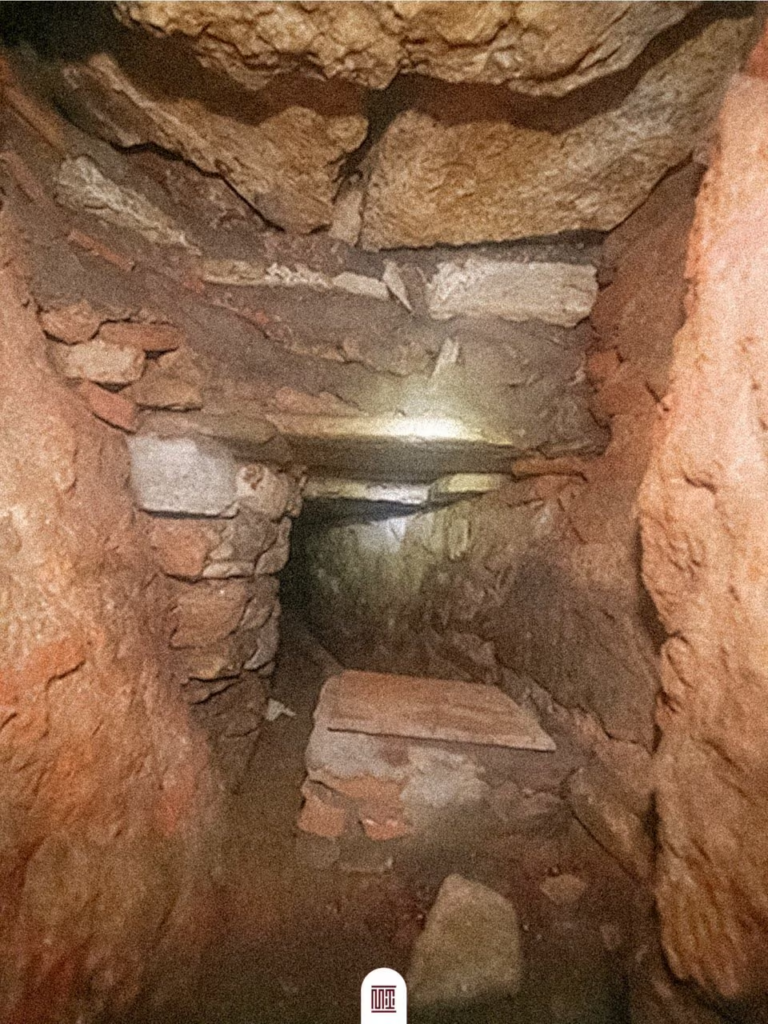
An underground network of nine tunnels
Six separate underground spaces connected by nine tunnels have been identified in Hagia Sophia’s western garden.
According to the Turkish minister, three of these spaces were probably underground sections of the former atrium, the courtyard associated with the church complex.
Investigations are continuing in other areas, including structures resembling elongated corridors measuring between four and 4.8 metres wide.
Of the nine tunnels, seven have already been cleared of accumulated material, while surveying and documentation are under way in the remaining two.
The cleared sections extend for a combined 420 metres.
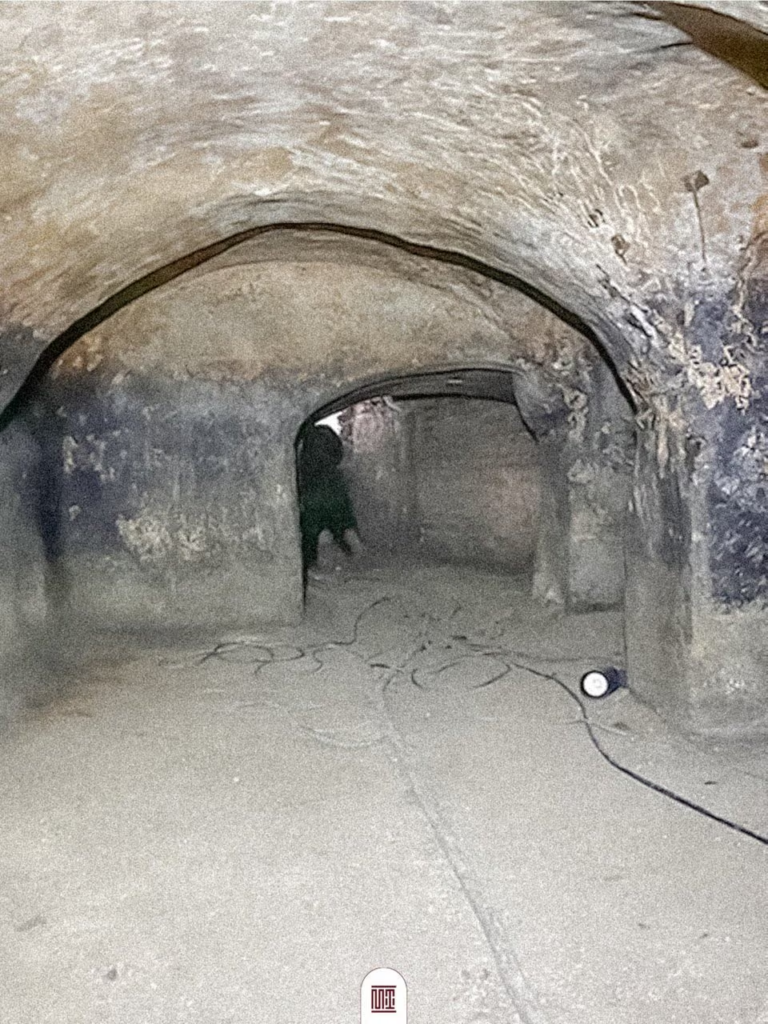
The longest tunnel measures 180 metres and is of particular archaeological interest because researchers are examining a possible connection with the so-called Roman Road of Constantinople.
The passage runs parallel to Hagia Sophia’s façade, extending from the area in front of the Fatih Madrasa towards the visitor entrance, with a gradient of approximately 3%.
Researchers are investigating whether it formed part of the historic road network of the Byzantine capital, although its original purpose has not yet been confirmed.
Constantinople’s hidden water network
Scientists believe the tunnels beneath Hagia Sophia formed part of a wider water management system serving historic Constantinople.
Some sections appear to have been used to distribute water and drain rainwater, essential functions for protecting and maintaining such a large architectural complex.
Their discovery offers researchers an opportunity to study the infrastructure built around Hagia Sophia during different periods of its history.
The restoration work involves more than clearing the tunnels. It also includes repairing vaulted ceilings, stabilising masonry and reinforcing damaged sections.
In one underground passage measuring 56 metres, structural damage has already been repaired along an 18-metre section.
Other tunnels are being reinforced with stainless steel components to ensure their structural stability.
Underground passages could open to visitors
Beyond the archaeological and historical significance of the work, the Turkish government is considering making some of Hagia Sophia’s underground spaces accessible to visitors.
Ersoy said a specialised presentation study would be prepared to examine how the underground structures could be displayed, with the protection of the monument and visitor safety as essential requirements.
No decision has yet been announced on which sections could open to the public, and no timetable has been set.
Experts are also examining whether the underground network could help improve ventilation inside the monument.
According to technical assessments presented by the minister, the existing underground opening can meet only 3.6% of Hagia Sophia’s ventilation requirements.
Future studies will examine whether some of the historic passageways could form part of a modern fresh-air ventilation system without altering their architectural character.
History beneath history
Hagia Sophia has dominated Istanbul’s historic centre for almost 15 centuries and remains the subject of archaeological and architectural research.
The latest investigations are drawing attention to the monument’s lesser-known underground structures, where evidence of successive building phases and infrastructure from historic Constantinople has remained largely hidden from view.

