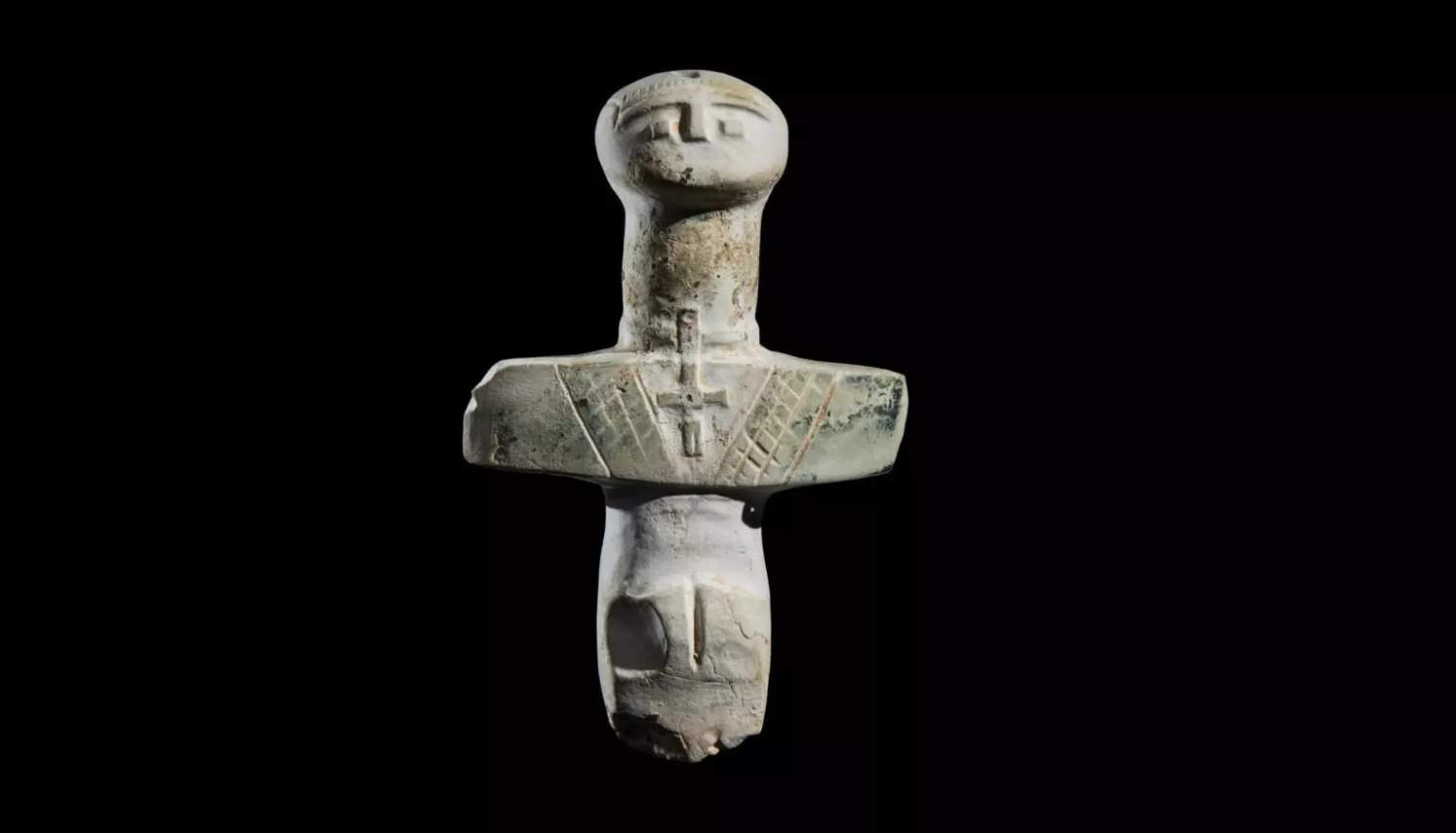
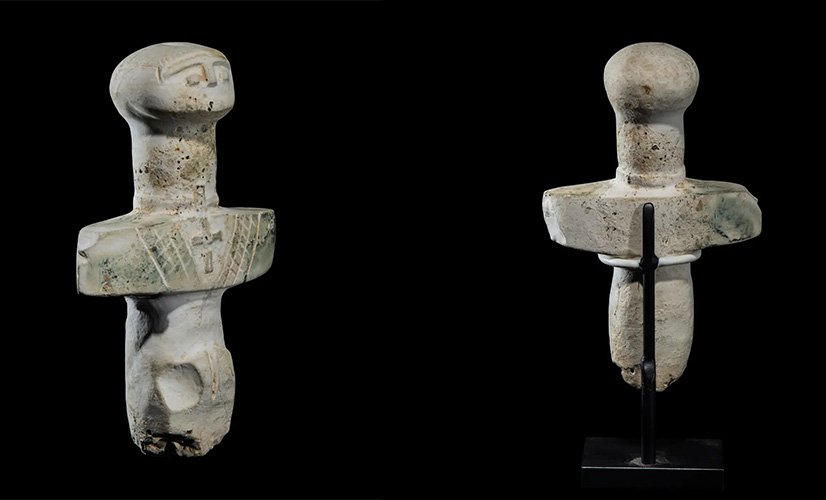
A cross-shaped Cypriot picrolite figurine more than 4,000 years old will be auctioned in Chicago on Thursday. A Cypriot collector says he would like to bid for it, but wants clarity first from the authorities on bringing it back to the island.
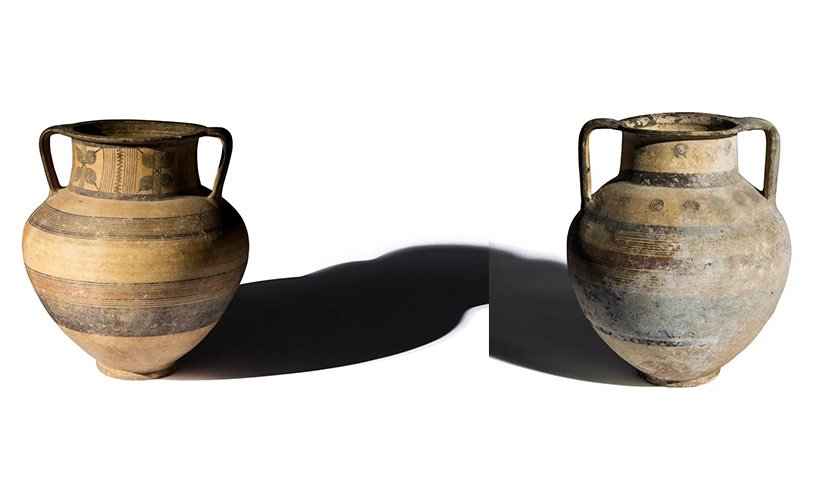
The figurine, just 9.5 centimetres tall, dates from the Chalcolithic period in the early third millennium BC. It is one of three Cypriot antiquities in Freeman’s ‘Antiquities and Ancient Art’ sale (Sale 6578), which starts at 10am Chicago time (6pm in Cyprus) on 19 November. The other two are Cypriot Bichrome Ware amphorae from the seventh to sixth centuries BC: lot 156, which is 34 centimetres tall, and lot 157, which is 38.5 centimetres tall.
Collector Antonis Antoniou, who systematically follows foreign auctions for Cypriot artefacts, spotted the figurine. He sees it as a characteristic example of prehistoric Cypriot sculpture that could enrich public collections and return to the cultural setting it came from. However, he has reservations about bidding until the position of the relevant authorities, and any procedures for importing it into Cyprus, have been clarified.
The case has brought him into contact with art historian and appraiser Maria Pafiti, who has worked on tracing and returning stolen or lost antiquities and religious works of art.
Provenance
According to Freeman’s listing, the figurine was in a private collection (T.S.) in London between 1960 and 1979, then passed to another London private collection, and was acquired by Ariadne Galleries in New York before 12 March 2015.
The gallery is linked to the Demirjian family. Pafiti knows the family personally and has worked with them before, and contact with them could help trace the figurine’s history.
The listing does not say when or in what circumstances the figurine left Cyprus.
Picrolite figurines
Picrolite, a soft blue-green stone associated with the geology of the Troodos mountains, was widely used in prehistoric Cyprus to make jewellery, objects and human figurines. Cross-shaped picrolite figurines, with their abstract human form, elongated heads and outstretched arms, are among the best-known works of Cyprus’s Chalcolithic period. They have been found in settlements and burials, and their use and meaning are still studied by archaeologists.