


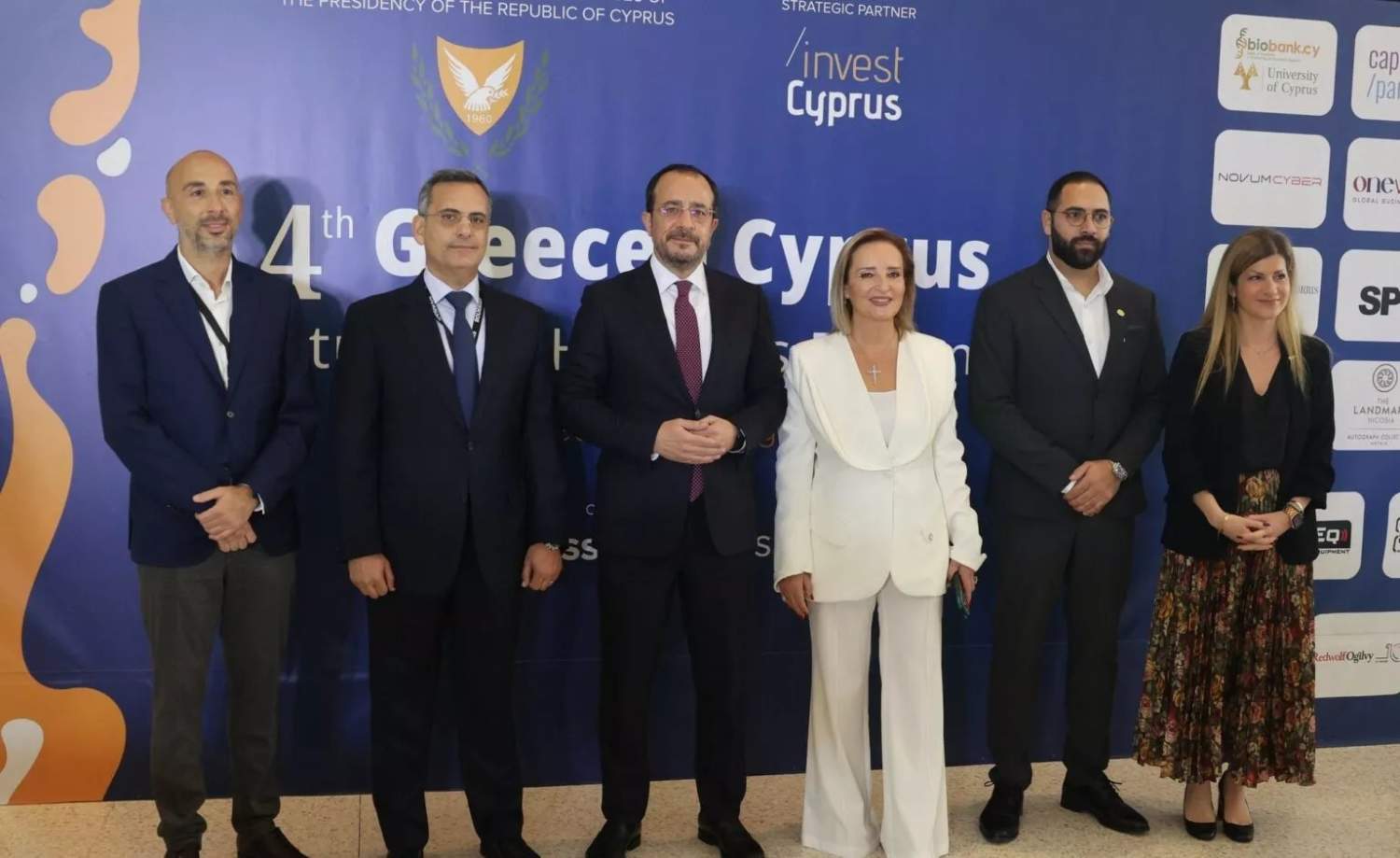
The stock of Greek direct investment in Cyprus rose to 9.2 billion euros in June 2026 from 5.6 billion euros in 2024, Invest Cyprus chairman Evgenios Evgeniou told a business forum in Nicosia on Wednesday.
Speaking at the 4th Greece-Cyprus Strategic Horizons Forum, Evgeniou said Cypriot investment in Greece is estimated at around 2.7 billion euros, and more than 1,500 companies with Greek interests operate in Cyprus. Trade in goods between the two countries reached 3.3 billion euros in 2025, and exports of Cypriot-produced goods to Greece rose by 12 per cent.
Also at the forum, Nicosia Mayor Charalambos Prountzos said the municipality aims to raise the capital’s tourism revenue from around 170 million euros to 400 million euros by 2029.
Invest Cyprus plans
Evgeniou said strengthening investment ties with Greece was a priority for Invest Cyprus. Its memorandum of cooperation with Enterprise Greece was renewed in April, opening the way for new investment initiatives, business missions and the exchange of expertise. At a recent meeting with Greece’s deputy foreign minister and the head of Enterprise Greece, it was agreed to turn the memorandum into a joint action plan with specific initiatives and measurable results, he announced.
In early December, Invest Cyprus will hold its first closed working meeting with Greek businesses operating in Cyprus, together with the Greek embassy. Cyprus’s Minister of Energy, Commerce and Industry and the head of Enterprise Greece will attend, with the aim of identifying the companies’ needs and new investment opportunities.
Evgeniou singled out the defence industry, defence technology and energy as areas for further cooperation, saying the two countries had complementary strengths that could help attract international investment. He highlighted the Great Sea Interconnector (GSI), the Greece-Cyprus electricity link, as an example of the coordination needed to deliver major cross-border infrastructure.
Greek and Cypriot business groups
Vicky Makrygianni, director of international relations at the Hellenic Federation of Enterprises (SEV), said the two countries had built strong trade and investment ties but still had significant room to work together, especially in international markets.
She said EU trade agreements and initiatives with partners such as Mercosur, India, Canada and Japan opened up large markets, but their requirements often exceeded what a single company could meet. “This is where the real value of our cooperation lies,” she said, adding that businesses should join forces, use their networks and build the scale needed to win a bigger share of international markets.
Greece’s production base and Cyprus’s links with the Middle East and the Gulf could be used together in energy, agrifood, construction, technology and high value-added services, as well as artificial intelligence and cybersecurity, she said.
She added that Greece taking over the EU Council presidency from Cyprus in the second half of 2027 created scope to continue joint work on competitiveness, simpler regulation, energy security and international trade partnerships.
Andreas Demetriades, vice-president for finance at the Cyprus Chamber of Commerce and Industry (CCCI) and president of the Cyprus Association of Large Developments, set out the goal of a single Cyprus-Greece regional business and investment hub.
Greece has a significant industrial and production base, infrastructure and access to European and Balkan markets, while Cyprus is an international business and financial centre with a strong presence in professional services, shipping and Middle Eastern markets, he said. These strengths complement rather than compete with each other, he added. “Together we can create a strong business network that will connect three continents,” he said.
Demetriades said the goal would require more joint business initiatives, strategic partnerships and joint ventures. Declarations were not enough, he said, and a specific action plan, political will and close cooperation within the private sector were needed. He stressed the role of chambers of commerce, saying permanent mechanisms for cooperation and for sharing information on investment opportunities needed to be developed, while practical obstacles were tackled.
Nicosia plans
Alongside the revenue target, Prountzos said the municipality aims to raise Nicosia’s share of Cyprus’s tourist arrivals from 5.7 per cent to 10 per cent. The number of tourist beds in the capital is expected to double by 2027 through hotel investments worth more than 250 million euros, he said, adding that major investments are also under way in the historic centre.
He highlighted plans for a major regeneration of the SOPAZ area in east Nicosia, covering 1.4 million square metres and aimed at creating new economic, residential and research activity. “Essentially, we are talking about a new city within the city of Nicosia,” he said.
The project is being promoted together with the government, he said, and aims to combine the area’s industrial history with sustainable business, innovation and a better quality of life. He invited Greek businesses to consider investing in the capital, saying the municipality was open to partnerships with businesses and research bodies and followed an investment-friendly policy.
(Information from Cyprus News Agency)

