


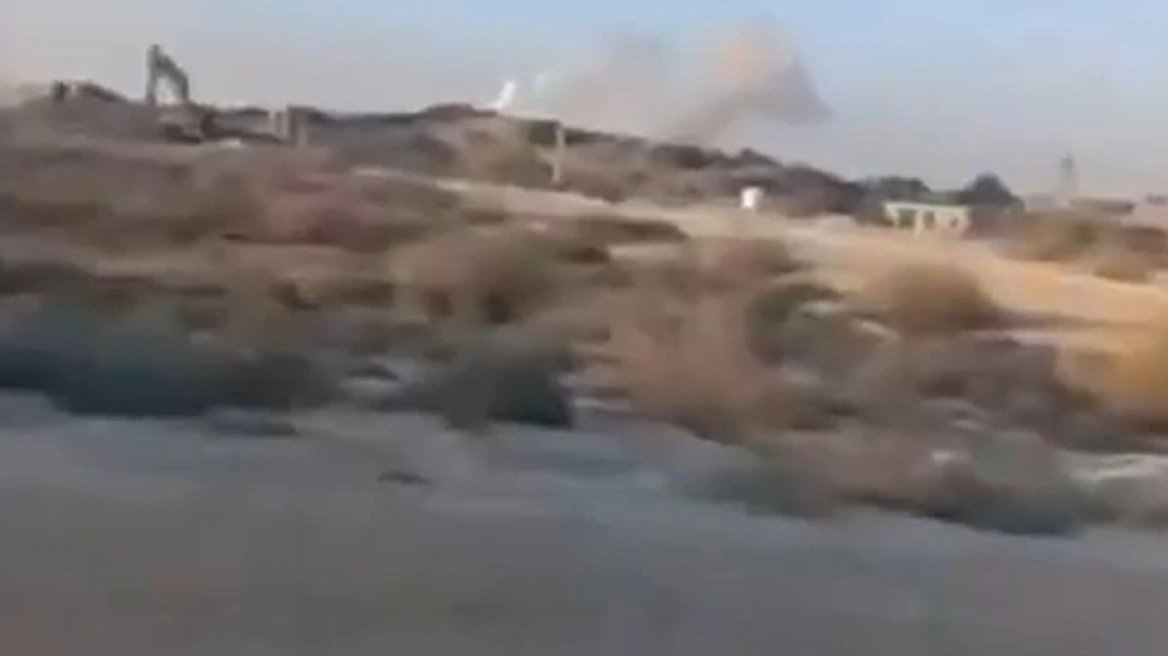
An explosion hit Iran’s Qeshm Island in the Strait of Hormuz on Tuesday, Iran’s Fars news agency reported, after Iran fired drones at a US military radar system in Bahrain, according to Reuters.
Fars said the cause of the explosion was unclear. The US carried out limited strikes on the island earlier this month.
Iran’s Islamic Revolutionary Guard Corps (IRGC) said it had targeted the radar system at Bahrain’s Sheikh Isa base. Bahrain, home to the US Fifth Fleet, said it had intercepted the attack, and there were no reports of casualties or damage. The attack came two days after Iranian aerial attacks that Tehran said targeted a US radar system at the Al-Rifaa helicopter base, following what it called hostile US actions.
Warning to Bahrain
The IRGC also warned Bahrain over its alliance with the US and its stance towards Shi’ite clergy. Tuesday’s attack followed the sentencing in Bahrain of 64 people, mostly Shi’ite clerics, to life in prison on charges of colluding with Iran to undermine the state. Bahrain is a Shi’ite-majority country ruled by a Sunni Muslim family.
IRGC spokesperson Hossein Mohebbi said Bahrain had made three key mistakes: cooperating in the invasion of Iran, staying within the US security bubble and encroaching on the sanctity of Shi’ite religious authority. These, “if continued, will jeopardize its survival in the region’s new security order”, he said.
Iran’s foreign ministry condemned the court ruling on Tuesday and called the accusations baseless. Tehran has long denied interfering in Bahrain’s internal affairs.
Tankers attacked
Attacks on tankers in the strait have increased this month. The United Kingdom Maritime Trade Operations agency said the crew of a tanker passing through the waterway were unaccounted for after it was attacked north of the Omani port of Khasab.
The IRGC and Iran’s navy said on Tuesday that a ship carrying liquefied natural gas (LNG) and two oil tankers had caught fire in the strait. Reuters could not independently verify the reports.
Before the war, the Strait of Hormuz carried about a fifth of global oil and LNG supplies. Iran now largely blocks it.
Talks in Qatar and Oman
The violence came as Qatari and Iranian officials met on Tuesday, Qatar said, as part of efforts to mediate an end to nearly nine months of war that has destabilised the Middle East and pushed up global energy prices. The talks are aimed at “bridging perspectives and narrowing the gap between proposals presented on the ground”, Qatari spokesperson Majed Al Ansari said.
At the same time, Iranian Foreign Minister Abbas Araqchi visited Oman. According to Oman’s foreign ministry, he and his Omani counterpart discussed safeguarding maritime corridors, keeping global shipping and trade flowing smoothly and preventing military escalation. Araqchi said on Telegram that he also met Sultan Haitham bin Tariq and briefed him on Iran’s diplomatic initiative to end the war, which began with US and Israeli strikes on Iran on 28 February.
Oman, which lies across the strait from Iran, has held talks with Tehran before about controlling traffic through the waterway, most recently in August.
Stalemate
The war has reached a stalemate. US President Donald Trump has said he might hold off attacking Iran if the US does not face what he called provocations from Tehran or from Yemen’s Iran-backed Houthis. He has also said he will maintain a US naval blockade on Iran because it continues to disrupt shipping in the strait, which is a sticking point in the negotiations.
On Tuesday, Trump said the US was taking seriously the possibility that Iran could be planning a so-called dirty bomb attack in Washington. He was responding to a question about a CNN report citing US intelligence assessments. Iran’s foreign ministry spokesperson called the allegations baseless, saying the report was part of a US campaign “to lay the media groundwork for their sinister designs”.
Iran is also putting pressure on Washington through the Houthis. They have attacked Saudi Arabia and seized areas along the Yemeni coast on the Bab el-Mandeb Strait, hoping to squeeze Gulf oil producers.
Benchmark Brent crude futures rose 0.4 per cent to 92.76 dollars a barrel on Tuesday. That is far higher than before the war, but well below April’s wartime peak of 126.41 dollars.
(Reuters)

