


Dedicated to Ambassador Andrew J. Jacovides, whose expertise, vision and diplomacy helped shape the Law of the Sea policy of the Republic of Cyprus (RoC).
In December 1982, Ambassador Jacovides signed the United Nations Convention on the Law of the Sea (UNCLOS) on behalf of the RoC at Montego Bay, Jamaica. It crowned years of negotiations in which Cyprus played an active, at times leading, role.
I served under him on the Cyprus delegation from 1976 to 1981. His command of international law and negotiating skills were exceptional. A true gentleman, an outstanding diplomat and a distinguished scholar.
At 22, I was still in my diplomatic pampers. At UN headquarters in New York, I learnt through osmosis from Ambassadors Zenon Rossides, Andrew Jacovides, Consul General Charalambos Christoforou, and diplomats from around the world. Above all, by watching multilateral diplomacy in action.
Jacovides challenged me to think, question and look beyond the obvious. I learnt that diplomacy requires understanding people, their motives and fears, national interests, what is said and what remains unsaid. Above all, sound judgement. What an education! Lessons that have stayed with me ever since.
UNCLOS was a remarkable achievement. It brought competing interests into a common legal framework, constraining arbitrary power. Many of its fundamental provisions reflect customary international law, binding even states that are not parties to the Convention.
Cyprus and UNCLOS
Three issues particularly mattered to Cyprus: the rights of islands, maritime delimitation and peaceful settlement of disputes.
Article 121 recognises that islands enjoy the same maritime entitlements as other land territory, including an exclusive economic zone (EEZ) and continental shelf. The exception concerns rocks unable to sustain human habitation or economic life of their own.
Where claims overlap, delimitation must achieve an equitable solution. International courts generally begin with a provisional equidistance or median line, adjusting it where circumstances warrant.
Cyprus concluded EEZ delimitation agreements with Egypt, Israel and Lebanon. All three are now in force.
Turkish military occupation has a maritime dimension. We speak of the 36.2% of Cyprus’ territory under Ankara’s de facto control since 1974. But approximately 57% of the RoC’s coastline is also occupied, with consequences extending to maritime zones, resources and security.
Time does not turn occupation into sovereignty.
Turkey neither signed nor ratified UNCLOS. Year after year, it has been the only state to vote against the annual UN General Assembly resolution on Oceans and the Law of the Sea. A minority of one.
The US and Israel are also non-parties, yet recognise important customary rules reflected in UNCLOS. The 2010 Cyprus–Israel EEZ agreement is a case in point.
Turkey may remain outside UNCLOS. It cannot place itself outside international law.
The Turkey–Libya Memorandum
In November 2019, Turkey signed a maritime delimitation memorandum with Libya’s Tripoli-based government, disregarding third-state rights. On 20 October 2026, Libya’s eastern-based House of Representatives approved it, reversing its earlier rejection.
But creating a fait accompli at sea does not confer legal entitlement. This is the danger of unchecked auto-interpretation: states treating their own claims as conclusive, without independent scrutiny.
No state can be judge, jury and executioner in its own cause.
On 26 October, Greece, Cyprus, Egypt, Bahrain, the UAE and the EU issued a joint statement at the UN, rejecting the memorandum for disregarding geographical realities and the maritime entitlements of coastal states, including islands. They declared:
“The Memorandum remains null and void, contrary to international law and cannot serve as a lawful basis for maritime delimitation or produce legal consequences for third States.”
In December 2019, Washington described the memorandum as “unhelpful and provocative”. In June 2020, it clarified that the agreement could not affect the rights or obligations of third states. Following the Libyan parliamentary approval, the US response on 21 October 2026 was confined to calls for dialogue. Four days later, Washington again described the move as “unhelpful and provocative”, reaffirming that its position remained unchanged, but without expressly repeating its earlier legal position on third-state rights.
The Great Sea Interconnector (GSI)
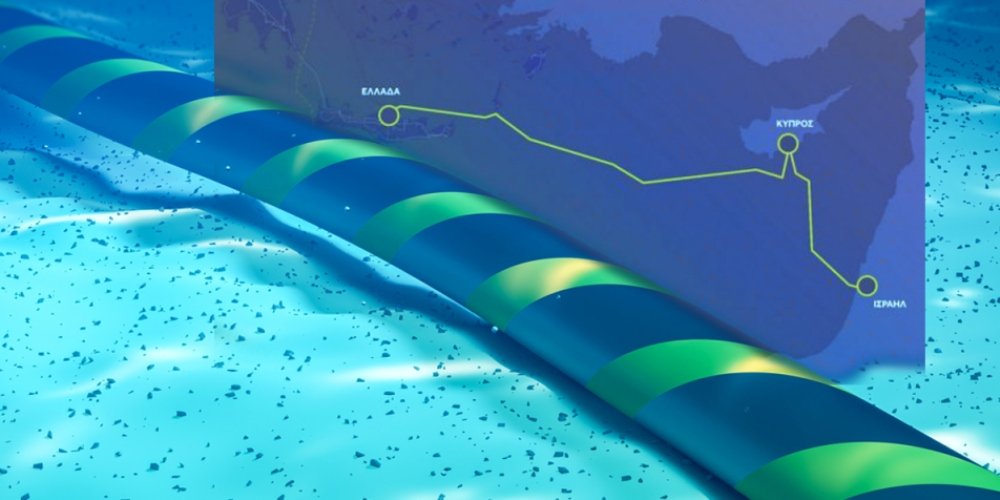
The GSI, linking Greece and Cyprus, with a planned extension to Israel, would help end Cyprus’ electricity-grid isolation and strengthen European connectivity.
Turkey claims jurisdiction over parts of the cable route. Turkish naval pressure disrupted earlier surveys. Ankara has demanded its consent and coordination with Turkish authorities, seeking to extend its claimed maritime jurisdiction and induce other states to recognise it in practice.
On 6 November, the relevant Greek and Cypriot authorities issued NAVTEX notices (navigational warnings to mariners) for renewed surveys. Turkey responded with a counter-NAVTEX, claiming that part of the survey area fell within its continental shelf and insisting on its consent.
Foreign Minister Hakan Fidan subsequently struck a reassuring note: “Everything is normal, everything is fine.” This did not mean Ankara had withdrawn its maritime claims.
France also sent a diplomatic Note Verbale to Turkey and Egypt concerning the planned operations. Its text has not been made public. Athens maintained that the notification was neither a request for permission nor recognition of Turkish maritime jurisdiction.
On 10 November, the French survey vessel Abeille Marengo departed Heraklion for the next phase of operations.
On 12 November, the Turkish frigate Gökova radioed the French vessel, reiterating Ankara’s claim that the surveys required Turkish consent. The Greek frigate Limnos responded immediately, reaffirming that the vessel was operating on the Greek continental shelf under Greek authorisation. The Abeille Marengo continued its work. There was no reported physical obstruction.
Under Article 2 of UNCLOS, coastal-state sovereignty extends beyond its land territory to the territorial sea, including its airspace, seabed and subsoil. In the exclusive economic zone (EEZ), by contrast, the coastal state enjoys specific sovereign rights and jurisdiction, not territorial sovereignty.
Under Article 79, laying submarine cables on the continental shelf does not require coastal-state consent to their route, unlike pipelines. Preliminary surveys for cable-laying may raise separate legal questions, while coastal states retain certain limited powers under international law.
A unilateral maritime claim does not in itself confer a legal veto over a cable.
Gunboat diplomacy can delay surveys, raise costs and deter investors, creating a de facto veto without legal legitimacy.
Ambassador Jacovides understood that rules do not enforce themselves. He knew the limits of diplomacy without power. Yet even great powers need predictability and stability. Power alone cannot guarantee either.
Cyprus helped shape the legal order governing the seas. Today, it must continue defending its rights against unilateral claims and threats of force.
The Turkey–Libya memorandum and GSI are two tests. There will be others.
Perhaps the best tribute to Ambassador Andrew J. Jacovides is not merely to remember what he helped achieve, but to remain faithful to the principles he upheld.
*Euripides L. Evriviades is Ambassador (Ad Honorem). Senior Fellow, Cyprus Center for European and International Affairs, University of Nicosia.

