


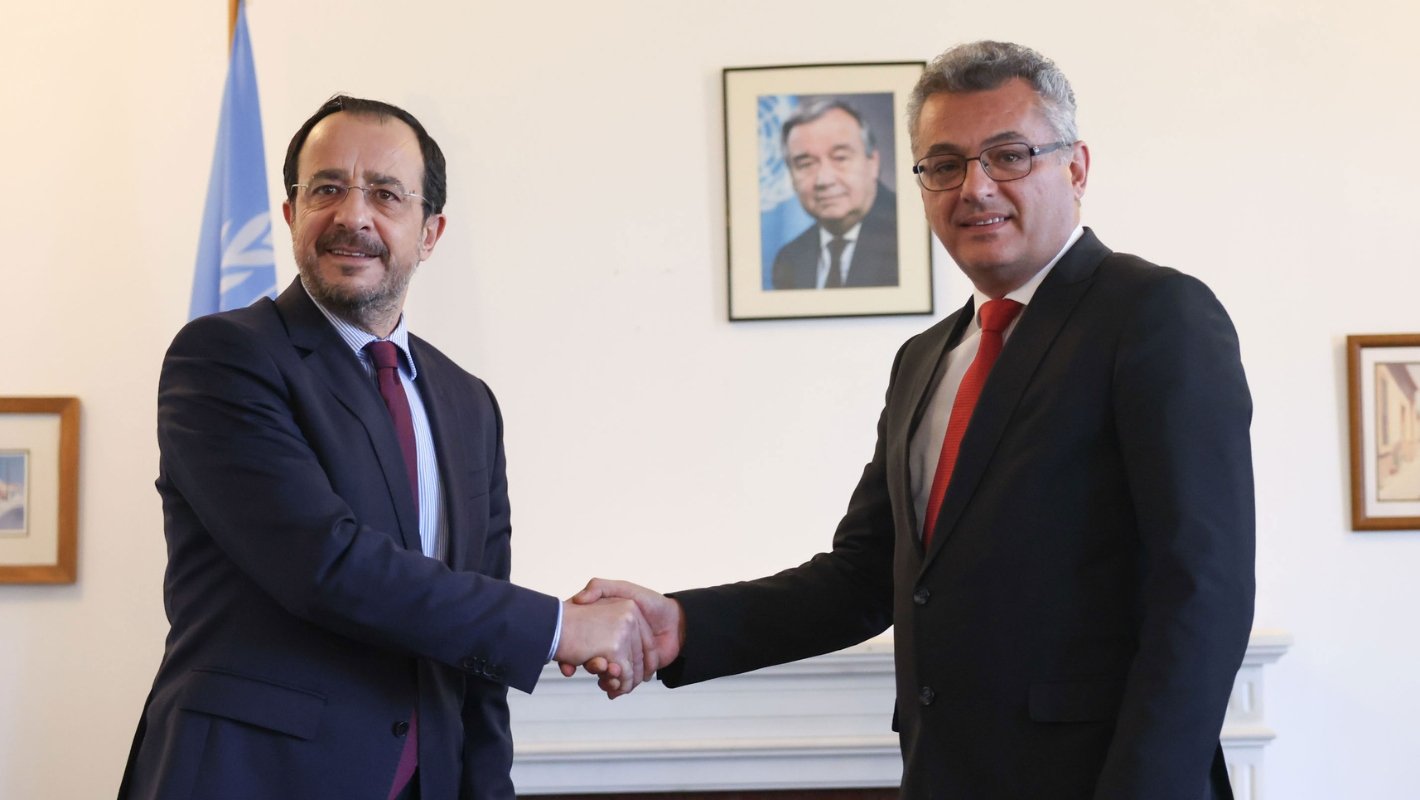
The Cyprus problem grinds on to the familiar rhythm of a diplomatic show with no final curtain. The two leaders meet, exchange views, note a positive climate, agree to keep talking and pencil in the next date. Meanwhile, a few “developments” turn up: some new crossing points, environmental initiatives, revamped education programmes and assorted other confidence-building measures. That is how political paralysis gets a PR makeover as momentum.
The question, of course, is not whether these measures are needed. It is whether they have become an end in themselves, and whether they ultimately entrench the occupation and partition. The rot sets in when piecemeal measures are sold as political progress and managing partition is rebranded as preparing to resolve it. When, in other words, talk of the substance of the Cyprus problem becomes a promise permanently postponed.
And so, almost without anyone noticing, the very lens through which we see the problem shifts. Invasion, occupation, settlement and the ongoing violation of a state’s sovereignty slip out of the spotlight. In their place comes a technical conversation about crossings, cooperation and practical arrangements. As if this were a squabble between two neighbouring administrations, not a country still under occupation.
Against this backdrop, the President of the Republic has wedded himself to a politics of perpetual expectation. Every meeting is a step forward, every announcement a sign of progress, every new initiative a chance to rekindle hope. And hope, however useful in politics, becomes all too convenient when it comes with no measurable results. It lets everyone declare themselves satisfied while nobody has to pick up the bill for real negotiation.
Worse still, this endless recycling of expectations ends up swallowing political differences, disarming criticism and creating the impression that anyone who questions the process is fighting the very prospect of a solution, Kyrenia’s own people included, sidelined to smooth the way for the fantasy horse-trading of yet another round of negotiations.
But peace is not built on communiqués hailing a positive climate, and a solution does not come from getting used to faits accomplis. Confidence-building measures may open doors, smoothing the way for pilgrims heading to Apostolos Andreas monastery, for those who want to top up their Porsches with cheap petrol or for anyone fancying a weekend at the ‘Acapulco Resort’ in occupied Agios Epiktitos. The question is whether they lead anywhere, or whether they simply teach us to live with open checkpoints and an unsolved Cyprus problem.
That is what all these “efforts” add up to, even if the President has convinced his friends (or his enemies) that he is not a federation man and still has red lines. As the United Nations has announced, Christodoulides and Erhurman will meet again, possibly with the Secretary-General, to discuss the methodology and substance of the Cyprus problem. Still haven’t worked it out? They might try looking up at Pentadaktylos.

