


Cyprus would have until 1 January 2036 to adjust to higher EU taxes on cigarettes and roll-your-own tobacco under a compromise put forward by the Irish presidency. However, the proposal stalled at a meeting of EU finance ministers in Brussels on Monday, after Sweden and nine other countries maintained their objections.
The extended transition period would apply to ten member states: Cyprus, Greece, Italy, Spain, Bulgaria, Croatia, Luxembourg, Portugal, Romania and Slovenia. It would give them more time to adjust to the new taxes, provided the required average annual increase exceeds 2.35 per cent, with 2025 as the reference year.
The compromise essentially kept the lower tax rates and phased introduction almost as the Cyprus presidency had proposed, and so did not bring the issue any closer to agreement.
Changes to tobacco taxation require unanimity in the Council of the EU, which, at least at Monday’s Ecofin meeting, did not appear to have been secured.
Sweden told the European Commission on Monday that its political situation did not allow it to change its position. Stockholm said it does not yet have a government in place to change its June decision, although its main concern is smokeless tobacco products such as nicotine pouches. The other nine countries cited mainly the risk of increased smuggling or the size of the proposed increases.
Italy, which had been among the countries opposing the changes, switched its position almost at the last minute. Italian Economy Minister Giancarlo Giorgetti said publicly that, overall, “the Presidency’s compromise text ensures the balance between the different demands,” and that Italy could therefore support it. The shift appears to be linked to specific technical concessions by the Irish presidency, mainly on the treatment of raw tobacco and the definitions of certain products.
The Irish proposal
The Irish finance minister, who chairs Ecofin, again urged member states on Monday to compromise. He said the existing tax rules are outdated and do not cover new nicotine products.
According to the Italian newspaper La Repubblica, the new proposal provides for a gradual increase in the minimum excise duty on cigarettes, from the current 90 euros per 1,000 cigarettes to 140 euros in July 2028, 170 euros in 2030 and 200 euros from 2032, instead of the 215 euros the Commission proposed.
It would also extend taxation to e-cigarettes, even those without nicotine, with an initial tax of 20 cents per millilitre or 20 per cent of the retail price. Nicotine pouches would face an initial tax of 30 euros per kilo or 10 per cent of the price, rising gradually to 50 euros per kilo by 2032.
The package also proposes cutting the indicative limit for personal use when carrying cigarettes between member states from 800 to 200. With these concessions, the Irish presidency is trying to soften opposition and unlock an agreement that still requires the unanimous approval of all 27 member states.
Smuggling
Italy and Romania in particular point to the risk of smuggling. A KPMG study showed the black market growing in Cyprus, where the state lost 27 million euros in 2025 because of cigarette and tobacco smuggling.
Across the EU, according to the study, 41.8 billion illegal cigarettes were consumed in 2025, equivalent to 10.3 per cent of the total, with estimated lost tax revenue for member states of more than 16.7 billion euros.
Arriving at Monday’s meeting, Romania’s finance minister said the new tax rules must take account of both public health and how feasible they are to apply in member states’ markets.
Keravnos on high prices
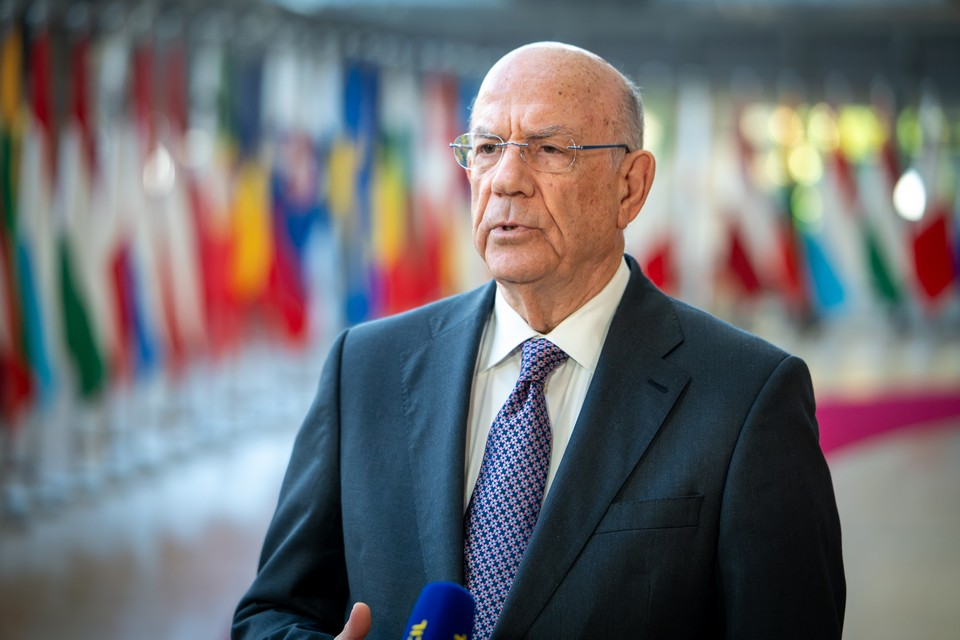
Separately, Finance Minister Makis Keravnos called in Brussels for immediate and substantive measures to tackle high prices and energy costs, urging European leaders to look beyond the usual approaches.
Despite the resilience of the European economy, he said, citizens and households continue to suffer from high energy costs, which create inflationary pressures that spread across the economy. He stressed the need to continue support measures without jeopardising fiscal sustainability or breaching EU economic governance rules.
The European Commission and European leaders needed “to think outside the box and find imaginative and immediate solutions”, he said, proposing investment in energy grids and increased production from renewable energy sources.
Nicosia is seeking greater fiscal flexibility to support households and businesses. The Commission has yet to respond to its request for a derogation from EU minimum tax levels on heating oil. Cyprus has already cut the tax from 7.4 to 2.1 cents per litre and is seeking further relief for consumers. A request for an exemption to allow a further cut in the excise duty on electricity is also pending.

