


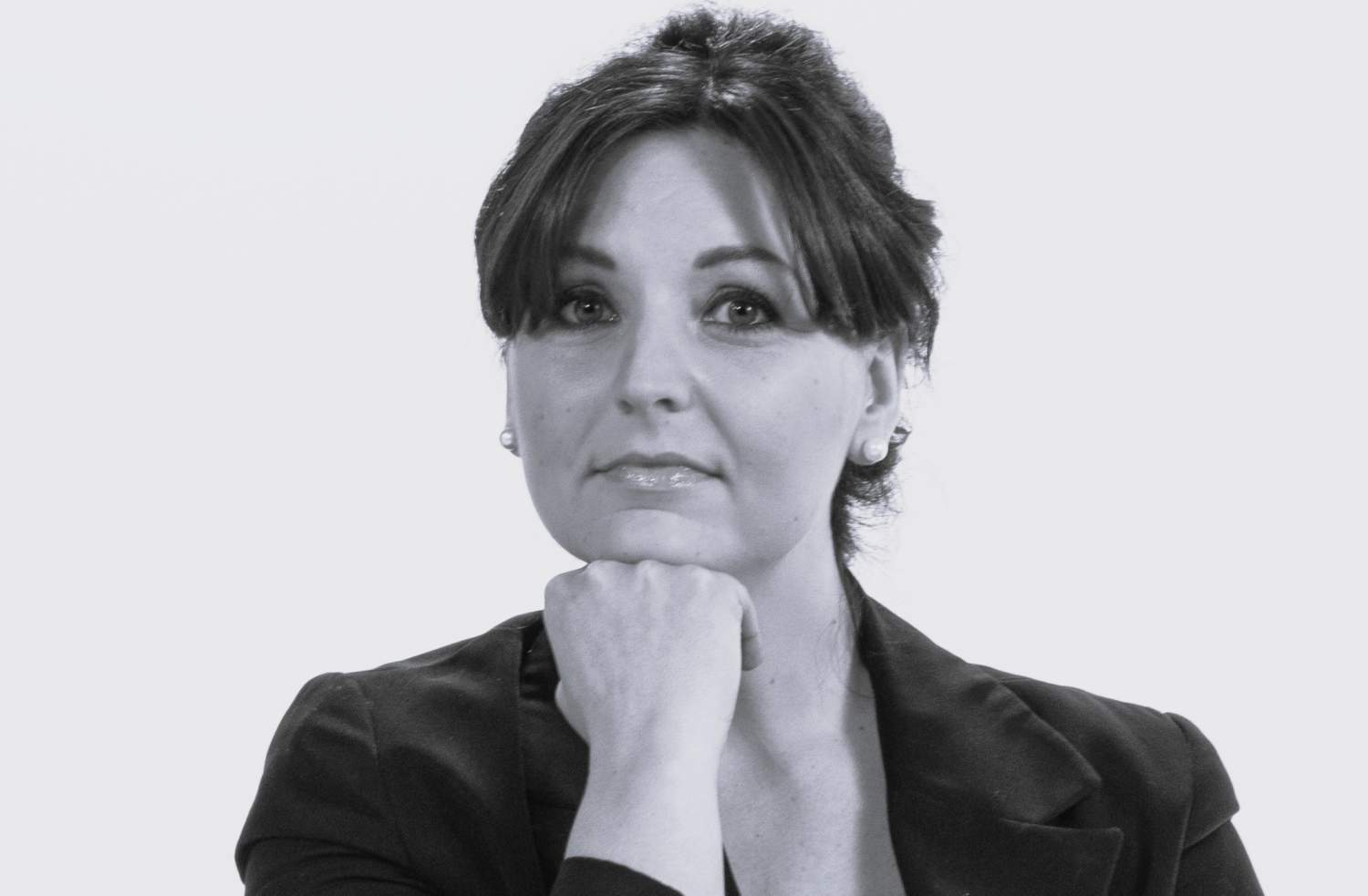
By Dina-Perla Portnaar*
When political convictions lose sight of their moral limits, the extremes can marginalise the political middle. Those far-end political communities foster beliefs strong enough to sustain collective action, resist injustice, and defend what they consider worth defending. Yet their persuasion changes their character, eroding the possibility of moral restraint, leading to authorising conduct people would otherwise condemn. Because, the opponent has become the embodiment of evil. It is now an obstacle to justice, history, and survival that must be removed.
Moreover, politics acquires a sacred dimension when a political cause is treated as morally untouchable, placing its adherents seemingly beyond ordinary ethical scrutiny. The question is no longer simply which idea is the best. It’s whether anyone, however convinced of being right, can remain accountable for what they do in its name.
The sacralisation of politics begins with something humans have done throughout history. Communities inherit injuries, remember humiliation, defend their identities, and seek protection against real threats. Their grievances may be justified, their fears grounded in experience, and their demands for justice legitimate. The problem begins when a political claim is transformed into an untouchable moral absolute, placing the cause beyond the scrutiny to which all claims to justice should remain subject.
The current state of affairs in a nutshell
When identity, history, and political purpose become inseparable, disagreement begins to acquire the character of an existential threat. An opponent’s argument is no longer something to examine, but evidence of corruption. Criticism of a movement is interpreted as hostility towards the people it claims to represent. Restraint becomes weakness, compromise becomes betrayal, and recognising another person’s suffering is recast as a concession to the enemy. At this point, political conviction no longer merely guides collective action. It begins to determine whose suffering counts, whose arguments deserve consideration, and whose moral standing can be dismissed.
This is the current state of affairs in a nutshell. Whether expressed through religious fundamentalism, nationalism, or forms of progressive activism such as woke extremism that treat dissent as evidence of moral corruption, these movements can develop their own versions of blind moral purity. Extremism can be defined here as the distinction between convictions that remain answerable to ethical limits and convictions that claim exemption from them. The political sacred becomes mass psychosis (please, allow me to use this) and blindness. Because the mass refuses to examine the distance between its declared principles and its actual conduct…
Exploring conscious boundaries in the middle
On both sides of the political spectrum, opposing movements become useful to one another without sharing the same ideology, objectives, or degree of power. Their relationship is one of mutual reinforcement. Both sides present adversary as proof that ordinary political constraints have become intolerable. The opponent responds by invoking the first movement’s rhetoric or actions as evidence that moderation is futile. Both have ready-made explanations of its escalations. Both point to the other side’s extremism as the reason for abandoning restraint.
This loop supports a movement’s cohesion, simplification of its narrative, and decrease of its doubts and internal criticism. The movements differ, however, in their access to state power, historical responsibilities, methods, and consequences of their actions. Their political absolutism is similar in the way they decide what is and isn’t worth knowing, investing more intellectual effort in chosen matters, leading to distortion. It’s a failure of willingness to feel the discomfort of the complexity of the matter. In other words, a political movement becomes intellectually closed without its members becoming intellectually incapable, simply because the opponent has become the enemy and ‘the other’ to be eradicated.
My attempts to enter the public debate on both far-right and far-left ends throughout the years have left me disillusioned. I deliberately connected on both ends where my presence wasn’t expected, attempting to preserve a sense of shared humanity and social cohesion. The results didn’t justify my efforts, which I’m not expressing with automatic condemnation or absolution. Because, who knows what the years of my direct confrontations have been able to achieve?
These experiences have taught me that dialogue cannot be sustained by someone’s willingness to engage when the other side treats engagement itself as a threat, a concession, or an opportunity for moral domination. However, I’m done with this type of unbounded engagement, not out of avoidance but out of prudence. I don’t plan to challenge harmful ideas that multiply like a virus any longer. I’m not responsible to make engagement in the public debate possible altruistically, nor do I have the power to make people engage to ‘save humanity’. The only thing I’m willing to do, is focus on the middle.
And thus, in my philosophy called humanecy, as explored in my novel Memos from the edge (to be promoted in 2027), I explore conscious boundaries in the middle. Where there are no excuses for harmful conduct, for treating all convictions as equally legitimate, or for assuming responsibility for persuading those who refuse to engage in good faith. Inclusion is paternalistic when it assumes that people should be shielded from criticism rather than recognised as individuals capable of moral agency. The moral convenience of mass psychosis, acting from a stance of collective guilt and deindividualisation of ‘the other’, needs to stop to strengthen the middle.
Ethical and non-dogmatic middle
The people who discipline themselves to self-limitation in the ethical and non-dogmatic middle, no matter what continent they live on, are the hope for the world of tomorrow. Ethical and non-dogmatic, because the political middle isn’t defined by the absence of conviction, but by the willingness to place conviction under moral scrutiny. Especially since most people cannot be reduced to political categories.
The middle has to hold on to the dignity of negotiating tensions between matters such as cultural continuity, social belonging, recognition, freedom, equality, and emancipation, even though the far ends continue to overrule. The implications of letting that dignity go, extend beyond individual morality into journalism, political leadership, and diplomacy. The political middle proves its worth, not by avoiding conflict, but by upholding moral boundaries when conflict puts them under pressure. Otherwise, what’s left?
Journalism, political leadership, and diplomacy
Particularly journalism hasn’t been that reckless as in current times. It can clarify or conceal the relationships between evidence, power, and language. Journalistic precision requires more than factual accuracy. It also requires resisting language that turns collective identities into objects of contempt. The central question is whether journalism can distinguish between evidence, interpretation, and moral judgement without turning collective identities into objects of contempt.
I condemn journalism like I’ve never done in the last decades, because its underlying task should have been to recognise our shared humanity over borders, security, resources, and political rights. This is why with humanecy I call on people to stay loyal to each other, no matter what background, religion, nationality, education, gender, you name it.
Political leadership faces a related challenge. Can political leaders uphold ethical limits when their supporters demand that those limits be abandoned, and the other way around? The responsibility lies not only in representing constituencies, but also in resisting the temptation to turn political loyalty into a justification for abandoning moral restraint.
Diplomacy matters most when trust is absent, values diverge, and mutual recognition is hardest to sustain. It doesn’t require full agreement, nor does it demand the suspension of moral judgement. The central question is whether diplomacy can preserve the possibility of negotiation without treating recognition of an adversary as moral surrender.
The political middle has a responsibility to preserve that possibility, because abandoning the conditions for dialogue makes restraint difficult to defend. A more humane global order begins with being clear about when the vocabulary of negotiation and moral imagination can be retained and when it cannot. People in the middle are humanity’s hope for it, as well as for a better global story. Aiming for such story is an obligation instead of rhetorical gesture.
*Dina-Perla Portnaar is a small business owner of a global agency, a critical thinker, analyst, and an author. Born in 1985, she escaped a restrictive upbringing, a journey she chronicles in her book, Exodus uit de Vuurtoren. Her philosophical novel, Memos from the Edge, includes ideas of her own philosophy called humanecy. She combines deep, free, and critical thinking with storytelling on morality, ethics, and integrity.

