


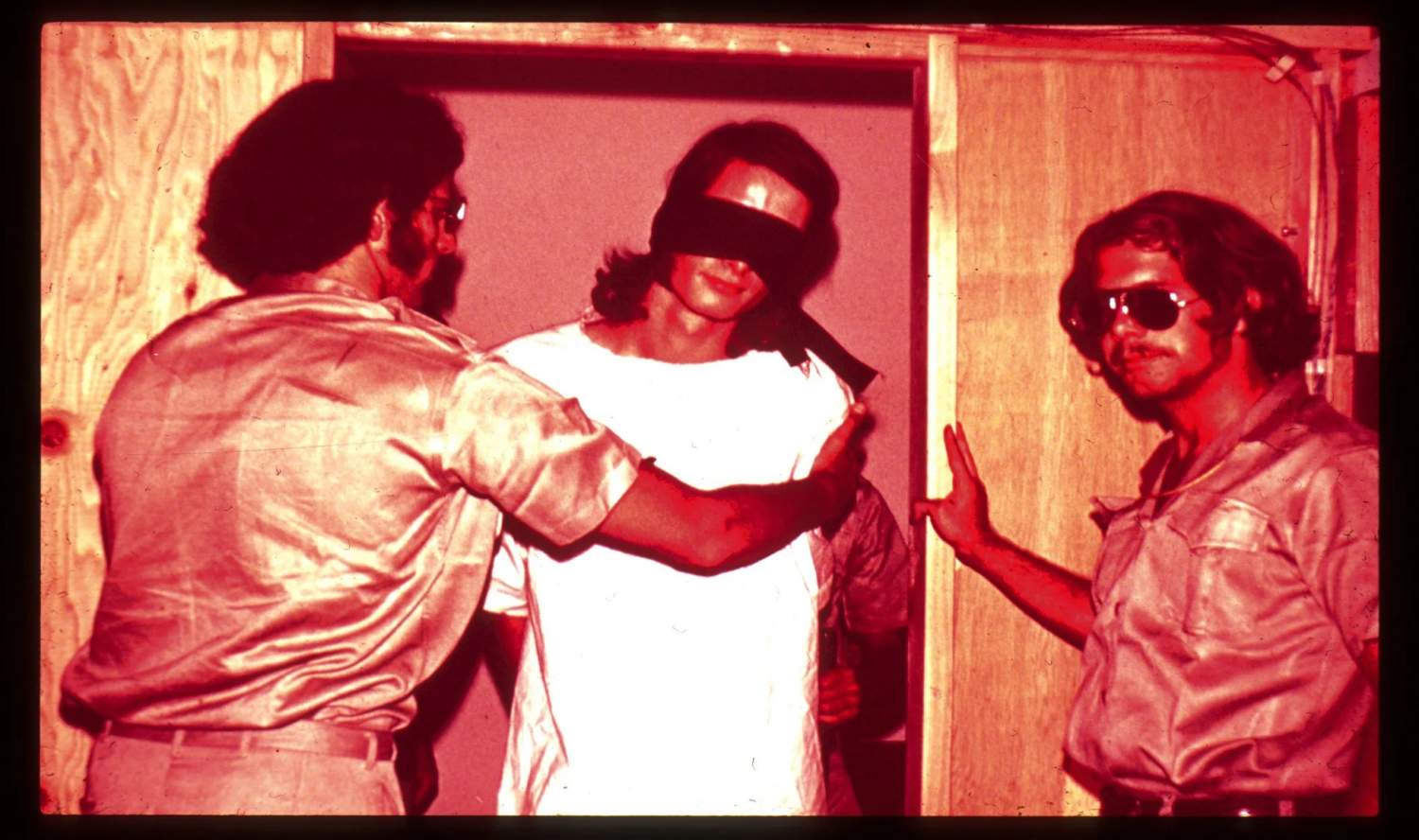
In 1971, 24 students took on the roles of prisoners or guards in a mock prison set up in a basement at Stanford. Led by psychologist Philip Zimbardo, the experiment was designed to last two weeks, but it was halted after six days as the guards’ treatment of the prisoners grew increasingly abusive. The Stanford Prison Experiment became a deeply controversial case in research ethics, prompting scrutiny of the safeguards protecting people who take part in similar studies.
Netflix’s television version, according to Washington Post critic Monica Hesse, does not go to the extremes of the real experiment, but it remains a difficult watch. The prisoners do not end up with bags over their heads, and they are not subjected to humiliating “punishments.” Even so, the series stays faithful to the conclusion that when a minority of people acquire absolute power without limits, they choose punitiveness over restraint, without anyone forcing them to. There is also a psychologist in the series who introduces unpredictable variables into the experiment, whispering “interesting” when she observes behaviors she had clearly expected. It seems, then, that the series remains faithful to the original precisely where the original was fatally flawed.
Years after the experiment, speaking in the documentary The Lucifer Effect (2007), Zimbardo admitted that he had coached the guards, a detail that obviously undermines the experiment’s objectivity and predisposes its outcome. Elsewhere in the documentary, some of the “prisoners” also admitted that they had exaggerated their reactions. In a sense, the “experiment” resembled a reality show more than serious scientific research. In 2002, the BBC tried to reproduce the experiment without interference and, to the surprise of many, the result did not produce the “spontaneous cruelty” the producers had expected. Worse still, as television, the experiment was extremely boring.
That is what Netflix appears to be trying to “fix.” Executive producer Jane Lipsitz said a faithful recreation would be “unethical,” which is why she made sure there were safeguards. The thirty participants — not only male students, but people of different genders, places, political views, and living standards — entered an abandoned prison in Georgia. There was a psychological screening of every member before entry, a safe word for immediate withdrawal, psychologists available around the clock, and a doctor. The creators do not claim to be conducting a scientific experiment, but the question they are trying to answer is the same: whether power corrupts.
It is indeed a timeless question that continues to occupy us, however controversial the methods we use to find the answer. Netflix’s new series will not lead us to firm conclusions, but it does, at the very least, spark our interest.

