


By Dr Simran Keshwani
When Cyprus takes its maritime business delegation to India this November, it should arrive with an offer that extends beyond selling services abroad: a practical proposition for Indian shipping businesses to establish European operations on the island. Around 25 Cypriot companies are expected to join the mission. Their opportunity is to secure a share of the decisions, contracts and skilled employment generated by India’s expanding international commerce.
That would give substance to the claim that Cyprus can shape the next India–Europe trade route. Its maritime economy can help organise the trade carried along that route, earning income from ships and businesses whose cargo may never pass through a Cypriot port. This is an achievable ambition grounded in capabilities the island already sells internationally.
Two developments strengthen the case. The EU and India concluded free-trade negotiations in January 2026, and the European Commission submitted the agreement for Council approval in September. Entry into force still requires further procedures. Meanwhile, the proposed India–Middle East–Europe Economic Corridor, or IMEC, envisages maritime and rail connections through the Gulf. Neither initiative guarantees additional business for Cyprus; both create reasons to build closer commercial relationships.
The distinction matters because transport geography alone is a weak business strategy. An additional port call must justify its costs and sailing time. A maritime services business can earn recurring fees wherever its clients’ vessels trade. Cyprus should therefore develop its contribution around the commercial functions it can perform competitively.
The Central Bank of Cyprus recorded €1.001 billion in ship-management revenue from non-residents in the second half of 2025. Full management and crewing accounted for more than 98 per cent of that income. The established business is international coordination: maintaining vessels, organising crews and ensuring that fleets operate reliably across jurisdictions.
Connections with India already exist. Columbia Group announced a Mumbai hub in January, with plans to recruit 220 additional staff across maritime and operational services. Fleet Management maintains offices in both India and Cyprus and participated in September’s bilateral maritime engagements. These networks provide relationships through which new ventures could develop.
They also expose a competitive challenge. India is developing its own maritime services capacity. Cyprus cannot assume that expertise offered today will remain scarce tomorrow. Its proposition must explain which functions benefit from a European base and how those functions complement work undertaken in India.
One answer is a European operating presence for Indian shipowners and maritime investors. A Cyprus-based team or joint venture could coordinate technical management, chartering support and European compliance, drawing on local professional networks. Indian partners could retain their domestic operations while obtaining a dedicated team for European business. The commercial test would be service quality and reduced operating friction.
Green shipping makes that proposition concrete. FuelEU Maritime has applied since January 2025, setting limits on the greenhouse-gas intensity of energy used by covered vessels. The EU Emissions Trading System separately requires allowances for covered shipping emissions. These obligations apply irrespective of flag; an Indian operator’s choice of registration does not remove the need to comply on qualifying European voyages.
Cypriot firms could offer Indian clients a coordinated service covering fuel-performance assessment, emissions records and the allocation of compliance responsibilities in contracts. Reliable data would also help owners assess fuel-saving retrofits and present investment proposals to lenders. The value lies in making European operations more predictable. Incorporating a company in Cyprus would not itself satisfy these requirements.
Maritime finance provides another opening. India’s GIFT International Financial Services Centre has a regulated ship-leasing framework. GE Shipping (IFSC), for example, offers operating leases under that framework. Cyprus-based owners and managers could explore transactions with such counterparties, combining vessel investment with management expertise and identifiable charter income.
A useful first project would identify the vessel, lessee and repayment cash flow before selecting a financing structure. Tax treatment, registration and lender security would require transaction-specific assessment. The purpose should be to make a viable shipping investment easier to execute, with clear responsibilities on both sides.
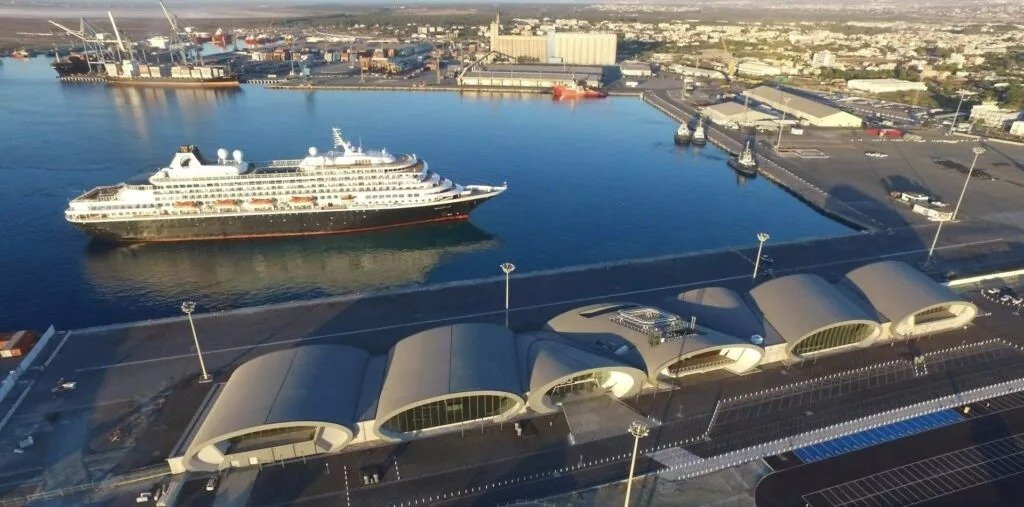
Port cooperation can develop alongside these services. EUROGATE operates Limassol’s container terminal, while DP World handles the port’s multipurpose and cruise facilities. India’s September delegation discussed potential Indian opportunities with EUROGATE. Terminal operations, digital systems and staff training offer areas for commercial proposals even before a new cargo service is established.
Any proposal to route additional Indian cargo through Cyprus should undergo a separate assessment of freight volumes, onward connections and total delivery costs. Separating that decision from services cooperation would allow commercially sound partnerships to proceed while the wider corridor develops.
The institutional machinery is available. Cyprus and India convened their first Joint Maritime Committee in September under their 2017 merchant-shipping agreement. November’s business mission should use that channel to identify obstacles emerging from specific transactions. A proposed management joint venture, a leasing transaction and a terminal-services partnership would each give officials a defined problem to help resolve.
Cyprus should then measure progress through recurring service revenue, skilled jobs and investment actually committed. The wider lesson for smaller European economies is that influence over trade can come from organising the capabilities on which international commerce depends. Cyprus can strengthen its position by becoming a place where Indian maritime businesses choose to run their European operations. November’s delegation should make that choice commercially persuasive.
*Dr Simran Keshwani is a political economist and Founder & Research Lead of IndiaForth, a Sydney-based strategic intelligence and advisory firm focused on India’s global rise. Her research examines industrial development, geoeconomics and international economic partnerships.

