


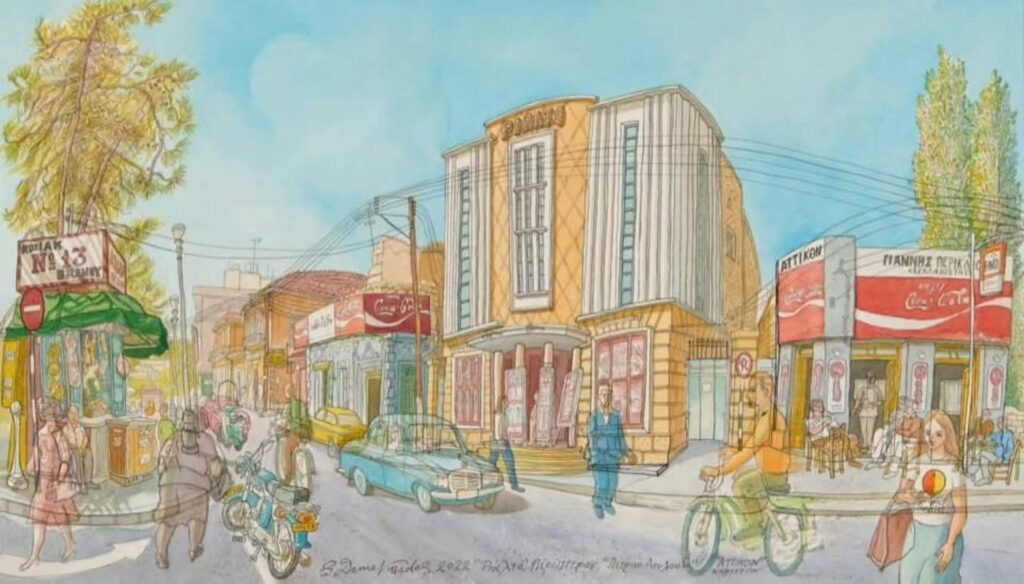
Limassol’s historic Rialto Theatre on Heroes’ Square is soon to pass to Limassol Municipality, more than three decades after a citizens’ campaign saved the building from being demolished to make way for a car park.
The move settles the ownership of the theatre, which was founded in the 1930s and remains part of the city’s cultural heritage. Thirty-six years after the original campaign, Limassol residents have again mobilised to claim the theatre for their city, with dozens of public statements from people in the arts and beyond.
The handover follows a Cabinet decision approving the completion of the state’s acquisition of the building and its lease to the municipality. The state will give the theatre grants of 250,000 euros for 2026, 125,000 euros for 2027 and 75,000 euros for 2028, with no state funding planned after that. The Rialto company’s 12 permanent employees are to keep their employment status, benefits and working hours in a new company wholly owned by the municipality.
The building’s fate hung in the balance in the early 1990s. In September 1990, jewellery designer and activist Evis Michaelides learned from architect Maximos Pantelides that plans had been requested for the demolition of the Rialto and a car park in its place.
“We had to inform people immediately and mobilise them,” Michaelides told Phileleftheros.
The campaign
The first meeting was held at Chrysallida, a self-managed social space at 13 Christodoulou Sozou Street that had been a hub of the city’s alternative scene in the 1980s. Many more meetings followed. They drew people from different backgrounds, organisations and groups, and residents who felt that part of the city’s memory was at risk along with the old theatre.
“With its demolition, all those beautiful memories that everyone had lived since the ’50s would be torn down too,” Michaelides said.
Out of these meetings came the ‘Initiative to Save the Rialto’, an independent group with no hierarchy. Michaelides said its open assemblies were well attended, estimating that more than 150 to 200 people must have taken part.
After each assembly, members produced new leaflets to keep the public informed. The initiative also worked to highlight the theatre’s architectural value and to keep the issue alive until a solution was found.
Its original core included architect Sevina Floridou and sociologist Andreas Panayiotou, along with many other Limassol residents from culture, architecture, journalism, civil society and politics.
Panayiotou said Limassol already had a strong alternative movement by the 1990s. It was made up partly of people returning from studies abroad and was shaped by a climate that had begun forming in the 1980s. Campaigns to protect public spaces went back further still, to protests over beaches in the 1970s.
He said the movement had started campaigning to preserve Limassol’s historic buildings, focusing at first on the castle area, when the plan to raze the Rialto suddenly emerged. Meetings were held at Chrysallida, just down from the square, and a gathering on Athinon Street drew people from different walks of life.
“As soon as it became public, people began to mobilise. The mobilisation spread. We would meet, draft the texts, send them out, put out statements and leaflets, all written collectively,” he said.
A place of shared memory
Floridou said she had just moved to Limassol and rented offices in a side street in the area, believing she had come to a historic city. She soon found there were plans to change it rapidly, in line with an American, car-centred philosophy, by widening roads and demolishing buildings. Under those plans, she said, the Rialto was to become a supermarket or a car park, but either way it was destined for demolition.
She said the building’s value went beyond its architecture because it was bound up with the city’s collective memory and identity. It was perhaps one of the first public buildings where Limassol residents could attend shared events.
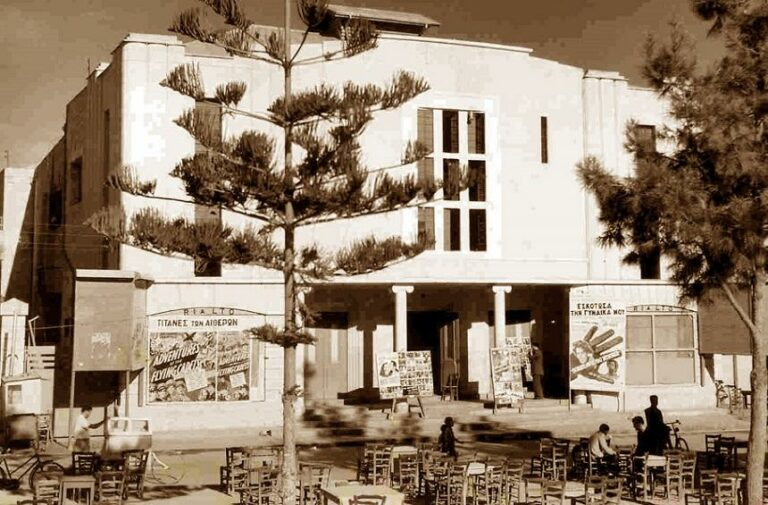
Its modern design stood out in both size and form in what was then a run-down area, Floridou said. The site had an Ottoman bath run by a man named Kefoglou and had at first been an open lot where donkeys were left. When the British arrived, the city was more developed to the west, towards the port, and no building stood out in the eastern part.
The Rialto changed that. “As soon as this building and its role in society appeared, it began to attract people who put on their best clothes to go there, almost as a ritual, to have a good time and listen to music,” Floridou said.
It hosted major figures, she said, and it was where Solon Michaelides played pieces for the first time.
She also stressed its role as a place where Greek Cypriots and Turkish Cypriots met, saying it was open to both communities at a time when people were not divided. At an event marking the theatre’s reopening, she said, Nicos Anastasiades and Mustafa Akinci recalled going to the cinema there as children.
“There is no Limassol resident whose memory this building does not touch, because it was a place of intense socialising,” Floridou said. She linked this to the city’s film tradition: “It is no coincidence that we have so many directors from Limassol who grew up there and have all had a connection to it since childhood. It was our ‘Cinema Paradiso’.”
The cooperative bank steps in
In a 2019 article marking 20 years since the theatre reopened, Andreas Christou recalled his anguish at the time. “After a committee meeting where it became clear our efforts were heading for a dead end, I told Hambis Genethliou: ‘The Rialto is gone, we are losing it. It will be sold and demolished, and the memories of Limassol’s people will be demolished with it.’”
The solution came from the Limassol Cooperative Savings Bank. According to Christou’s 2019 account, Genethliou acted as a bridge between the initiative’s committee and the bank’s committee and proposed that the bank buy the Rialto and preserve it for Limassol. Michaelides credits Melios Georgiou with making the decisive suggestion to the bank’s committee. The proposal was adopted, and in February 1991 the bank bought the abandoned theatre.
The purchase was the start of a much larger project. Land behind the Rialto was acquired to extend the stage and support areas, and the bank also funded improvements to Heroes’ Square. An architectural competition followed in 1994, the project was put out to tender in 1996 and work began in 1997.
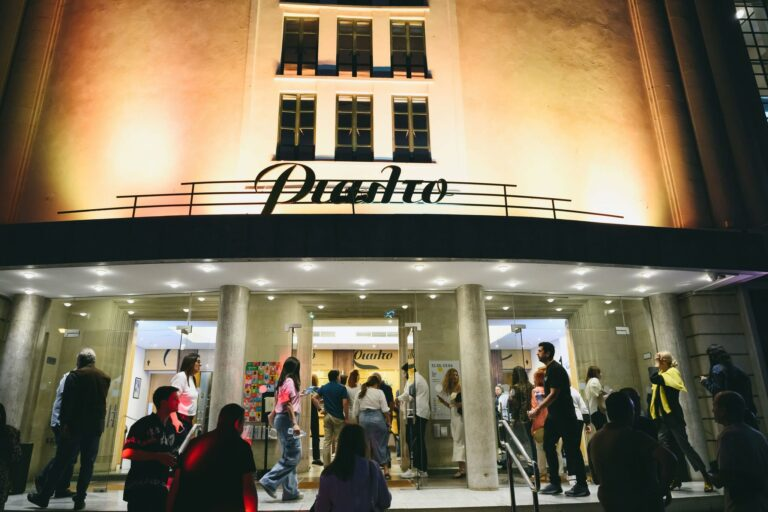
Architect Themis Themistocleous designed the new Rialto. The old cinema was restored and turned into a modern theatre that kept key features of its historic identity, and it reopened on 15 May 1999. The reopening marked a wider effort to revive Heroes’ Square and old Limassol.
Floridou said the facade was kept intact, as had been the aim. Stylised details in the auditorium were also retained, such as the side balconies and boxes, reflecting a building caught between classical and modern architecture.
Citizens’ say
Michaelides said the story’s significance lies in the struggle itself, in how a city’s residents, as active citizens, can organise, mobilise and bring about change.
Panayiotou said the campaign centred on citizens’ participation in the life of the city and their right to a say in decisions about the place they live. “There are buildings we fought whole campaigns to save, but they were eventually razed. Others, however, were saved,” he said.
He added that Heroes’ Square was where a cultural shift was taking place. “It was an area that Vasilis Michaelides also frequented. It was, and is, part of our history.”
Perhaps the Rialto’s relationship with the city is best summed up in Floridou’s words: “Heroes’ Square exists because the Rialto is there. And the Rialto is part of the square and of all of Limassol.”
(Featured image: a painting by Cypriot artist Spyros Dimitriades showing the Rialto and Heroes’ Square)

