


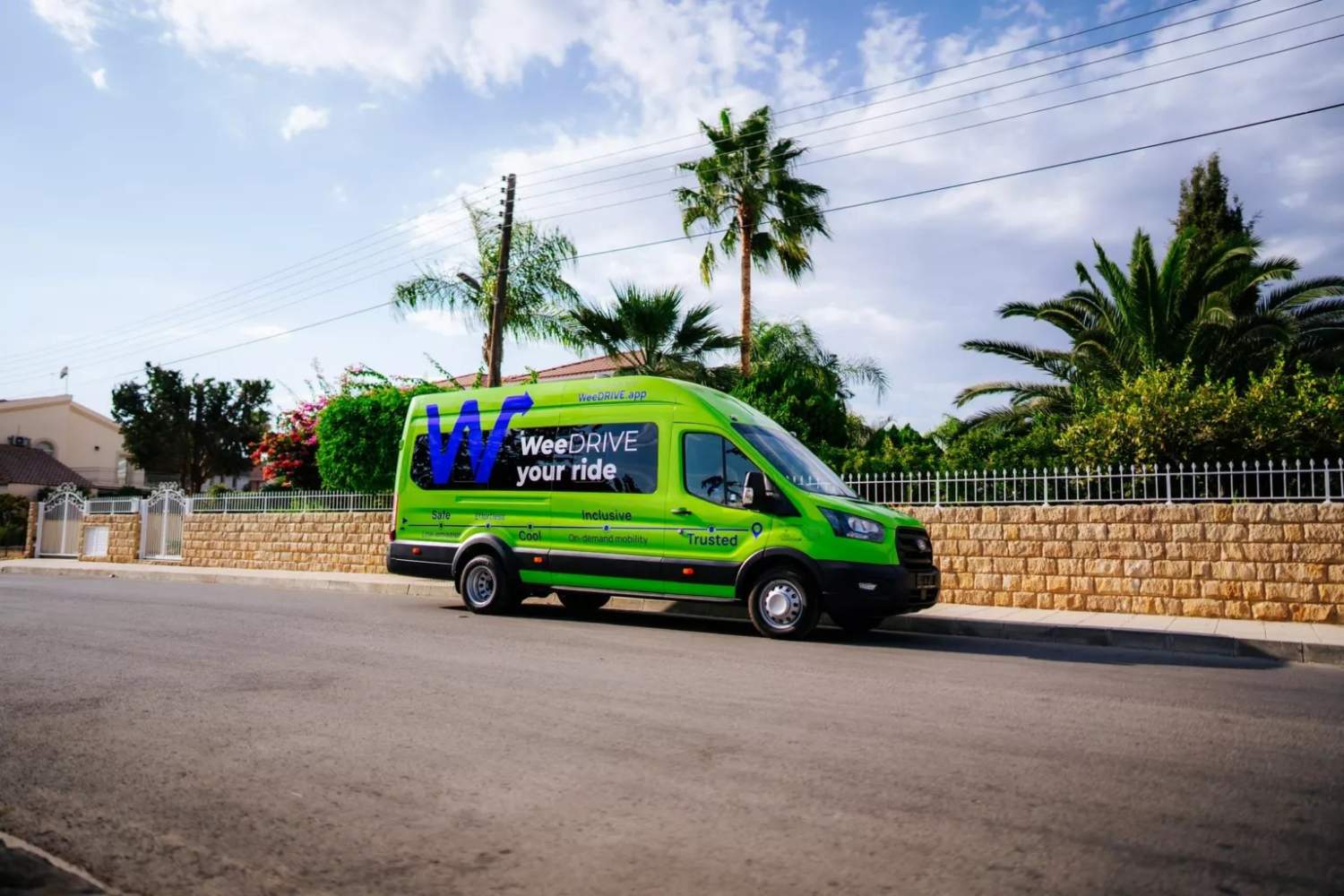
Demand for WeeDRIVE, an app-based minibus service in Limassol exclusively for teenagers aged 12 to 18, has nearly tripled in its second year, but funding problems and a gap in the law leave its future and any expansion to other cities uncertain, parliament’s Transport Committee heard.
The committee took up the issue at the suggestion of DISY parliament member Charalambos Petrides, to discuss extending the service to other cities as a way of easing traffic congestion.
The EU co-funded pilot began on 5 October 2025 and runs until December 2027.

Maria Kamariani, the project’s scientific coordinator, told the committee that 456 teenagers used the service in the 2025-2026 school year, with six buses in operation. In September this year alone, the number nearly tripled to 1,224, which she said was beyond the scope of the pilot, leaving the service unable to serve everyone who wanted to use it.
The service is used by both boys and girls, and, contrary to experts’ predictions, 84 per cent of users are Cypriot, which Kamariani said showed a strong local need for it. Parents had saved a total of 78 days in time, and 3,000 car journeys had been taken off the roads, she said. Routes change daily according to demand.
A cost study found that with 2 million euros a year and 22 minibuses, the service could provide 1,000 trips a day, or 250,000 a year, operating seven hours a day from September to June, she added.

Funding and legal hurdles
Andreas Nikiforou, head of public passenger transport at the Ministry of Transport, Communications and Works, described WeeDRIVE as an innovative programme and said a private company in Nicosia had applied to run a similar service.
He said the programme would not stop in 2027 but would no longer be viable once its current EU funding ran out. Users now pay between 3 and 9 euros per trip, but once the funding ends, and taking possible cancellations into account, the full cost could reach about 16 euros, he said.
Nikiforou also pointed to a legal issue covering ad hoc routes, tourist coaches, school routes and taxis. The ministry has begun work on legislation, he said, but problems remain with contracts for transporting minors, which set a fixed number of kilometres the contractor can cover.
“There is political intention to support the effort, but the proper procedures must be followed,” he said.
Limassol backs the service
A representative of the Limassol Passenger Transport Company (EMEL) told the committee that Limassol was close to gridlock, especially in the afternoons, with more than 250,000 trips a day made to take pupils to private lessons.
“WeeDRIVE can offer a real, not theoretical, solution to the problem,” the representative said. The service had succeeded faster than expected and had now reached its limits, and whatever was holding back its growth had to be identified, the representative added, proposing an update of the public transport framework to close the legal gap.
A Limassol Municipality representative described the service as a success and said the municipality supported the programme and wanted it to continue.
How it works
WeeDRIVE uses 17-seat minibuses to take teenagers to afternoon and Saturday activities in Agios Tychonas, Mouttagiaka, Germasogeia, Agios Athanasios, Mesa Geitonia, Limassol centre and Kato and Pano Polemidia.
It runs from 14:30 to 20:30 on weekdays and from 09:00 to 16:00 on Saturdays, except on public holidays.
Parents download the app, set up a family account and enter their children’s weekly schedule of afternoon activities. They then book trips, and the app plans the most efficient routes.
The service offers door-to-door pick-up and drop-off, real-time GPS tracking and notifications for every trip. The minibuses are fully wheelchair accessible, and the drivers are vetted and specially trained to transport children. Parents top up credit in a family wallet and can book trips until midnight the day before.

