


Haidar Abu Middain, 60, lifts a desiccated bough of a fallen olive tree and tosses it aside in the barren dirt of what was once one of the most prosperous groves in central Gaza.
The family olive orchard he owned with his brothers and his uncles used to span 900 dunums — 220 acres — of trees that this time of year would be heavy with ripe fruit.
The whole clan would come out to gather the harvest — 1,100 to 1,500 tons of olives piled in bushels — some to be sold as fruit, the rest pressed into enough fragrant oil to fill as many as 900 of the 16-litre drums in which it is typically sold.
Today, nearly half of the orchard lies beyond the “yellow line” guarded by Israeli troops who bar Palestinians from even entering two-thirds of the Gaza Strip. The other half of the grove, though still accessible, has mostly been bulldozed.
Only around 20 or 30 trees are somehow still standing. Abu Middain reckons they will produce just two drums of oil, not even enough for his own family.
“The produce before the war was blessed, it was enough to earn a livelihood for our families,” he told Reuters. “The harvest from here used to be enough to supply the entire central area, with both oil and olives.”
PRIZE CROP AND SANCTUARY
Before the war, olives were the jewels of Gaza agriculture, pressed into enough rich oil to serve as a staple for the local diet, and a small surplus for export to Israel. The shady groves abutting Gaza’s concrete cities were a sanctuary for families in one of the world’s most densely populated territories.
But a year after a ceasefire ended major fighting, almost all of the once-proud orchards are bulldozed under.
Gaza’s agriculture authorities estimate that of 2 million olive trees, barely 150,000 are still standing. They anticipate a harvest of about 5,000 tons of olives instead of the usual 40,000, producing only 700 tons of oil instead of 5,000.
THERE’S ZERO
Bushels of olives and drums of freshly pressed oil would normally be stacked high in Gaza’s markets this time of year.
Nowadays there is barely any at all, and what does make it to market sells at around triple the pre-war price, nearly $500 a drum, well beyond what Gazan families can afford, said Imad al-Ajrami, 33, a shopper in Deir al-Balah market.
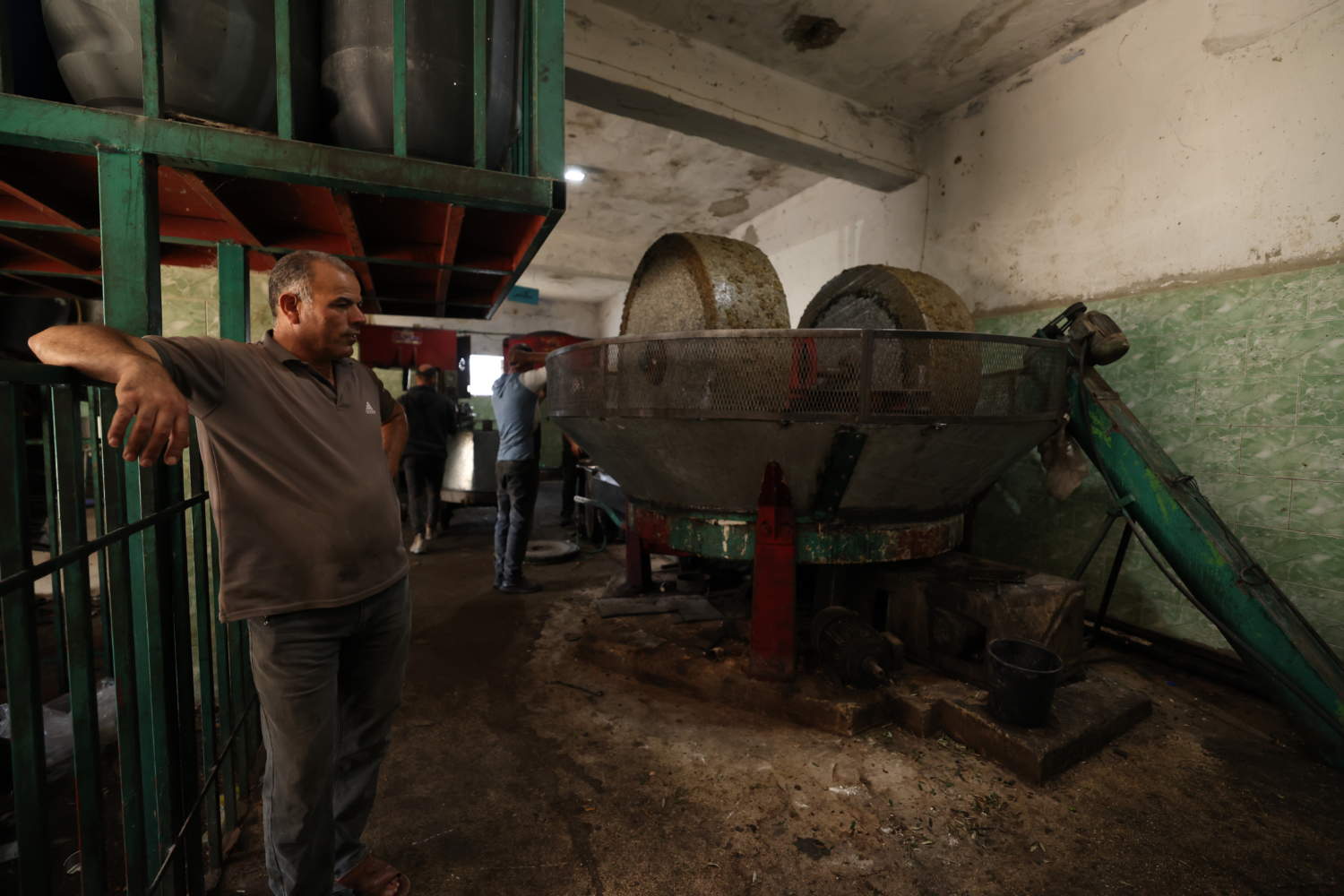
Authorities say only seven olive oil presses are still operating, down from about 40 before the war. They are barely functioning, said Fawaz Zidan, who has kept his press open in Deir al-Balah.
“Compared to years before the war, there’s zero. Because there are no olives, all of it has been bulldozed, the olives are gone,” he said as a handful of residents queued with plastic jerrycans to collect fresh oil from the spigot of the press.
In Deir al-Balah, a tiny part of central Gaza that Israeli forces declared a safe zone and held off from storming during the war, one of Gaza’s few remaining olive groves still serves as a sanctuary at harvest time for Khalil Mansi and his family.
They were out gathering the green olives, the fruit pitter-pattering as it fell from the branches onto a white cloth laid out below. Barefoot boys climbed ladders to reach the higher branches. Girls sat below sorting the olives from leaves and twigs. Later the family sat for a picnic in the shade.
Ahmed Khader, 38, had come out for a rare day of work on the harvest. In the old days, the season would keep a labourer like him employed for two or three months, he said. Now he was grateful for a day’s pay.
“But we still have to provide for our children with a bite to eat, and we want to try to get our daily bread.”
(Reuters)

