


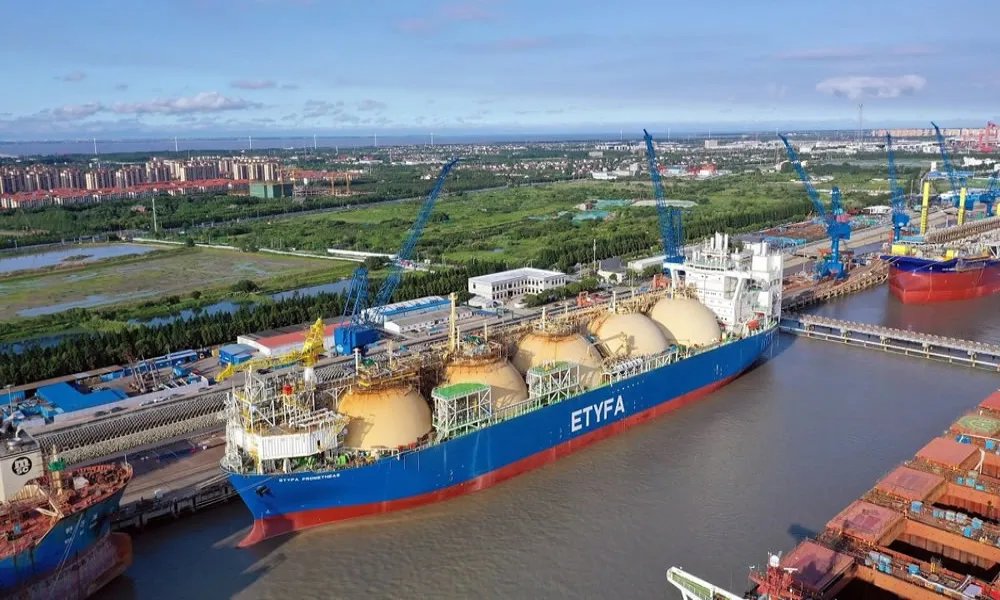
The first call for companies interested in completing the delayed natural gas terminal at Vasilikos closes on Friday, and construction work on the Cronos offshore gas field starts in two months, with the first Cypriot gas targeted to reach the market in the first half of 2028.
Energy Minister Michalis Damianos said the terminal would take about 18 months to complete once a new contractor got the green light. Speaking to Philenews’ ‘Economy’ vidcast on Thursday, he confirmed that several companies had already asked for clarifications on the terms, a sign of interest in the project.
By Monday, the government will know which investors have cleared the first stage, and how much real interest there is in a project that has been caught up in arbitration, new tenders and long delays since a Chinese consortium pulled out.
The harder part begins on Monday, when the preliminary expressions of interest will be assessed and the Natural Gas Infrastructure Company (ETYFA) will move the tender process forward. That process will take months to complete.
Damianos said he hoped to avoid appeals against the tender, which could push the timetable back further. He acknowledged there was still a long way to go and said the project had to be done properly this time. The greatest damage from the Chinese consortium’s departure, he said, was not only the legal dispute in London but the cost to the economy of the delay in bringing natural gas to Cyprus.
Offshore gas
Cronos is ahead of the other fields in Cyprus’s exclusive economic zone. Initial revenue for the Republic of Cyprus will be small. However, synergies with Egypt’s Zohr field, Eni’s facilities at Damietta and Egypt’s state company make the development economically viable.
ExxonMobil and QatarEnergy’s Glaucus and Pegasus fields are expected next, by 2033. The government also plans for gas from Aphrodite by then.
The government is in talks with ExxonMobil and QatarEnergy about awarding Block 4 to their consortium. Damianos said there would be announcements before the end of the year.
Great Sea Interconnector
For the first time, Damianos gave a firmer date for the Great Sea Interconnector (GSI). Greece is expected to issue a NAVTEX around the end of October so that seabed surveys can resume. He discussed the issue with Greek Energy Minister Stavros Papastavrou in Athens on Wednesday.
Damianos described the interconnector as a project for energy adequacy, with significant geopolitical value and cost. He said that over the next 10, 20 and 30 years, Cyprus could not remain the only electrically isolated member state in the EU.
Turkey had been “the elephant in the room” from the start, he said. The involvement of French interests through Meridiam and Nexans adds further geopolitical weight to the project.
Issuing the NAVTEX will also set payments in motion. The first 25 million euros will go to Greece’s Independent Power Transmission Operator (IPTO) through the electricity tariff. Consumers will not be charged directly, because the money will come from state funds. The Cyprus Energy Regulatory Authority (CERA) has already recognised 82 million euros of the 302 million euros in costs claimed by the operator. Damianos said that, since CERA has recognised it, the 82 million euros will later be paid by consumers in Cyprus.
An updated European Investment Bank study on the interconnector is expected by the end of the year. If the project’s numbers do not add up, Damianos said, the government would have to look for new investors or additional grants.
Cost of electricity
Damianos said bringing in natural gas was unavoidable, because there was no other way to substantially cut the cost of generating electricity. The interconnector, renewable energy and the Electricity Authority of Cyprus’s (EAC) new generators are all part of the same puzzle, he said, but none of them replaces gas. Bringing prices down meaningfully requires moving away from heavy fuel oil to a cheaper fuel, particularly while geopolitical turmoil is keeping energy costs high.

