


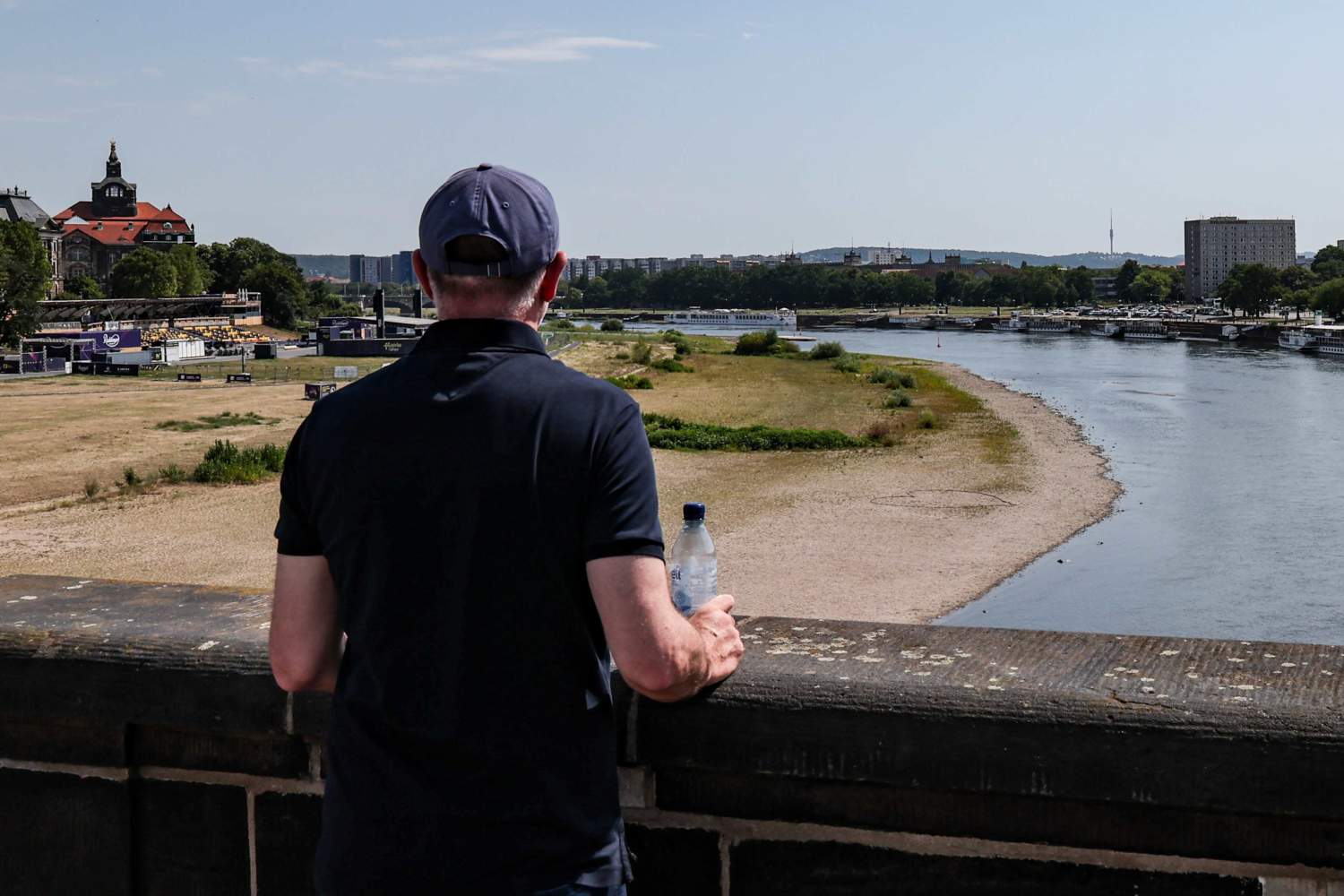
As every environmental crisis also becomes a financial one, action is needed to prevent the worst consequences.
How much does climate change cost? The damage caused by a flood or heatwave can be calculated in euros. Far harder to quantify are the displacement of people, the transformation of a landscape or the loss of ways of life that once sustained a community. Economic estimates, useful though they may be, therefore capture only part of the full extent of the losses.
Speaking to Phileleftheros about the impact on European economies, Matteo Roggero, a postdoctoral researcher with the Resource Economics Group at the Albrecht Daniel Thaer Institute, Humboldt University of Berlin, says no sector can assume it will be spared. Water scarcity affects agriculture and drinking water supplies, but can also hamper energy production. Heatwaves damage transport infrastructure, while changes to mountain environments affect tourism. In interconnected economies, the consequences do not stop where they first occur.

“No impact can now be dismissed as a remote possibility. Nor is there any sector that will remain unaffected,” he says.
Limiting climate change is technically feasible. The harder challenge is political, Roggero argues, adding that the decisions required will change how wealth and power are distributed, both within countries and between them. Urban adaptation will also require resources. What we must bear in mind is that we will bear the costs of climate change one way or another. The question is how much human suffering we are prepared to prevent, and for whom.
Inequality must also be taken into account. Roggero argues that societies that are already unequal risk protecting those with the greatest resources first, while shifting exposure to climate risks onto poorer people. Even a measure presented as a solution can have this effect unless consideration is given to who benefits and who pays. Climate policy, he stresses, is inevitably also a decision about how we want to live together.
Europe is warming faster than any other continent and the economic consequences are already putting significant pressure on public finances. Do we have an estimate of how much climate is costing Europe every year?
There are certainly attempts to quantify these costs, and the insurance industry has gone a long way in quantifying the challenges posed by climate change. That said, economic valuation is more about the process than the outcome: the costs connected with natural disasters are at best an underestimation of the actual losses, and there are losses that only lend themselves to comparison and quantification under very strong (and questionable) assumptions: the toil and trouble of the displaced, the change in the landscape, the change in social and cultural practices (etc.) are not commodities traded in a market – we cannot really measure them with the same yardsticks.
Which sectors of the European economies are likely to be hit hardest by climate change? And will the economic impact be felt equally across Europe, or smaller economies like Cyprus are more vulnerable than larger economies such as Germany?
The question is misleading. The climate is pervasive in human activities, and economies are interconnected systems where hardly anything can be affected without effects on all the rest – the more so in a context of international trade. At best, the question is what will be affected in the short term. Agriculture and drinking water provision are certainly on the chopping board, but the last few years has shown how water scarcity can quickly affect energy production (lack of sufficiently abundant and sufficiently cold cooling water for power plants), heat-waves can affect transportation (damaged roads and train tracks), increased snow-melt can destabilize the mountain environment, and the tourism it relies on, and the list goes on. None of these impacts can be considered long-term any more. None, by the same token, will be spared.
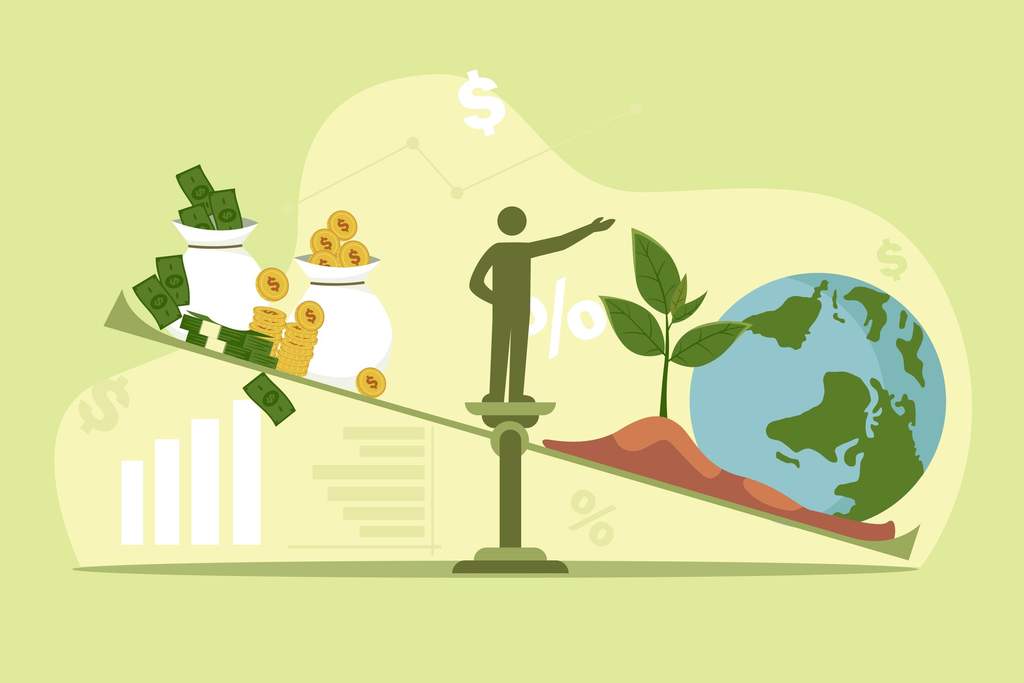
Climate change is often described as an environmental crisis, but to what extent should we now see it as an economic and financial crisis as well?
The economy is a subset of the ecology – and that’s a perspective dating at least a few decades now. The economy, however service oriented, still needs its material underpinning. That is something provided by Earth and maintained by ecosystems. Humans only add some labour to that (plus the institutions coordinating how such labour is provided and how the benefits of it are distributed – this also costs time and effort). Of course any environmental crisis will translate to an economic and financial crisis. The matter is whether governments, decision-makers and society at large realise that early enough to avert the worst.
Can our current economic model effectively address the climate crisis, or does tackling it require a fundamentally different approach? And if a new economic model is needed, what could realistic look like in practice?
That’s the million-dollar-question. If “our economic model” means capitalism, one key aspect of capitalism is that it changes and diversifies: capitalism in North-America looks very different from capitalism in China, which is different again from Europe – let alone from the Global South. We owe the greatest advances in renewable energy to China, which is at the same time one of the largest emitters of CO2 on the planet. The core problem here is that reining in climate change is (with a few big caveats) technically feasible, but will alter greatly how wealth and power are distributed both globally and locally. Nobody really wants to bite that bullet for the sake of future generations – definitely not in the Global North, where most of the historical responsibility lies.
Much of your research focuses on institutions rather than simply on money or technology. Why the real problem is the not the lack of resources but the lack of will from governments, institutions and local authorities?
Our common understanding of the economy comes from a time where physics was picking up pace, so we tend to think of it as flux of matters (and currency) held together by some laws of nature. That’s not the case: the economy (or better: how individuals, groups, and society as a whole go about problems of provision and allocation) rests on entirely human-made laws shaping who has access to what resources, to what ends, and with how much protection from the state (or society, where the state does not exist). This is why economies differ so much around the world, and why some thrive while other ones struggle. One may also think that the differences in wealth across nations may have a military explanation rather than an institutional, and there’s certainly some truth to that. That, however, depends on institutions too, as the failings of Russia in Ukraine or the US in Iran have recently shown.
Given the further global warming now appears increasingly difficult to avoid, what measures must we take to adopt to a hotter climate and ensure that our cities and communities remain liveable?
The name for that is “adaptation to the impacts of climate change” or “climate adaptation” for short. Climate adaptation is highly context dependent: what works in a place will not necessarily work in another. Also, climate adaptation also depends on the effectiveness of decarbonization efforts: what works for 2 degrees of global warming doesn’t necessarily work for 5. That said, giving more room to nature and restoring ecosystems goes a long way in stabilizing an increasingly erratic water cycle, and protecting people from increasingly frequent and severe extreme weather events.
Europe’s southern cities were built to cope with hot summers, while those in the north were designed for colder winters. As a climate patterns shift, can the cities be adapted to this new reality without the cost becoming prohibitive?
This question is misleading. We will face the costs of climate change whether we can afford it or not. By adapting to climate impacts, society trades off some human suffering for some monetary expenses. Whether it is “worth it” or not depends on how society values (whose) human well-being. Markets are terrible at doing that, hence society is left with holding very difficult conversations on how much suffering is acceptable and how much wealth and development will need to be forgone for that. Any answers to these questions will have highly distributional implications, biting at the core of how we live together on this planet.
Climate change cuts across almost every area of government, water, health, transport, housing and energy. Are our public administrations still too fragmented to deal effectively with a crisis that does not fit nearly within individual ministries or departments?
Local governments have made giant steps in these regards. What is clear, however, is that those giant steps are predicated on substantial amount of wealth and capacities being available in the first place. We know, in other words how the sustainable city of the Global North looks like, how that runs and operates. We know very little, on the other hand, on how to get there in the context of the Global South, where, incidentally, the largest and fastest urbanization is taking place now and for the foreseeable future.
Could climate change become a new driver of inequality in Europe, with healthier households or regions or even countries be able to protect to protect themselves from extreme heat, flooding, disasters or rising food and energy costs while power cannot?
It’s the other way around. Societies built on unequal institutions will handle climate change just the same – who would expect them to do otherwise? If anything, climate struggles are intersectional struggles and that, in a complex society, should not be surprising either. Climate mitigation and adaptation can easily have counterproductive outcomes if justice consideration are not taken into account: the “efficiency” of energy markets being more than off-set by the power-hungry lifestyles of the wealthy, or climate adaptation failing to reduce vulnerabilities and shifting them instead from one group (the wealthy) to another (the poor). This happens within national borders (climate injustice) and across borders too (climate displacement and migration). Climate research has gone a long way in highlighting the justice implications of climate adaptation and mitigation measures (and lack thereof) – if they are ignored, they are ignored on purpose.

