


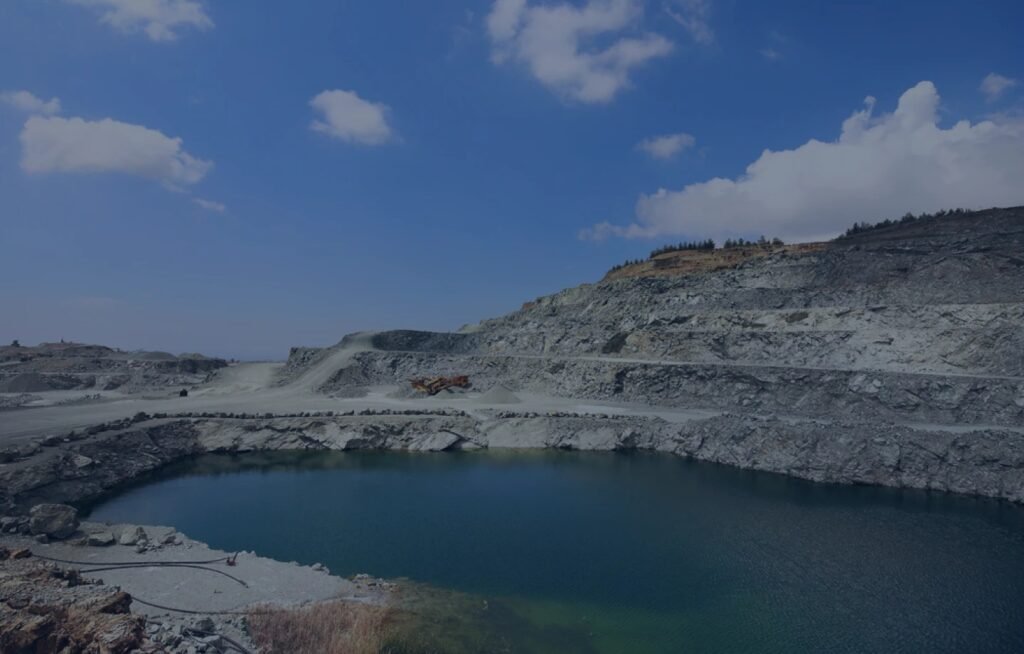
The Mines Service is pushing to expand existing quarry zones to meet the needs of the construction sector, but the plans face objections, environmental concerns and bureaucratic hurdles, including a three-year wait for a decision from the British Bases on Xylofagou.
Cyprus has 38 large quarries, 24 of them producing aggregates for construction projects. Sales have risen steadily by 5 to 7 per cent amid strong building activity.
Androlykou
To meet Paphos’s immediate needs, an application for a small extension to an existing quarry in the Androlykou zone is at the final stage of review. The terms of the only quarry in the zone that still has reserves have also been changed, so that the zone’s two other crushing plants can source rock from it.
The Mines Service’s study on a proposed new quarry zone at Androlykou is expected to go to the Department of Environment within days for its final environmental opinion. The existing zone lies next to the Akamas Peninsula Natura 2000 protected areas.
The study follows an Environmental Authority opinion issued in February 2023, as part of its review of the strategic environmental assessment of the Akamas Local Plan. That opinion required an assessment of whether a new aggregates zone at Androlykou was essential compared with alternative locations, and of the conservation status of the area’s species and habitats in relation to quarrying.
Separately, the Department of Environment is assessing data for the final approval of quarries adjoining the existing zone, following a special ecological assessment report. According to the report, the proposed extension, which lies just outside the zone, would enlarge the quarrying area by about 5.5 per cent and extend activity by two and a half to three years. The authorities estimate it would not add to existing environmental pressures but only prolong them, as local wildlife appears to use the area despite the quarrying.
Other quarry zones
The British Bases have yet to decide on a request the Republic made three years ago to extend the Xylofagou quarry zone. They have cited possible environmental effects. The relevant ministry authorities have backed the extension.
At Pyrga, a small extension is planned next to a National Guard camp, and the Defence Ministry is in consultations with the Mines Service. Stavrovouni Monastery and some local residents have strongly objected. Any licence will depend on ensuring there are no negative effects on the surrounding area.
In Sia, residents are concerned about a possible extension on the southern side of the existing zone. The Mines Service has issued an exploration permit to test the quality of the rock, but made clear this does not commit the Republic, since environmental studies must be examined first. It has also measured vibrations from blasting and adjusted the terms for using explosives to protect nearby homes.
In Parekklisia, residents have raised serious objections to the nuisance caused mainly by lorries carrying quarry materials through the village. The Environment Directorate-General and other relevant services are in contact with the Public Works Department to find an alternative.
Mining
The Skouriotissa mine at Katydata, in Nicosia district, produces copper cathodes of 99.999 per cent purity. However, its copper reserves are exhausted, and cathode production has been boosted by reopening the Apliki mine at Kalopanagiotis, at the Lefka crossing point. Both mines use hydrometallurgical techniques.
Monitoring and planning
The Mines Service has taken on new inspectors and technology to check that operations stay within their limits, crack down on illegal quarrying and inspect explosives stores.
In Pissouri, where landslides have occurred, a network of GNSS stations, inclinometers, piezometers and InSAR satellite measurements monitors the ground. Groundwater management and drainage measures are also in place, along with an early warning system to protect residents.
The Mines Service says its aim is to secure raw materials for construction sustainably, while putting the protection of people, infrastructure and the environment first. It says licensing for mineral resources involves environmental and planning procedures that require several services to work together, and that it is working to speed these up to meet the construction industry’s needs.
Work under way includes geological suitability maps, a basic tool for spatial planning and the safe licensing of developments. It also covers the study and monitoring of geohazards across Cyprus and a revision of the seismic zones based on the latest scientific data.
Studies are being launched for a National Strategy for Critical Raw Materials, in line with the relevant EU regulation. The strategic study on the Sustainable Mining and Quarrying Development of Cyprus 2021-2050 is also being updated to reflect current conditions and environmental requirements. A technical committee has made the use of recycled construction and demolition waste mandatory in construction projects, and the requirement has already been added to Public Works Department tender terms.

