


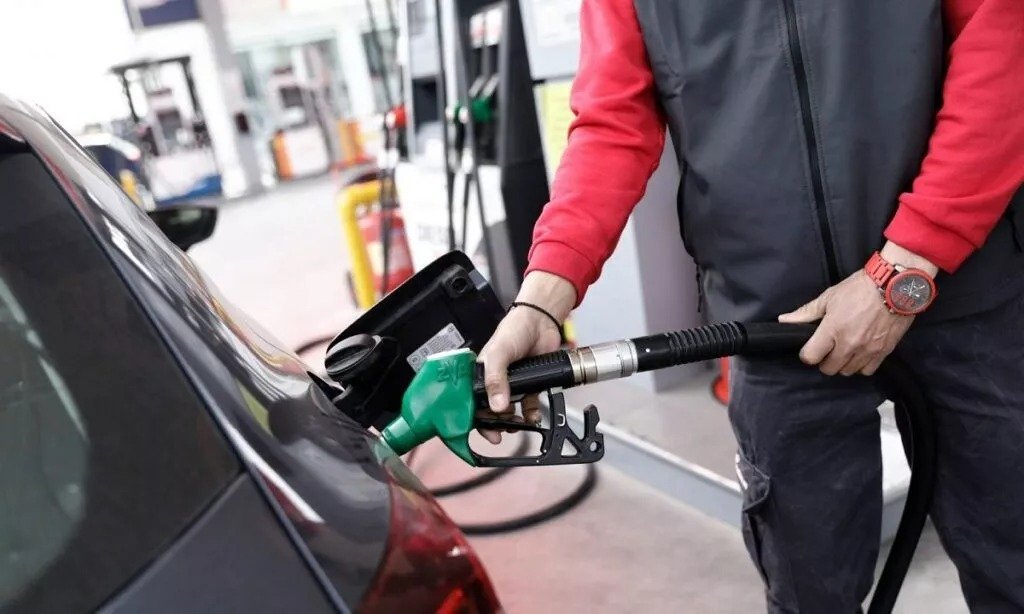
Diesel prices in Cyprus are expected to exceed 2.10 to 2.20 euros per litre within the next one to two months, energy expert Charalambos Ellinas has forecast, warning that high prices for oil products, particularly diesel and jet fuel, could persist until mid-2027.
In comments to the Cyprus News Agency (CNA), Ellinas said the pressure stems from damage to Russian refineries caused by Ukrainian drone attacks, along with a fall of more than 50 per cent in diesel and oil product exports from the Persian Gulf because of the war.
“We should expect problems and be ready to face them for quite some time,” he said, adding that the cut in excise duty should continue into 2027 as well.
New Eurostat figures published on Tuesday lend weight to the warning: diesel prices in Cyprus rose 11.3 per cent and petrol 6.2 per cent in August 2026 compared with July, with both increases outpacing the EU average.
Why falling Brent prices aren’t easing the pressure
According to Ellinas, the fall in Brent crude below 100 dollars a barrel has not resolved the difficulties in sourcing refined products. Supply of aviation fuel is especially tight, he said, noting that in some countries, including the United States, there are even concerns about possible aircraft groundings.
He explained that shortages are pushing prices higher: diesel and jet fuel prices are now more than double the price of Brent crude, and are expected to rise further, since production and supply problems cannot be resolved quickly.
Refineries need months to recover
Ellinas said a major refinery in Moscow was bombed on Monday and went completely offline, with a return to production expected to take months.
In his assessment, this means that even a de-escalation of the war in Ukraine would not immediately restore supply, with the effects likely to continue into next year and keep prices high. He noted, as an example, that Brent crude for delivery in April 2027 is currently priced at around 90 dollars a barrel.
Knock-on effects for transport and food
Higher fuel prices are pushing up the cost of transport and food, creating a chain reaction of pressure across the economy, Ellinas said. The price rises are accompanied by higher inflation and interest rates, he added, while the factors driving the pressure are external and outside Cyprus’s control.
He said there was no easy way out of the problems created by the wars in Iran and Ukraine, repeating his forecast that high prices, particularly for diesel and jet fuel, are likely to last until mid-2027.
Cyprus fuel prices rising faster than the EU average
The Eurostat data show Cyprus recorded the fourth-largest monthly increase in petrol prices among EU member states in August. Only Spain, with 8.2 per cent, Romania, with 6.6 per cent, and Italy, with 6.3 per cent, recorded bigger rises.
On an annual basis, fuel and lubricant prices in Cyprus rose 19.1 per cent, compared with 23.8 per cent across the EU as a whole.
Across the EU, diesel prices rose 8.3 per cent and petrol 3.3 per cent in August compared with July, following monthly rises of 4.3 per cent and 4.7 per cent respectively in July compared with June. Petrol prices rose in 22 member states in August, while two countries saw no change. Small falls were recorded in Hungary, down 0.6 per cent, Denmark, down 0.3 per cent, and Slovakia, down 0.1 per cent.
Diesel prices rose in 26 EU countries. The steepest monthly increases were in Czechia, up 14.3 per cent, Bulgaria, up 13.5 per cent, and Luxembourg, up 12.3 per cent, while the smallest rises were in Italy, up 5.2 per cent, Romania, up 6.1 per cent, and the Netherlands, up 6.2 per cent.
EU annual price rises accelerating
Fuel and lubricant prices for personal transport across the EU were higher in August than in August 2025, an annual rate of increase that accelerated from 13.7 per cent in June and 16.9 per cent in July, according to Eurostat.
Annual price rises were recorded in 26 of the EU’s 27 member states, with August’s increases larger than July’s in 26 countries and larger than June’s in 24.
Annual price rises exceeded 20 per cent in 18 member states. The largest were recorded in Bulgaria, up 34.5 per cent, Lithuania, up 28.8 per cent, Finland, up 27.6 per cent, Germany, up 27.5 per cent, and France, up 27.4 per cent. The smallest annual rises were in Hungary, up 1.3 per cent, Sweden, up 6.1 per cent, and Ireland, up 11.7 per cent.
Read more:

