


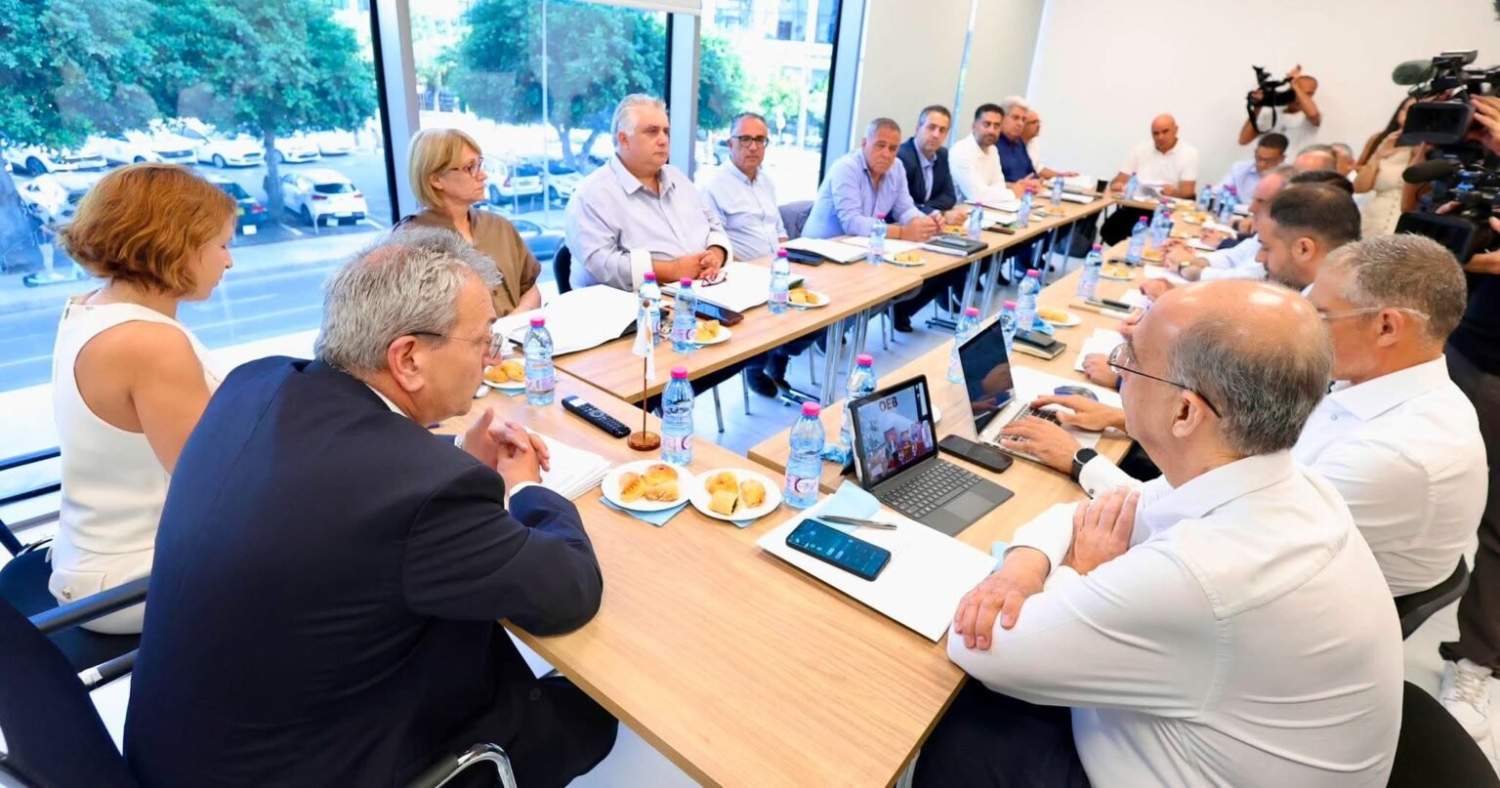
Cyprus’s Labour Minister Marinos Moushouttas said on Monday, after a meeting of the Labour Advisory Body, that discussions on pension reform were nearing the end of their current phase. “We can keep talking for another 10 years if we want,” he said, but made clear the bill covering pillars “0” and “1” would be submitted to parliament by the end of September, with debate expected to start on 13 October.
He said agreement on the second pillar was not a precondition for pillars “0” and “1” to go ahead, and that he expected the social partners to be the first to lay out their own position on the Provident Funds. He also denied reports of a reallocation of resources for the reform, saying one part of the funding would come from the Social Insurance Fund and another from public finances.
Timeline and second pillar
Moushouttas added that on Monday he had also been waiting for submissions from the social partners on the reform’s various subgroups, but they told him the article-by-article discussion of the legislation would need to be completed first. He said this process would continue daily over the next three days, so that anyone who wanted to make submissions could do so at the Labour Advisory Body’s next meeting, on Monday, 28 September.
On the second pillar, Moushouttas said the Technical Committee would meet later that day. He clarified that the legislation for Social Insurance would be separate from the legislation for Provident Funds, and added that actuaries from the International Labour Organization (ILO), as well as an adviser from the Finance Ministry, would soon arrive to help move the process forward.
He said the Labour Ministry was ready to proceed on the second pillar, “provided we first hear the partners’ positions and how they see the issue, not just on the big question of whether it’s mandatory or voluntary, but also on the individual issues concerning the second pillar.” Asked whether the government would push for mandatory provident funds, the Minister did not reveal his position. “Allow us to have our own strategy too,” he said, adding that he would not say publicly what he proposed and was waiting first for the partners’ positions.
He explained the disagreement: “We do not set as a precondition that, for pillars 0 and 1 to proceed, there must at the same time be an agreement on the second pillar. The partners’ position is that there must, at the same time or soon after, also be an agreement on the second pillar, based on which the legislation will be drafted covering, from A to Z, how the provident funds will operate.”
Contribution increase
Asked about the issue raised over a possible increase in contributions and the retirement age, Moushouttas said the government’s reference had been to a potential increase in contributions, if needed, so that neither a cut in pensions nor a rise in the retirement age would be required.
He added that a study on life expectancy is carried out every five years, and that if it shows the retirement age should rise, an increase would then be discussed, but said this was independent of the pension reform.
Cost of the reform
Asked about the cost of the reform if implemented as it stands, citing Finance Ministry tables, the Minister said: “The total additional burden for the state is estimated at 486 million euros over the six years, and for the Social Insurance Fund 334 million euros, so in total around 820 million euros over a six-year period.”
Commenting on social partners’ remarks, after the last meeting, about a reallocation of resources, he said: “If I fix the Social Insurance Fund but damage the economy, you understand the consequence will be that the Social Insurance Fund will also have a problem. We are not talking about reallocation. One part will be financed by the Social Insurance Fund and one part by public finances, without disturbing the balances.”

