


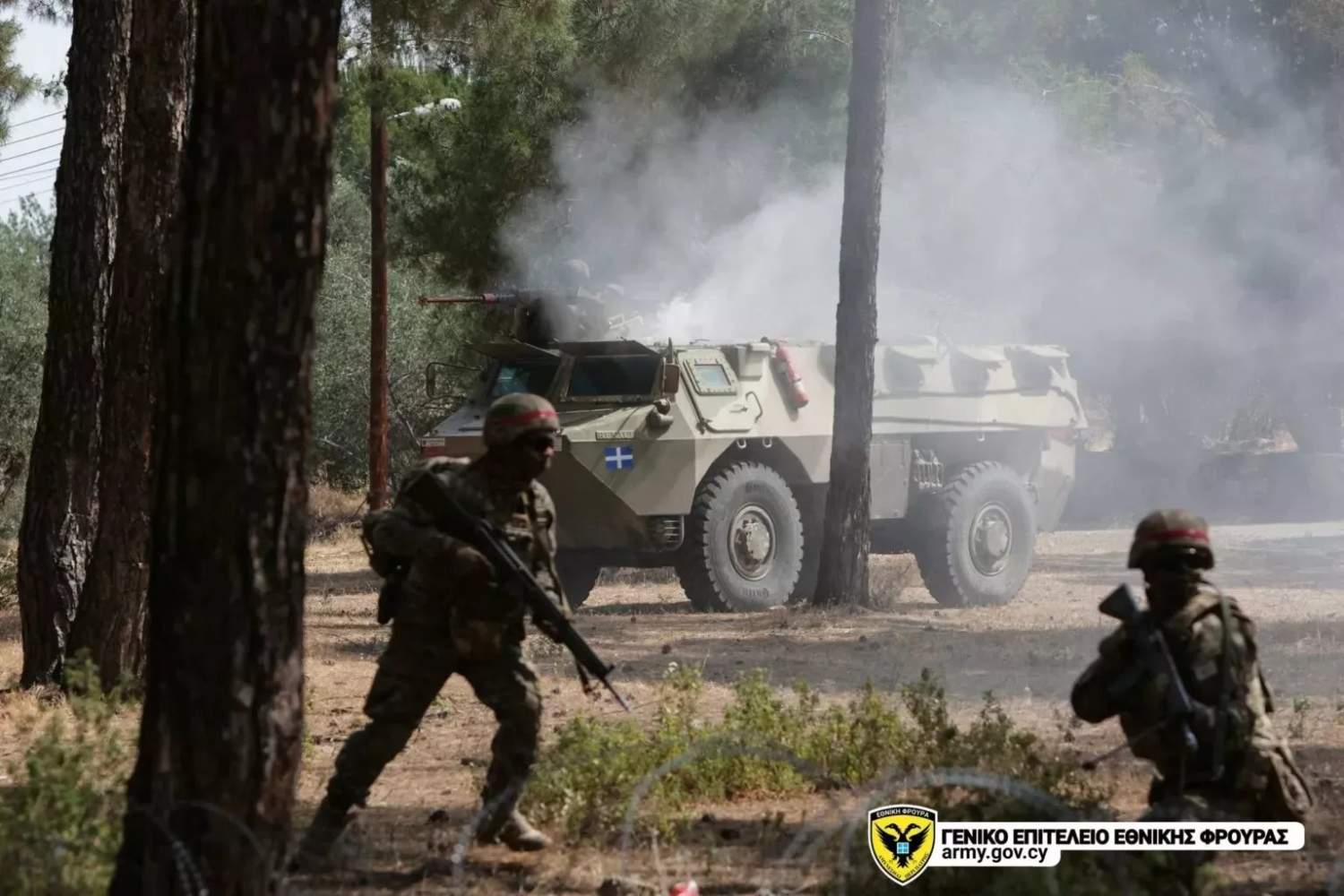
DISY MPs Charalambos Petrides and Giorgos Karoullas have proposed setting annual defence spending at no less than 2% of GDP and introducing a rolling five-year programme for military capabilities and investment.
Their proposed law would make the 2% threshold a national budget-planning target that must be reflected in both the annual state budget and the Medium-Term Fiscal Framework.
It would not automatically authorise spending or bypass existing procedures for approving funds. Defence expenditure would still have to be approved through the annual budget or, where necessary, a supplementary budget.
The Council of Ministers would also have to explain how the 2% target had been incorporated into its annual and medium-term fiscal planning.
A separate Defence Fiscal Planning Annex would accompany the state budget submitted to parliament. It would show projected defence spending as a share of GDP, break down the main areas of expenditure, link spending to approved strategic and operational objectives and provide projections for the following three financial years.
Five-year plan for defence capabilities
The proposal would also require the defence minister, working with the finance minister, to prepare a rolling five-year defence capabilities and investment programme every year and submit it to both the Council of Ministers and parliament.
The plan would cover strategic risks and deterrence needs, weapons procurement, infrastructure and equipment upgrades, annual funding allocations, the sustainability of planned spending and measures concerning reserves and personnel.
Government would have to explain spending below 2%
If the government proposed defence spending below the 2% target in either the annual budget or the medium-term fiscal framework, it would have to submit a separate explanatory report.
The report would have to set out the reasons for the shortfall, its impact on defence capability, how long the deviation was expected to last and a plan to return spending to the target within three financial years, unless exceptional circumstances applied.
The proposal would allow a justified departure from the target in cases including a severe economic downturn, an exceptional fiscal need, a natural disaster, a state of emergency or the activation of national or European escape clauses.
It would also introduce annual reporting requirements. Within three months of the end of each financial year, the defence and finance ministers would submit a joint report to parliament detailing actual defence spending, its share of GDP, any departures from the approved budget and progress on the five-year programme.
The report would be made public, subject to national security requirements and rules governing classified information.
In the explanatory report accompanying the proposal, the sponsors say the legislation is aimed at creating a stable and predictable framework for defence funding, citing national security needs, Cyprus’ international obligations and the need for continuity in defence planning.
They link the proposal to the security situation in Cyprus and the Eastern Mediterranean and argue that defence preparedness should not depend solely on annual budget decisions.
The explanatory report also says the 2% target draws on internationally recognised defence-planning benchmarks, referring to NATO’s corresponding guideline and to European countries that have adopted similar or higher defence spending commitments.

