


Russia has torched 12 million books in Ukraine. Printing houses, publishers and second-hand bookshops have all been hit in targeted strikes. That’s more books than the entire populations of Greece and Cyprus put together.
This year alone, Ukrainian media report, Russia has destroyed a third of every book printed in 2026, plus 1.3 million, or 10 per cent, of those meant for schoolchildren. More than 35 publishing sites hit, in weeks.
But books are only the start. Museums, galleries, film studios, libraries, opera houses, historic monuments: all under fire. At the Kyiv Pechersk Lavra, a vast medieval monastery and one of Ukraine’s great cultural treasures, the golden domes of the Cathedral of the Dormition were struck.
Repairs alone: $11.2 million, two years of work. The same site is home to Ukraine’s Museum of Book and Printing. UNESCO listed the complex as a World Heritage Site back in 1990; in September 2023, it added the Lavra to the list of heritage sites in danger.
Ukraine’s Culture Minister, Tetiana Berezhna, put it starkly: “Russia wants to destroy us as a nation, to wipe us off the map, as though Ukrainians never existed at all. That’s why Russia is going after our cultural heritage, the symbols of our presence here across the centuries.” She added that more than 1,900 heritage monuments and over 2,000 cultural institutions have come under attack.
Erasing a nation’s identity and history while it fights for survival isn’t a Russian invention. This playbook goes back to antiquity. The Romans burned Alexandria. It hasn’t stopped since; it’s just changed uniforms.
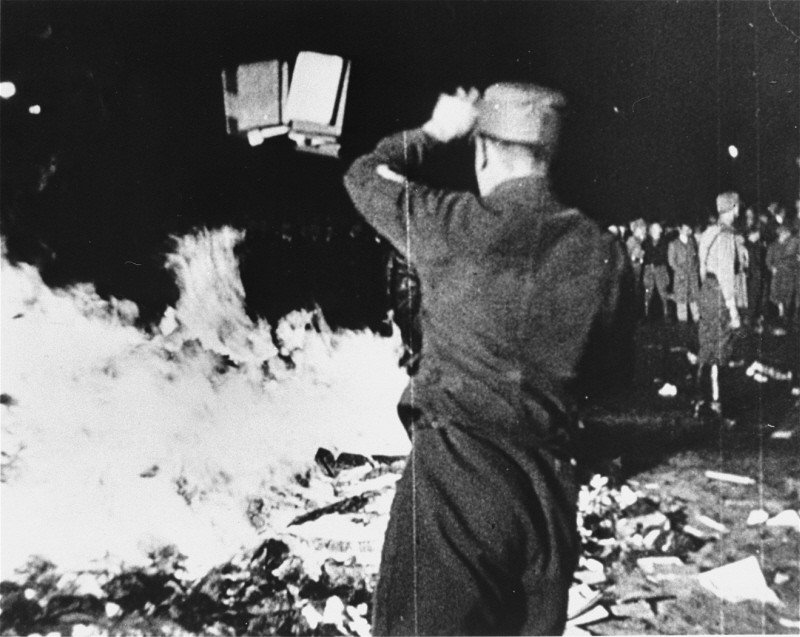
The Nazi student book burnings of 1933 remain infamous, of course. But the destruction didn’t end with a bonfire in a German square. Through the war, the Nazis waged a systematic campaign against libraries, destroying books and manuscripts wholesale, with Jewish heritage the prime target.
Germany’s wartime ally Japan followed the same script. Its troops stormed through China, bombing and burning universities and libraries, wiping out more than a million rare Chinese books along the way.
Armies never seem to grasp it: when a library burns, everyone loses something, as true at Alexandria as anywhere since.
Winners and losers alike. Poorer, all of us, as human beings.

