


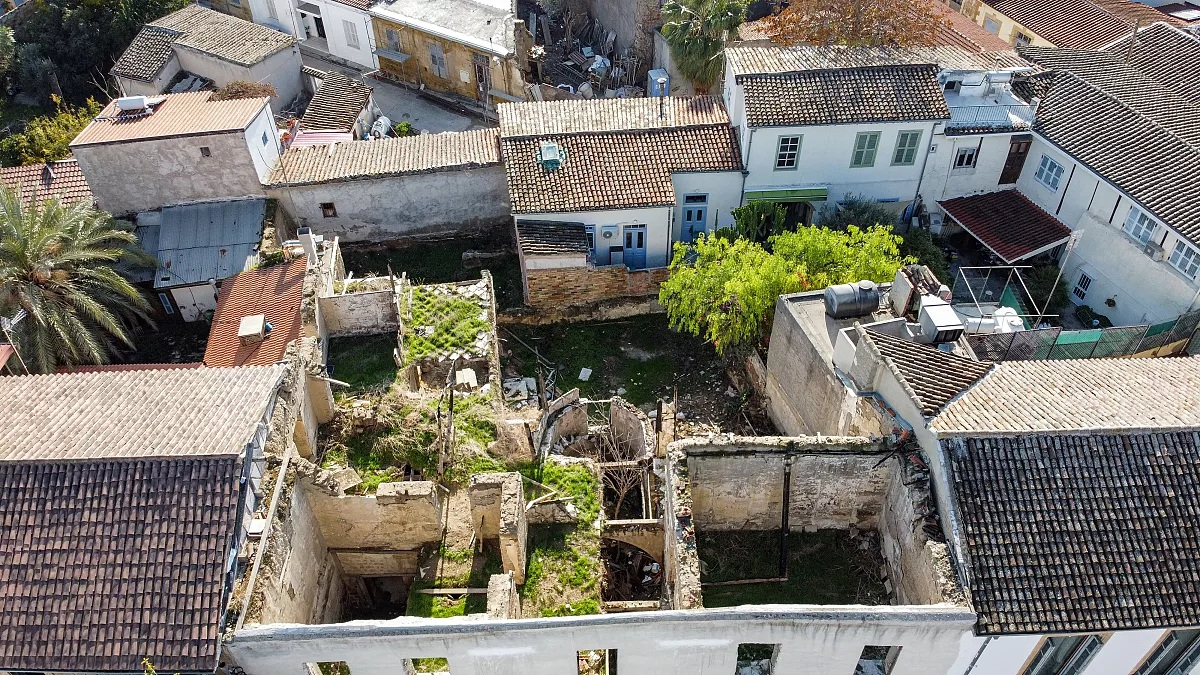
Cyprus has around 30,000 buildings that are effectively uninhabited yet could be repaired and brought back into use to boost housing supply, particularly for those who can only rent rather than buy, according to estimates by the Cyprus Scientific and Technical Chamber (ETEK).
Former parliamentary Environment Committee chairman Charalambos Theopemptou examined how other EU member states tackle vacant and abandoned housing to find out what could be done in Cyprus.
Theopemptou told Phileleftheros he became interested in the issue after moving to Agios Andreas in Nicosia, where he found many abandoned buildings, including old mansions. His research and experience showed that abandoned homes exist across the countryside and throughout Cyprus, at a time when the housing shortage is severe.
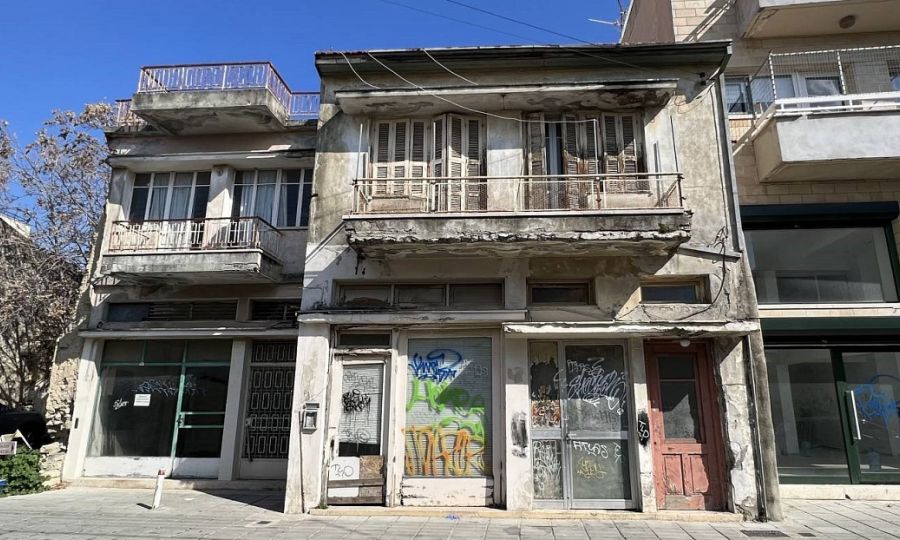
Looking at how other EU countries approach the issue, Theopemptou found the following:
- Ireland offers grants of up to 50,000 euros for renovating vacant properties and up to 70,000 euros for derelict properties
- France applies tax pressure in areas with high housing demand through a special levy on empty homes
- Spain allows municipalities to impose additional property tax on homes left vacant for extended periods, under specific conditions
- Portugal supports building restoration through a dedicated urban renewal and reuse fund.
In Cyprus, the Interior Ministry currently provides up to 40,000 euros towards renovating a three-bedroom residential unit.
Theopemptou proposed a series of low-cost steps. Every municipality and community, working with the Interior Ministry and relevant technical services, should create a registry of vacant, abandoned and dangerous buildings, he said, noting that district local government organisations (DLGOs) have already built a good picture of dangerous buildings specifically. He clarified that vacant, abandoned, dangerous and listed heritage buildings are all distinct categories requiring different treatment.
The registry should categorise buildings by which are dangerous, which can be renovated, which have architectural or historical value, and which are located near schools, bus stops, local centres or areas with demand for affordable housing, Theopemptou said, so that municipalities can act on priorities rather than only in response to complaints.
A second step should combine incentives with obligations, he suggested: owners wishing to bring a building back into use should receive fast technical guidance, simple procedures and targeted financial support. He pointed to Cyprus’s existing “Exoikonomo-Anavathmizo” (“Saving-Upgrading”) energy upgrade schemes for homes and buildings as similar tools that could be adapted to prioritise vacant or abandoned buildings returning to legal use.
Use of buildings for social benefit
Theopemptou noted the clear need for more affordable housing, for student accommodation, and for small shops that would not require a car to reach, as well as spaces for cultural activities and other uses. “Abandoned buildings in city centres and old residential cores can be part of the solution,” he said.
He suggested the state and municipalities could explore long-term leasing, partnerships with owners, social enterprises, or the use of inactive municipal buildings.
Fast permitting, transparency and oversight
Theopemptou also proposed fast-track permitting for small and medium-scale interventions, noting that many buildings do not need drastic or costly works or extensive projects. Instead, what is typically needed is a structural assessment, cleaning, removal of hazardous materials, basic repairs, energy improvements, accessibility upgrades and reconnection to infrastructure, he said.
He noted that the European Commission’s Renovation Wave initiative aims to double the annual rate of energy renovations and renovate 35 million buildings by 2030, and said Cyprus should translate this EU target into simple, fast local projects while also pursuing funding.
He further suggested that local authorities should publish data on the number of abandoned buildings registered, how many were found dangerous, how many were cleaned, renovated, returned to use, or used for social purposes, adding that this transparency would also help municipalities secure funding.
A proper policy for managing abandoned buildings would benefit many people for years to come and make neighbourhoods more liveable, improving quality of life, Theopemptou said.

