


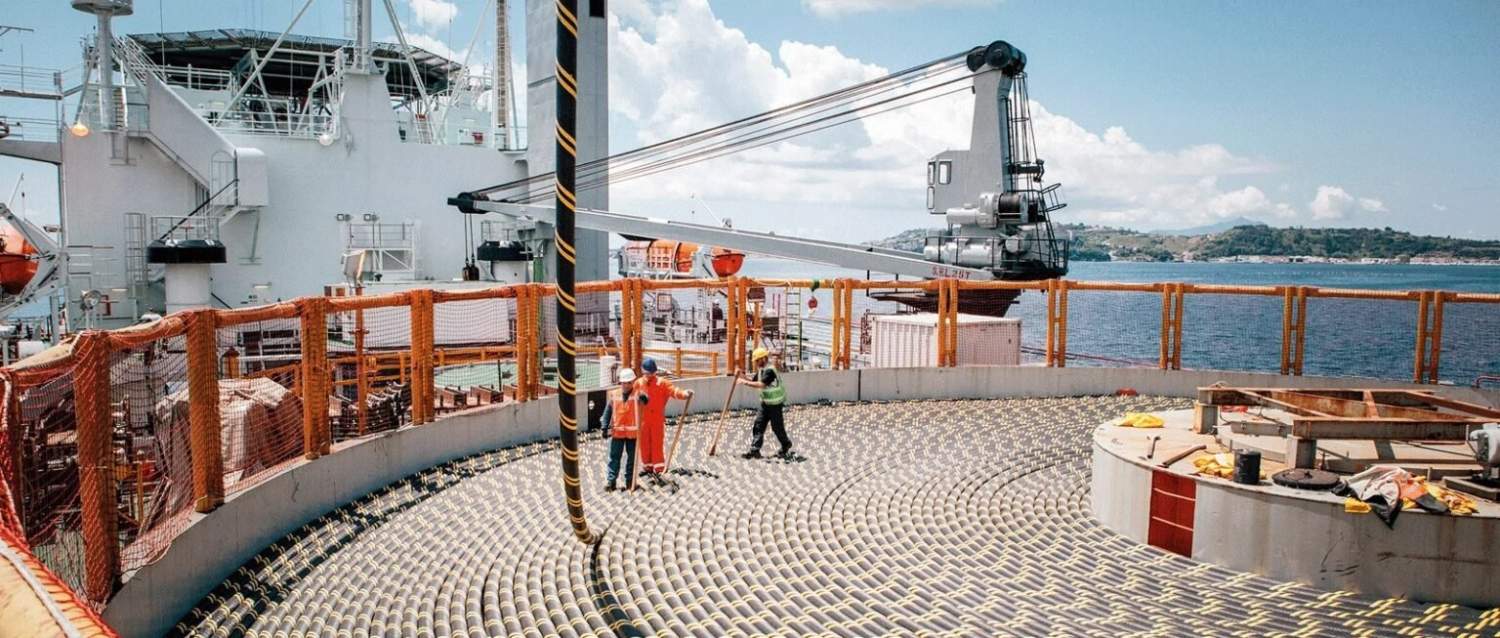
German newspaper Handelsblatt says the Great Sea Interconnector, the planned Greece–Cyprus–Israel power cable, is gaining new momentum, describing it as one of the most ambitious energy projects in Europe.
The paper’s report refers to Greece’s grid operator, IPTO, submitting an investment request for the cable’s second section, between Cyprus and Israel, following the landmark agreement for French company Meridiam to take a 66% stake in the project. According to Handelsblatt, the project has faced years of delays, funding problems and geopolitical tensions, but is now gaining fresh momentum.
Handelsblatt notes that Meridiam’s involvement does more than improve the project’s prospects for sustainable financing. According to the paper, the majority stake also gives the project greater political weight, because the first section of the cable, between Greece and Cyprus, passes through a maritime area that Turkey considers to be its economic zone, in violation of the UN Convention on the Law of the Sea.
The report also highlights the involvement of French company Nexans, noting that the project’s supporters expect the participation of two major French firms to help eliminate Turkish objections.
At the same time, Handelsblatt points to challenges facing the project’s implementation, including doubts expressed by Nicosia over the project’s economic viability, as well as the complexity of carrying out the project across two areas it describes as problematic: the Greece–Cyprus and Cyprus–Israel sections.
(Information from energypress.gr)

