


2028 is not far away. And it is an election year.
The government was entitled to make something of yesterday’s Council of Ministers decision approving the Development and Production Plan for the Kronos field by the ENI-TotalEnergies consortium. It is, genuinely, a significant milestone on the road ahead.
But there must be a road ahead. And crucially, the consortium must take the Final Investment Decision. Without it, nothing moves, and the day Cyprus becomes a gas producer remains a distant prospect.
The Development and Production Plan for the Aphrodite field was approved back in 2019. Seven years on, that first discovery — found in 2011 in Cyprus’s Exclusive Economic Zone — is at a less advanced stage of actual development than Kronos, which was only discovered in 2022. That fact alone says a great deal.
The Aphrodite saga lays bare the unknown and unpredictable factors that can upend the best-laid plans of governments and companies alike. Recall that the new operator of Aphrodite demanded modifications to the original Development Plan after signing on the dotted line, causing serious delay. The original plan was revised. And now we are in a waiting phase all over again.
Search for recent statements by government officials online and you will find published projections of gas sales from the ENI-TotalEnergies consortium and the Kronos field beginning by late 2027, and all outstanding matters between the state and the companies wrapped up by the end of March 2026. Yesterday — May 19, 2026 — one very significant outstanding matter was indeed resolved: the Council of Ministers approved the Development Plan for Kronos. But it is not the last.
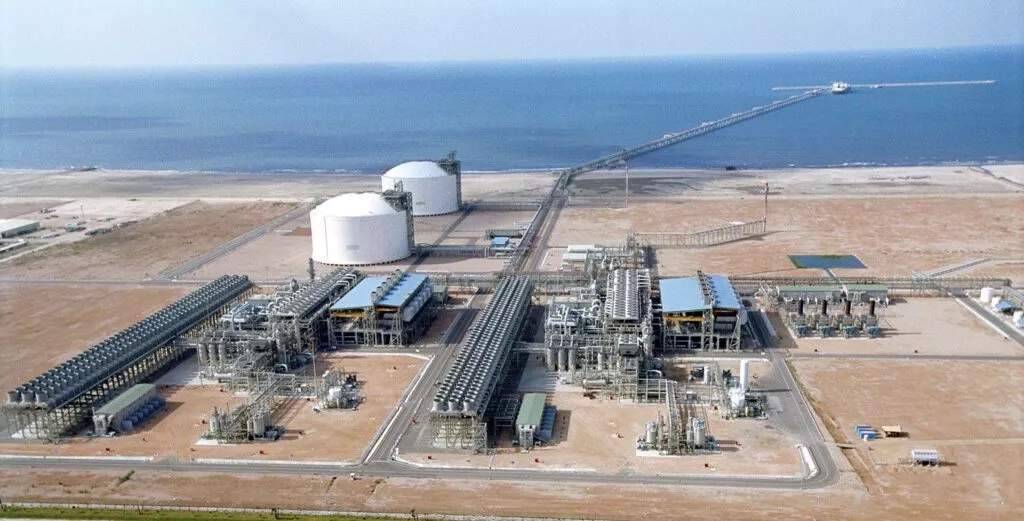
The ball is now back in ENI-TotalEnergies’s court. The speed with which they move to take the Final Investment Decision, on the basis of what has been agreed with the governments of Cyprus and Egypt, will determine when construction of the infrastructure for extracting and transporting the gas to the Damietta liquefaction terminal begins and ends — with the Zohr field infrastructure, also managed by ENI, serving as an intermediate staging post.
We are not disputing for a moment that planning for the development of Kronos has matured considerably over the past two years, and that the conditions for the project to move forward are genuinely promising — promising enough that Cyprus could realistically see its first LNG produced and sold within 2028.
Nor are we disputing that hard negotiations between all three parties preceded yesterday’s announcement, to the point where the most substantive parameters — technical, financial, and political — have been discussed and agreed. Some of them at the cost of significant concessions by both the Cypriot and Egyptian sides on commercial and economic terms. Yes, a great deal of ground has clearly been covered on the way to the ultimate objective.
But the Final Investment Decision is still outstanding. As is its implementation. And that decision typically involves not only technical questions about infrastructure development and its costs, but also pricing questions — sellers, buyers, available volumes, demand, prices per million BTU, and so on. We are also living through, this very quarter, a geopolitical crisis on our doorstep — and very close to the infrastructure under development — that has triggered a fresh energy crisis and sent costs soaring, for fossil fuels and for the risks that companies, traders, shippers, and suppliers factor into their calculations.
This is, in short, a period that does not obviously lend itself to easy or swift decisions.
We do, however, note Energy Minister Michalis Damianos’s statement yesterday that decisions and announcements from the Kronos consortium are expected very shortly. He presumably has some information to go on. This column chooses to be cautiously optimistic.
That said, it would be remiss not to flag the possibility of slippage from the current plans and projections — and with it, the risk that yesterday’s promise of Cypriot gas sales beginning within 2028 could be broken in the middle of the presidential election campaign. It would not be the first time.
For a fair-minded observer, five or six months either way would not, of course, be the end of the world. True enough. But how fair-minded, politically speaking, will Christodoulides’s rivals be in 2028? Especially if the delay turns out to be considerably longer than that.

