


Cyprus is in with an outside chance of winning the Eurovision Song Contest 2026, ranking 16th most likely out of 30 countries according to Eurovision World. It remains a long shot, but Antigoni’s entry, Jalla, has raised an intriguing question: what would happen if Cyprus finally won the contest?
What are the non-monetary benefits?
Cyprus infamously holds the record for the most Eurovision entries without having ever won the competition. It has entered over 40 times and only ever come 2nd once, in 2018.

Right now, Cypriot music is mainly enjoyed by the locals and is yet to gain much recognition from other regions. A victory would give Cyprus’s music scene its biggest international platform to date, especially as it is a pop song with strong Cypriot influences.
Crucially, it would give Cyprus a rare moment of sustained international attention, allowing the country to project a modern cultural identity beyond its usual associations as a tourist destination.
What about financial benefits?
There is potential for major monetary benefits. A study by the University of Tennessee revealed that winning and hosting Eurovision increases tourism receipts by 8% over three years, as reported by Oxford Economics. When Liverpool hosted in 2023, it saw the highest volume of hotel rooms sold in a month since 2018, while accommodation prices were also hiked due to extremely high demand.
There is always huge demand for Eurovision, and many people will visit the city during the week of the contest whether they have a ticket or not. If Cyprus was to host the competition, it would arguably be the biggest event hosted on the island in its history. It would certainly be the first time it hosted an international event of this scale.
Where would it be?
This is a rather interesting discussion and potential logistical problem.
Major concerts are usually held at Nicosia’s GSP, however, a roof would need to be built if it was to be held at the stadium, as Eurovision has never been held outdoors. This is for technical reasons as it has to be broadcasted on TV.
The largest indoor venue on the island is Limassol’s Spyros Kyprianou Athletic Center, which, following extensive renovations in 2024–2025, has a capacity of 8,000 spectators. The rock band The Scorpions performed there in 2019.
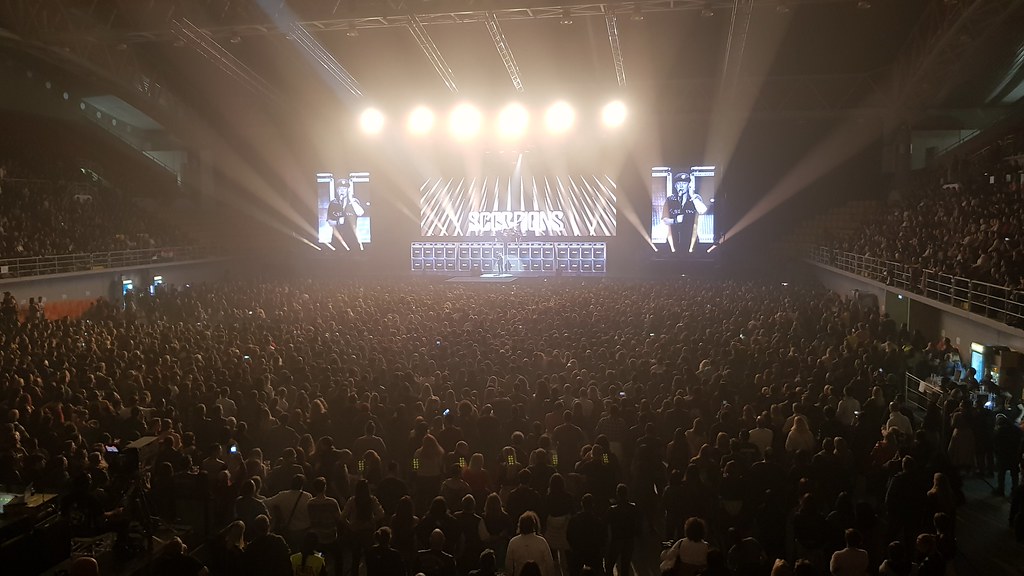
However, Eurovision finals usually require a venue with a capacity of at least around 10,000 spectators, alongside extensive backstage, press, delegation and production facilities. On that basis, Spyros Kyprianou may not be large enough in its current form.
GSP may actually be considered too large, so Tsirio Stadium would also be potentially used, however, it would also need a roof installed, which would come at great expense.
Are there potential drawbacks?
There are certainly great economic benefits that come with winning and then hosting Eurovision, but it’s not cheap to put the show on either. Oxford Economics says that it can cost in the region of €20-30 million to host the event, while funding relies on “a combination of cash from the host city, broadcasters, sponsor ticket sales, and government funds”.
For Cyprus, additional investment would almost certainly be required to ensure that any venue met Eurovision’s capacity, technical, broadcast and safety requirements.
That said, the scale of the cost would not necessarily make hosting impossible. The recently built Alphamega Stadium in Limassol cost approximately €31.3 million, showing that Cyprus has previously delivered major sporting infrastructure at a comparable level of expenditure. However, Eurovision would be a different type of challenge, involving short-term operational spending, international broadcasting demands and intense pressure on accommodation, transport and public services.
Nevertheless, the chances of Cyprus winning are extremely slim. Being ranked 12th favourite out of 35 may sound positive, but the nation has still only been given a 1% chance of winning. You can look at the likes of Conchita Wurst, who in April 2014, was ranked 14th in the odds, but by the night of the final, was considered a top-five contender and one of the main favorites to win (which she did).
Antigoni will perform in the second semi-final on Thursday, 14 May, hoping to secure a place in Saturday’s grand final.
Read more:

