


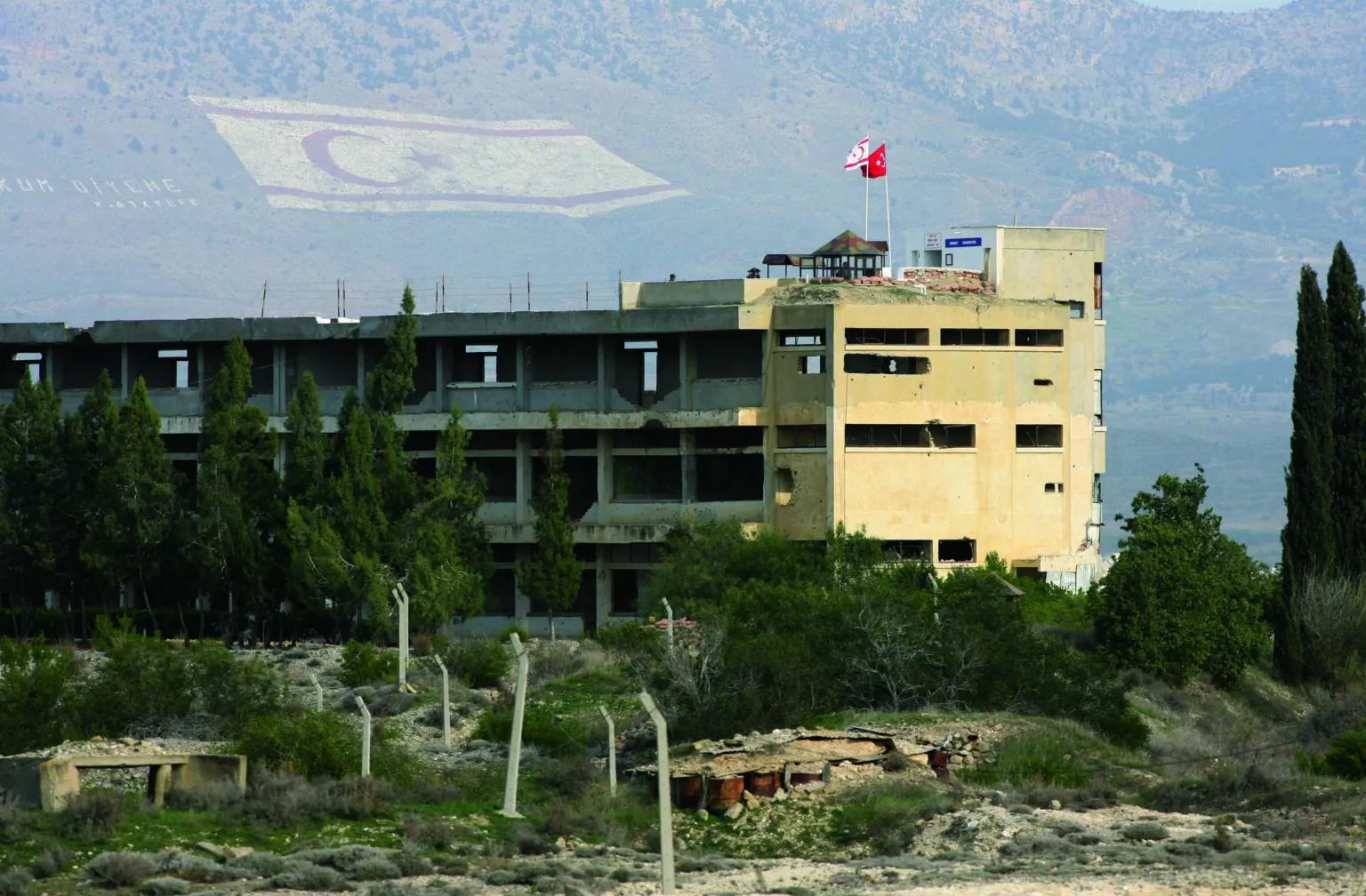
Recent movements by occupying forces in the buffer zone are part of a systematic plan to expand occupied territory, according to reports.
These actions, described as methodical and deliberate, aim to finalise borders in line with the strategic goal of a two-state solution. Defence Minister Vassilis Palmas identified the violations in Pyla as the most serious phase of this ongoing effort.
Sources indicate that occupying army officials have told United Nations Peacekeeping Force (UNFICYP) officers that disputed areas within the buffer zone are “TRNC” territory. This claim is reportedly being pushed to establish a new status quo and maintain a climate of tension.
Sovereignty claims and military advancement
The occupying side has refused to discuss operational rules within the buffer zone with UNFICYP, denying the Peacekeeping Force’s jurisdiction. They maintain that the zone is their own territory and that any movement within it should require their permission.
Activity near Nicosia airport further illustrates these intentions. The recent arrest of a Greek Cypriot picking wild asparagus in the area was intended to signal that the occupying army controls the zone. Military positions are also being advanced in this sector.
Buffer zone incursions and farming disputes
Regular incursions are also occurring between Avlona and Denia. Under military protection, settlers and Turkish Cypriots are being sent to cultivate land belonging to Greek Cypriots.
While Greek Cypriot farmers traditionally access this land with UNFICYP permits, the occupying army has begun intercepting them, claiming sole authority to grant farming rights. Reports indicate that armed soldiers have recently appeared within the buffer zone in these areas.
This strategy is not new but has become more systematic. In 2021, similar moves were recorded between Athienou and Mammari, where the occupying forces reportedly drafted maps detailing plans to partition the buffer zone and displace UN authority.
Links to the Cyprus problem
The territorial pressure is directly linked to the “two-state” political narrative. The occupying side claims that certain areas designated as buffer zone in 1974 actually belong to them, despite not being captured during the invasion.
Furthermore, they argue these areas should be treated as “intermediate zones” to be divided during future territorial negotiations. This would allow them to claim more land than what was seized in 1974.
The occupying army is also pressuring UNFICYP to sign a separate Status of Forces Agreement (SOFA) with the illegal regime. Since this is legally impossible, sources suggest they are now pushing for “operational arrangements” to bypass international recognition hurdles.
UN and Government response
UN Assistant Secretary-General Kassim Diagne initially attributed the movements to disputes over foot-and-mouth disease management. However, following strong representations from Nicosia, he shifted his approach. UNFICYP has since taken a more deterrent role, particularly in Pyla.
The Republic of Cyprus is responding at political and diplomatic levels through the UN and EU. Nicosia has reportedly prepared measures intended to impose a cost on the occupation regime.
Impact on peace efforts
The surge in violations complicates UN Secretary-General Antonio Guterres’s goal of leaving a framework for negotiations as his legacy.
UN Personal Envoy Maria Angela Holguin recently met with Guterres in New York to evaluate the situation. Plans are currently focused on convening an informal five-party meeting in September, likely on the sidelines of the UN General Assembly. Holguin is expected to return to Cyprus in July.
While discussions remain focused on Confidence Building Measures (CBMs), the ongoing violations make progress difficult. Nicosia maintains that it is impossible to discuss opening new crossing points while the occupying forces continue to create new facts on the ground.

