


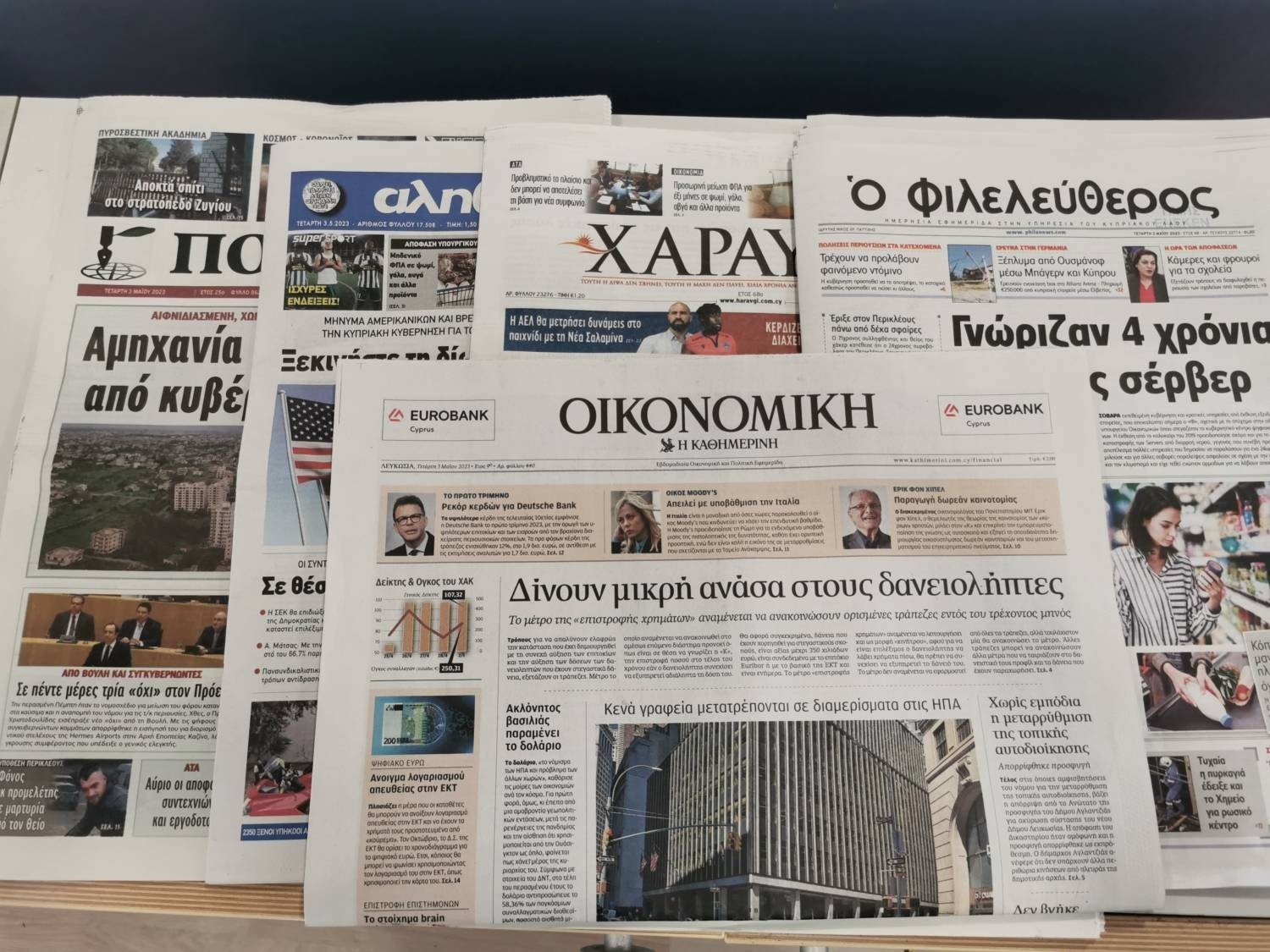
Cyprus has fallen three more places in the 2026 World Press Freedom Index, ranking 80th out of 180 countries, as concerns grow over legal and administrative attempts to constrain journalism in the country, CIReN reported.
According to the index published by Reporters Without Borders (RSF), Cyprus remains the second-lowest ranked EU member state for press freedom, ahead only of Greece, which sits at 86th. Cyprus now holds a total score of 56.9 out of 100, just above the world average of 54.
The country also recorded the steepest drop in political score within the Europe-Balkans zone, which covers 40 countries, this year. Cyprus additionally holds the worst legal score in Europe, a measure that reflects journalists’ freedom from censorship and judicial sanctions, as well as their ability to access information and protect sources.
“Cyprus continues in the decline that started in 2022 and accelerated in 2024,” RSF Prague Bureau Director Pavol Szalai told CIReN. The country ranked 26th in the 2021 index before falling to 65th in 2022 and 77th last year.
Szalai cited several specific concerns. The government drafted legislation last year that would give the president-appointed prosecutor or the head of the intelligence service authority to lift journalists’ right to source confidentiality. “Confidentiality of journalistic sources is a cornerstone of press freedom,” he said. “This would be very dangerous.”
A draft law criminalising the dissemination of so-called fake news is also still causing concern, as is what Szalai described as a growing trend of government and state officials refusing to take questions from the press.
He also pointed to a dispute over press accreditation during the Cyprus Presidency of the EU Council, with the Presidency Secretariat requiring Cypriot journalists to present press cards issued by the Republic’s Press and Information Office while refusing to accept cards from the Cyprus Union of Journalists. These developments were “clearly undermining the right of journalists to access public information,” Szalai said.
Szalai also criticised the government’s handling of corruption allegations made by investigative journalist Makarios Drousiotis, noting that authorities had failed to investigate allegations of state surveillance and hacking of his devices and files. “All these problems actually have to be seen in the general context of press freedom in Cyprus,” he said. “It is a very small market with a lot of media ownership concentration. Media funding and ownership are not transparent. The public broadcaster does not have guarantees of independence. Overall this is an environment which is very constrained for free journalism.”
RSF’s updated country profile reiterated longstanding concerns including government, business and church influence over media, direct interference in editorial decisions, growing media concentration and a lack of transparency in media ownership.
Occupied Cyprus
The occupied north of Cyprus ranked 82nd in the 2026 index, two places below the Republic. Although this technically represents a rise of nine places from last year, RSF’s five indicators increased by only 1.7 points to a total score of 56.6.
Szalai cautioned against reading the improvement as meaningful progress. “From the change of score, which is not significant, we can see that this is mostly thanks to the fall of other countries,” he said. “Northern Cyprus remains sixth from the bottom in the EU-Balkans zone.”
The modest score increase was partly attributed to a Turkish Cypriot court dismissing a libel case brought by then-Turkish Cypriot leader Ersin Tatar against daily newspaper Yeniduzen, its then-editor Cenk Mutluyakali, and journalist Serhat Incirli. Szalai described the case as a SLAPP — a Strategic Lawsuit Against Public Participation intended to silence critical speech — and welcomed the dismissal as good news for press freedom.
He expressed particular concern over the ongoing case against Turkish Cypriot journalist Ali Kişmir, who faces a ten-year prison sentence for allegedly insulting and defaming security forces in an article criticising Turkish interference in elections. Szalai said Kişmir was “unjustly prosecuted” and that a constitutional court decision was still pending.
RSF’s updated analysis cited Turkey’s increasing pressure on media and growing concentration of ownership among businessmen as key factors undermining press freedom in the north, alongside threats, lawsuits and criminal proceedings against journalists who criticise Turkish or Turkish Cypriot authorities.

