


Foot-and-mouth disease has broken through protective measures to infect two Larnaca farms breeding rare native animals, forcing authorities to consider whether EU law can spare the animals from mandatory culling.
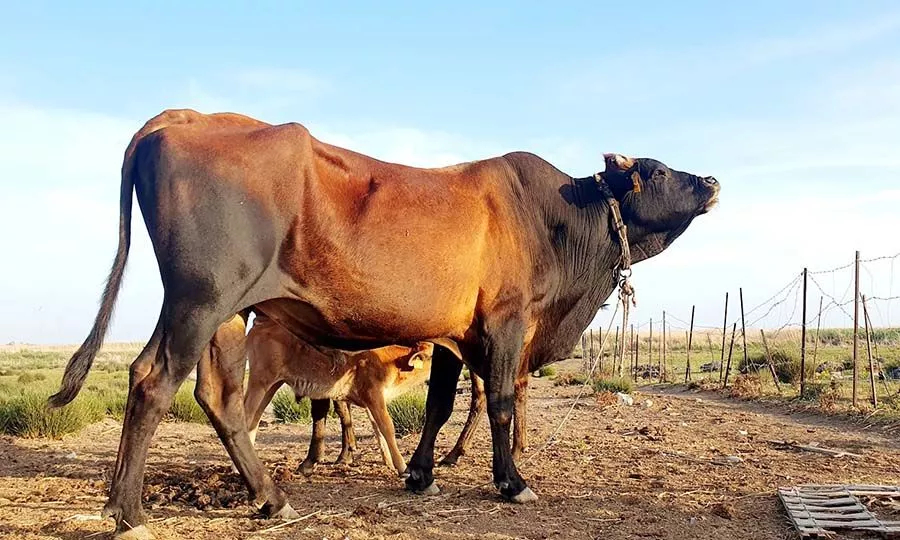
The affected farms house red cattle (Bos indicus) and Cyprus fat-tailed sheep, two of the island’s rarest native breeds. Veterinary Services are examining whether to invoke EU Delegated Regulation 2020/687, which allows exemptions from culling requirements for animals belonging to officially registered rare breeds or those of high genetic and cultural value.
Any decision will require strict documentation of the animals’ purity in cooperation with the Department of Agriculture, weighed against the epidemiological risk of keeping them alive.
A breed on the edge
The Cyprus fat-tailed sheep’s situation is particularly precarious. The breed numbers just 1,185 animals across 19 farms island-wide, representing only 0.44% of Cyprus’s total sheep population.
Paphos district holds the largest share with 736 animals, followed by Limassol with 272, Nicosia with 74, Larnaca with 56, Pitsilia with 38, and Famagusta with nine.
The red cattle population is equally vulnerable. The 2025 census recorded 1,243 animals across 65 farms island-wide, a 4.68% decline on the previous year. Of these, 671 are cows. Only 56 farms are considered pure native breed units.
Limassol holds the largest concentration with 262 cows from a total of 455 animals, followed by Paphos with 245 cows from 473, Larnaca with 123 cows from 232, Nicosia with 34 cows from 70, and Famagusta with seven cows from 13.
The native cattle are distinguished by a characteristic hump and black tail tuft. Lowland types from the Mesaoria plain tend towards a reddish-blonde colouring, while mountain types from Paphos are smaller-bodied with darker shades.
Broader outbreak
The two Larnaca farms are part of a wider outbreak that has now reached 104 infected units across Cyprus: 13 cattle farms (nine in Larnaca, four in Nicosia), 88 sheep and goat farms (63 in Larnaca, 25 in Nicosia), and three pig farms in western Nicosia.
Infected and culled or pending-culling animals account for 8.1% of the total adult sheep and goat population, 2.8% of cattle, and around 7% of pigs.
A blanket vaccination programme covering all cattle in Cyprus, not only native breeds, is under way to halt the virus’s spread. Sampling across all units in infected areas is continuing, with the Geri and Dali areas completed and western Nicosia and Larnaca due to finish by the end of April.
Farmers who keep native fat-tailed sheep and native cattle classified as endangered receive special financial support through European programmes.
Read more:

