


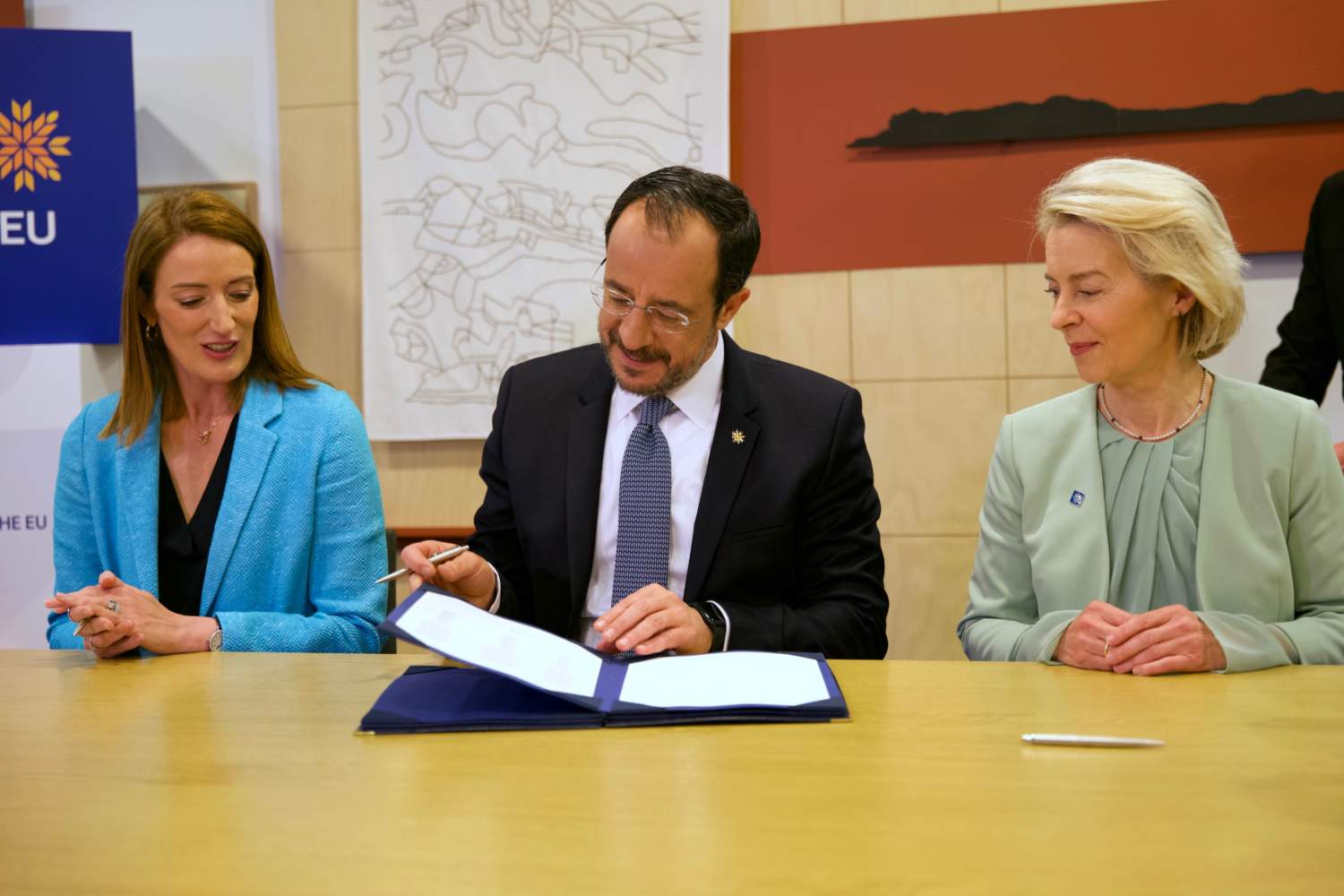
The European Parliament, the Council of the European Union and the European Commission signed a joint roadmap in Nicosia on Friday, committing to deliver the “One Europe, One Market” vision set out by the European Council in March 2026, with decisive progress required within 2026 and full implementation by the end of 2027 at the latest.
What are the five pillars?
The roadmap is organised around five strategic pillars:
Simplification of rules — reducing regulatory complexity across the single market.
A more integrated Single Market — including the removal of the ten most harmful barriers to cross-border activity.
Stronger trade relations — promoting EU trade partnerships externally.
Lower energy prices and decarbonisation — reducing energy costs for businesses and citizens while advancing the green transition.
Digital transformation and artificial intelligence — accelerating the EU’s digital economy.
What has each institution committed to?
The Commission has committed to proposing the legislative and policy initiatives listed in the roadmap’s annex.
The European Parliament and the Council have committed to working towards swift agreement on all legislative proposals in the annex, treating them as political priorities within the annual interinstitutional legislative planning cycle.
The Commission and member states have committed to stepping up the enforcement of existing legislation to ensure the roadmap’s commitments are fully delivered and produce clear results.
How will progress be monitored?
The three institutions will meet quarterly to review progress, identify obstacles, coordinate actions, update and supplement the annex where needed, and examine what is required to integrate the social dimension of the Single Market into the initiative.
What is the political commitment?
All three institutions have agreed to give the roadmap initiatives the highest political priority, within a framework that respects the legislative process and the principles of each institution.
Read more:

