



By Guru Rajesh Ananda
Adapted and Edited by Constandinos Tsindas
Editor’s Foreword
Sleep. Drama. Tossing and turning, waking up exhausted, making an effort to be that elusive early bird catching a distant worm through the day and rushing after the energy needed to respond to the daily demands, rising to the tasks, being creative enough.
The almost constant suffering of most people like myself, working stressful shift hours but also everyone who has precious little time to breathe, the private sector toilers of nine to seven who are being called upon to raise productivity but also be present in the challenges of their own families and the daily lives of their offspring, as they grow in financially and socially decaying times and rising dangers.
So yes, the importance of a good, healthy sleep as part of maintaining mental and improving mental strength, is more topical than ever.
I am saying that more as a Cypriot than anything else. In previous decades, talking about mental health in connection to anything we face, had been a social stigma.
Going to a therapist or seeking alternative ways of facing a stressful life, (meditation was actually an outwardly no no) professionally or otherwise, was considered a weakness, a sign of imbalance or a source of advice by the rest of your social circle, the question posed being ‘Are you kind of crazy or what?’
Over the past few decades, the understanding of how mental health impacts every part of our lives and physical being has forced-in a sense-Cypriots to look more inwardly and consider these aspects much more seriously in order to improve their physical and psychological existence and be able to achieve awareness and confidence that can help them face with social realities.
So yes, any idea that means to push the brain to calm waters, allowing the individual to remain in a state of vitality would change life for the better, making an individual an active personality, not just a bewildered passive recipient dragged along by the unyielding current. Our flow must be our own.
The mind ages before the body, that is a fact as far as experience commands. And science follows. If Cyprus could consider meditation techniques as public health allies-in a coherent, organised and knowledge-based fashion-a lot could change.
Meditation, Sleep, and the Ageing Brain
In recent years, science has begun to uncover something that spiritual traditions have long understood: the mind, when properly trained, has a profound influence on the body, not only on how we feel, but also on how we age.
A new study, published in the journal Mindfulness, has added a fascinating dimension to this understanding. It suggests that people who practise advanced meditation techniques may have brains that are biologically younger than their chronological age by nearly six years.
This is not philosophy. This is measurable science.
And for us here in Cyprus, where stress, uncertainty, and the pressures of modern life are increasingly felt, this research offers not only insight but hope.
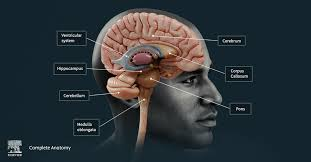
Understanding Brain Age and Why It Matters
Biological brain age is derived from measurable neurological markers, particularly during sleep, where the brain’s electrical patterns reveal how efficiently it is functioning.
Scientists compare these patterns, such as slow-wave activity and sleep spindles, against large population datasets. When these markers decline, it indicates reduced neural efficiency, impaired memory consolidation, and increased vulnerability to neurodegenerative conditions.
Therefore, a “younger” brain is not metaphorical; it reflects objectively stronger neural coordination, resilience, and repair processes.
What the Research Found
In this recent study, neuroscientists, including Jayme C. Banks from Massachusetts General Hospital, examined a group of long-term meditation practitioners.
The study used electroencephalography (EEG), a well-established method for capturing real-time neural oscillations. By comparing meditators with matched control groups, researchers ensured that variables such as age, education, and health status did not distort the findings.
The consistent finding of a brain age nearly 6 years younger indicates a statistically significant deviation from normal ageing patterns, suggesting that meditators maintain more youthful neural dynamics during sleep.
Quality Over Quantity: A New Understanding of Sleep
Sleep research has increasingly shown that restorative value is tied more to sleep architecture than duration. The meditators’ brains demonstrated heightened organisation during lighter sleep stages, particularly through bursts of high-frequency activity linked to synaptic consolidation.
This implies that their brains achieve restorative outcomes more efficiently, reducing the need for prolonged sleep cycles. In neurological terms, this reflects improved homeostatic regulation and synaptic optimisation—key indicators of brain health.

The Role of Breath, Mind, and the Nervous System
Controlled breathing directly influences the autonomic nervous system via vagal pathways. Slow, rhythmic breathing reduces activity in the locus coeruleus, a brainstem region that releases norepinephrine, which is associated with arousal and stress.
By modulating this system, meditation stabilises neural excitability and promotes conditions conducive to restorative sleep. This mechanism provides a plausible biological bridge between meditative practices and the improved sleep patterns observed in the study.
What This Means for Emotional Health
The emotional improvements reported in the study align with well-documented effects of meditation on the limbic system, particularly the amygdala and hippocampus.
Reduced perceived stress and increased social connectedness suggest enhanced emotional regulation and decreased threat reactivity.
These changes are often observed even in short-term interventions, as the brain rapidly adapts to reduced cognitive load and increased present-moment awareness. This explains why emotional benefits can appear quickly, even before structural brain changes occur.
A Cyprus Perspective: Why This Matters Now
Public health data across Europe indicate rising levels of stress-related conditions, and Cyprus reflects similar trends driven by economic pressures, social change, and lifestyle demands.
Chronic stress disrupts sleep architecture and accelerates biological ageing through hormonal pathways, particularly elevated cortisol levels.
Integrating mental fitness practices, such as meditation, offers a preventive approach, targeting the root neurological and physiological mechanisms rather than only addressing symptoms after they arise.
Our Experience in FISU Meditation
Within FISU Meditation, long-term observational patterns support these findings. Participants who engage consistently with individually prescribed techniques demonstrate sustained improvements in behavioural regulation, sleep quality, and cognitive clarity.
While not a controlled clinical study, the consistency of these outcomes across diverse populations over decades provides strong experiential validation, aligning with emerging scientific literature on meditation’s long-term neurological benefits.
Meditation and the “Younger Brain”
From a neuroscientific standpoint, meditation may support neuroplasticity—the brain’s ability to reorganise and maintain efficient neural pathways.
Functional imaging studies have shown increased activity and connectivity in regions associated with attention and emotional regulation, alongside reduced activity in stress-related circuits.
These adaptations likely contribute to the “younger” brain patterns observed during sleep, as the brain retains higher levels of synchronisation and functional coherence over time.

Important Scientific Considerations
It is essential to interpret these findings within a rigorous scientific framework. The absence of baseline data means causality cannot be definitively established.
Additionally, factors such as lifestyle, education, and pre-existing health behaviours may contribute to the observed outcomes.
The use of matched control groups and objective EEG measurements strengthens the validity of the findings. Future longitudinal studies will be critical in determining the extent to which meditation directly influences brain ageing.
A Call for a New Approach to Health in Cyprus
Modern healthcare increasingly recognises the importance of preventative strategies. Mental training practices such as meditation directly influence neural regulation, hormonal balance, and behavioural outcomes.
By incorporating these practices into public health frameworks, Cyprus has the opportunity to reduce long-term healthcare burdens associated with stress-related conditions, cognitive decline, and sleep disorders. This represents a shift from reactive to proactive health management.
From Stress to Stillness: A Way Forward
Meditation operates as a regulatory mechanism for the mind, reducing cognitive noise and enhancing attentional control. This allows for improved decision-making, emotional balance, and physiological regulation.
Over time, the cumulative effect of these changes leads to a more coherent internal state, where the brain and body function in greater harmony. This is not an abstract concept but a measurable shift in neural efficiency and behavioural stability.
Conclusion: Ageing Well, Living Fully
The convergence of scientific evidence and lived experience points toward a clear conclusion: the brain’s ageing process is not entirely fixed. It can be influenced by how we live, think, and regulate our inner world.
Meditation offers a structured method for engaging with these processes, supporting both immediate well-being and long-term cognitive health. For individuals and communities alike, this represents a powerful tool for enhancing quality of life across all stages of ageing.
English: www.fisumeditation.org
Greek: https://dialogismos-fisu.org/
Author Site: www.rajeshananda.guru

