


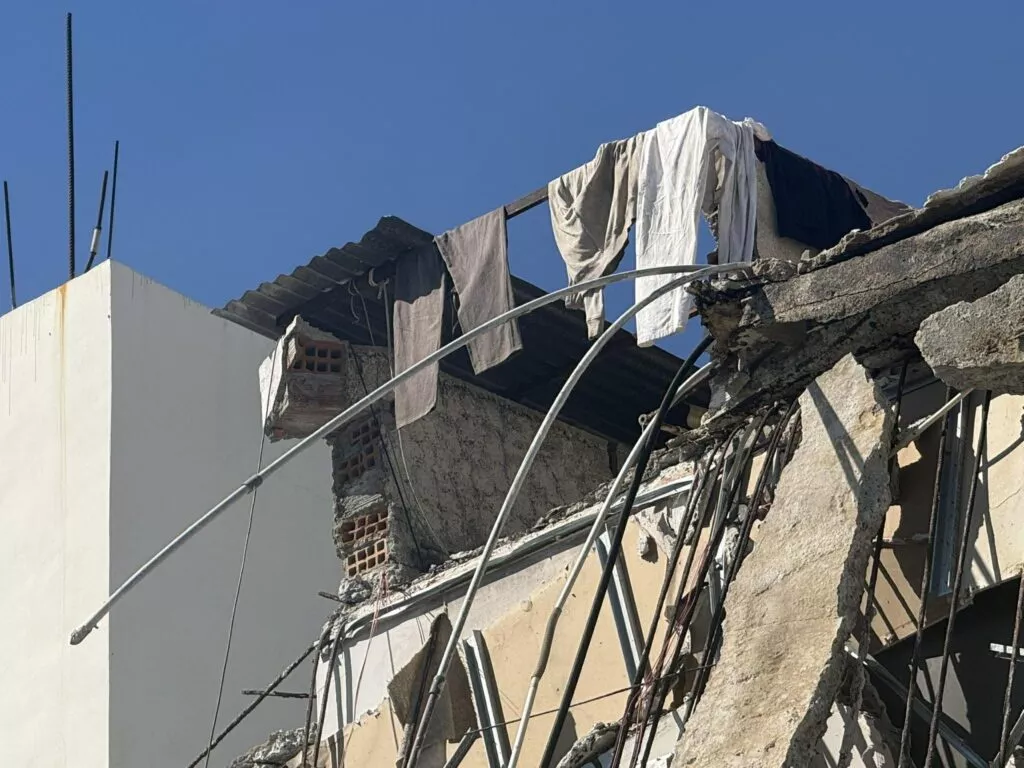
Dangerous buildings across Cyprus have long been seen as a ticking time bomb, with repeated warnings that collapses could lead to casualties.
Balconies have fallen on their own, walls have suddenly given way and cracks in buildings have multiplied, underscoring the scale of the problem.
The need to properly regulate dangerous buildings has been discussed for years. According to data published by Philenews on April 2, 2025, their number across Cyprus stood at 1,292.
Of these, 618 were in Nicosia, 308 in Limassol, 170 in Larnaca, 26 in Famagusta and 170 in Paphos, based on the same report.
Following local government reform on July 1, 2025, responsibility for overseeing dangerous buildings shifted from local authorities to the district local government organisations (EOA), which had raised concerns over a lack of funding. At the same time, services to carry out the necessary inspections had not yet been set up, raising the likelihood that the total number of dangerous buildings has increased.
Some buildings that had previously been reinforced to prevent collapse may now be in worse structural condition, according to the same information.
Speaking before the House interior committee on October 3, 2025, civil engineer and secretary-general of Scientific and Technical Chamber (ETEK) Andreas Theodotou warned that some apartment blocks could collapse even in a minor earthquake, potentially causing fatalities, stressing that the issue must be addressed as quickly as possible.
Theodotou said the problem is most acute in Nicosia and Limassol, particularly in city centres, though it is not limited to those areas.
“Public safety is extremely important and we must find a way to safeguard it, as the situation is very difficult,” he said.
He added that ETEK has repeatedly raised the need for regular building inspections and said the measure should eventually be implemented.
He also suggested that support and restoration efforts could begin with shared residential buildings, where more people live compared to individual properties.
In the same report, Philenews noted that discussion of legislation to regulate jointly owned buildings, where nearly half of Cyprus’s population lives, stalled, leaving the bill unresolved.
According to remarks by the chair of the House interior committee, the process was blocked after the interior ministry assigned responsibility for jointly owned buildings to the EOAs without consulting them and without approving the resources needed to hire staff to handle the cases.
Constantinos Yiorkadjis, who chairs the committee, said the EOAs had been burdened with responsibilities previously handled by others, without consultation.

