


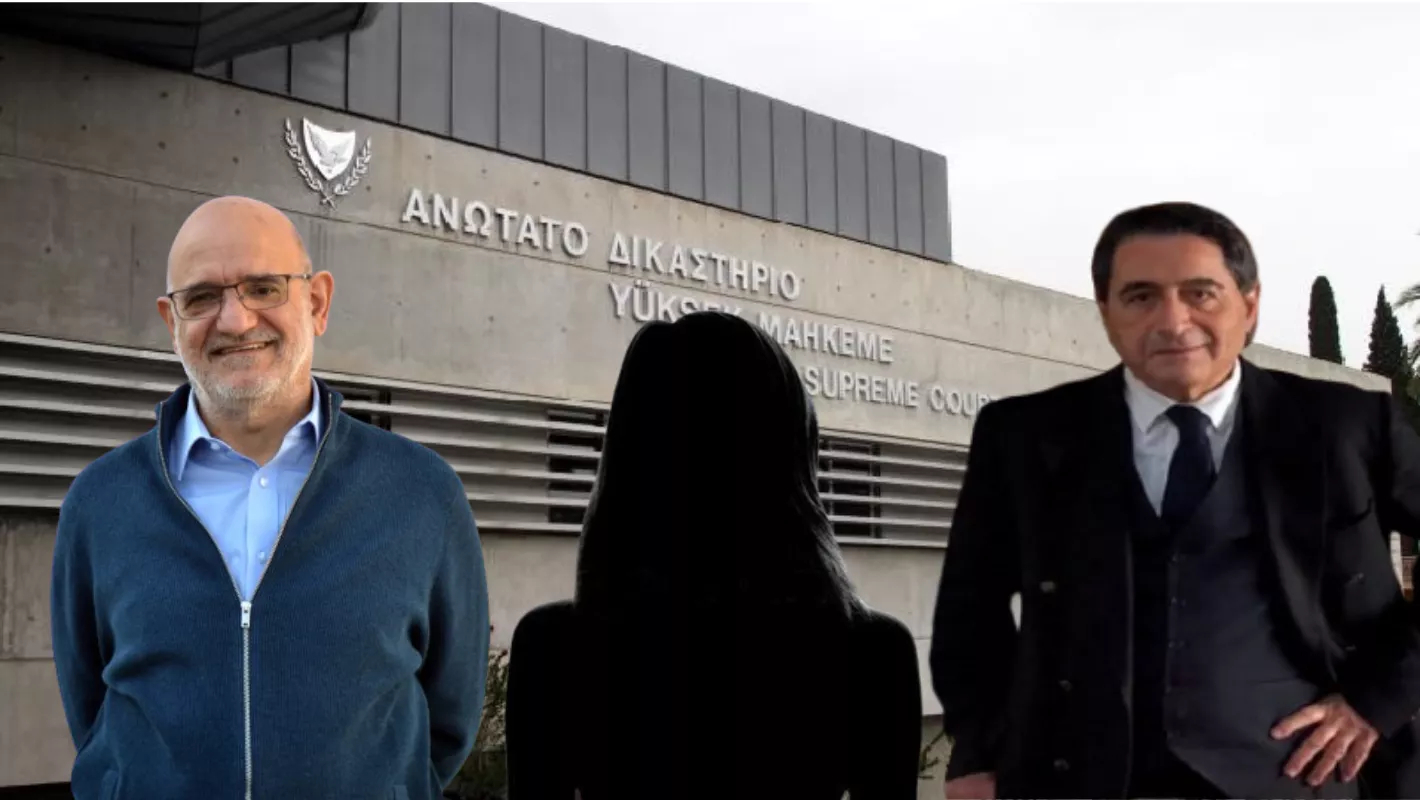
When Makarios Drousiotis published his lengthy post on the night of March 30, titled “The Dark Face of the Rule of Law in Cyprus,” Cypriot society was confronted with a series of very serious allegations. The events he described — which he did not necessarily present as directly connected — unfolded like another chapter from one of his books.
In the eleven days since, much has been said, written and done. Allegations, accusations, sweeping statements — but also verifiable facts which, taken on their own terms and without interpretation, have already begun to shift the picture from what was originally presented.
Philenews today sets out some of the key points that have emerged. No interpretation, no conclusions — only facts, adequately explained.
The aim is to contribute to public clarity on where things actually stand. Within these points, certain questions and uncertainties are identified regarding aspects of the original narrative as it was presented.
It should be made clear that what follows is a purely journalistic exercise in informing the public. It is not intended to attack or demolish anyone’s narrative.
What will ultimately clarify the picture and determine developments is the outcome of the forensic examination — specifically, whether the messages, all or some of them, are genuine or fabricated.
Point 1: The paedophilia allegations
Drousiotis’s text opens with an account of an alleged paedophilia case. Former Supreme Court judge Michalakis Christodoulou is alleged to have sexually abused “Sandy” from the age of ten, to have raped her at thirteen, and to have left her pregnant at sixteen.
Two things must be taken into account. First, when questioned by Cyprus Police, “Sandy” rejected the paedophilia allegations — though the possibility that she did so under fear or pressure cannot be excluded. Second, among the 150-plus files in the “Sandy” archive held by Phileleftheros and journalist Fanis Makrides, nothing has been found to support the paedophilia claims.
Point 2: “Sandy’s” children
Drousiotis and Nicos Clerides both spoke of rape from the ages of twelve or thirteen. According to Drousiotis’s account — citing “Sandy” — the former judge left her pregnant at sixteen, and the two of them had three children together, one of whom died of leukaemia. Yet in statements to Politis, Clerides described “Sandy” as a 45-year-old mother of three minor children.
The contradiction is straightforward: how can a woman who first became pregnant at sixteen be forty-five years old today and have three minor children? The only scenario that would make sense is if the child who died of leukaemia was the first — born when she was sixteen or seventeen — and that eleven years then passed before she had her second child, who would now be under eighteen.
Point 3: The authenticity of the messages
Drousiotis says he met “Sandy” in April 2023 at her own request — she wanted him to write her story. At that meeting, he says, she confirmed the messages were authentic.
Before investigators, however, “Sandy” has allegedly testified that the messages were fabricated by her. Again, the possibility that this testimony was given under fear cannot be excluded.
Point 4: The Papadakis-Christodoulou messages and the forensic examination
The first and most prominent part of Drousiotis’s account relied heavily on messages allegedly exchanged between former judge Christodoulou and Demetris Papadakis. Last Wednesday, the former MEP held a press conference and published the results of a forensic examination carried out by expert Alexis Mavros on the three phones he used between 2019 and 2026.
The examination found “beyond any technological doubt” that the messages published by Drousiotis were not sent from Papadakis’s examined devices. Mavros explained that searches were run using the names of both individuals, characterisations including the phrase “arhonta mou” (my lord) that Papadakis is alleged to have used when addressing Christodoulou, and possible phone numbers.
“The search returned no results,” Mavros said. He added that even if the messages had been deleted, the device history would still show activity at the timestamps shown in the screenshots — and no such indication was found. An examination of 73,000 messages showed Papadakis had not used the phrase “arhonta mou” even once.
Several of Drousiotis’s allegations rest on the alleged Papadakis-Christodoulou messages — including the claimed personal relationship between former President Nicos Anastasiades and Tal Dilian, director of the company that managed the so-called “black van.”
Without taking a position on whether the two men did in fact have a personal relationship: if the messages are not authentic, as Mavros contends, that alleged contact cannot be substantiated through them.
Point 5: The Excel errors and the photograph of the banknotes
According to Drousiotis’s narrative, around July 2020 an alleged “Brotherhood” decided to buy “Sandy’s” silence and induct her as a member — fearing she would expose Christodoulou. An alleged transfer of €850,000 to Christodoulou’s account is described, with the money to arrive in Cyprus “little by little” in cash. One instalment allegedly reached “Sandy” in a suitcase and a safe, accompanied by a note reading: “Sandy, 250,000, From Michalis.”
In a subsequent post, Drousiotis published photographs of an Excel file, cash, and that note. Questions were raised on social media about the authenticity of the bank statement due to typographical errors, though some experts have suggested the errors may have resulted from a file format conversion.
It should also be noted that, following the 2013 financial crisis, it is considered unlikely that a bank would accept a deposit of that size without supporting documentation. As for the photograph of the banknote bundles, the same image was found on a Dutch website dated December 20, 2021.
Point 6: Apps that fabricate messages
On April 1, Drousiotis published messages he claims were sent by Demetris Papadakis, with screenshots showing Papadakis’s full name and phone number.
On April 8, Phileleftheros reported that investigators had already been examining the possible use of a specialised digital application for fabricating fake messages. Patented software exists online — known as Fake SMS or Fake Text Message apps — that allows the creation of fake phone messages appearing to have been sent or received by another person. “You can make entire conversations — SMS, MMS, even voice messages — and make them look realistic,” reads one typical description.
Drousiotis responded by complaining that the authorities were leaking to the press on the basis of a “predetermined scenario” that the messages are fake. He has every right to hold that view. It does not, however, change the fact that these applications exist, and that some or all of the messages in circulation could be their product.
Point 7: Inconsistencies over the Presidential Palace and Christodoulides
From the outset, Drousiotis and Clerides stated they had no confidence in the police or the Law Office, which they consider implicated in the affair. Until last Wednesday, Drousiotis appeared through his public statements to have some expectations of President Christodoulides — he even sent the President a copy of his 34-page statement supported by 137 digital exhibits.
After Minister Fytris announced the evidence would be sent to Europol, Drousiotis questioned Europol’s independence, citing the secondment of officers from member states. He also called on Christodoulides to answer for the alleged hiring of “Sandy” at the Presidential Palace immediately after his 2023 election, and to clarify whether he had any involvement in the matters under investigation. A reasonable question arises: if Drousiotis had such serious information, why was it not included from the start? He raised it ten days after his first post.
When the government’s announcements were not what he had hoped for, Drousiotis published the new and serious allegation — which the government immediately denied. The following day, he offered no new evidence to support it. Instead, he announced he would take a few days off for Easter, adding only that “fake and fabricated are President Christodoulides’s assurances that he is interested in investigating.”
Point 8: Inconsistencies from Nicos Clerides
Clerides appeared on numerous television programmes following the Drousiotis revelations and also made statements to Philenews. On several occasions, the dates he gave in one appearance differed from those given in another. On April 3, speaking to Philenews and Michalis Hadjivasilis, he said “Sandy” approached him shortly after his 2018 revelations about bankers and judges. In separate statements on CyBC to Tasos Christodoulou, he said he met the woman in early 2020.
Point 9: The silence of everyone until now
Another reasonable question concerns the years-long delay in bringing these allegations to light, while various individuals had the electronic material in their possession for years. Clerides has known the material since either 2018 or 2019-2020 — the exact date matters, given whether or not his brother Kostas Clerides was Attorney General at the time. Former Cyprus Bar Association president Christos Clerides said in his own words that he knew about the messages since 2020. Drousiotis met “Sandy” in 2023 but, based on his own writing, was aware of the case earlier.
Under Cypriot law, anyone who holds evidence of paedophilia is legally obliged to report it immediately to the authorities. Speaking on CyBC, Clerides said that when he learned “Sandy’s” story, his priority was her safety.
He arranged, with the help of a private expert abroad, for her to flee to Germany via the US Embassy. When she returned to Cyprus in 2023, he decided the time had come to proceed — but in a coordinated way, and only once the authenticity of the messages could be confirmed. To that end, he passed the material to trusted individuals, including Drousiotis.
Clerides now says he disagrees with how Drousiotis chose to go public, arguing the disclosure should have been handled in a coordinated manner and only after verifying that the messages were authentic. To this day, he says he does not know whether they are.
Point 10: The alleged flirtation
On CyBC, Clerides claimed that at some point early in their acquaintance, “Sandy” approached him through a fake account and flirted with him — he blocked her the same day. At a later stage, she passed him the file containing the SMS messages.
The admission caused a strongly negative public reaction and cast serious doubt over the seriousness of the affair, adding yet another layer of complexity to an already heavily burdened story.

