


Cyprus has pushed the European Union to open a formal debate on how Article 42(7), the bloc’s mutual defence clause, should work in practice, arguing that the latest Middle East crisis exposed a security gap for member states outside NATO’s protection umbrella.
For years, NATO’s security guarantees for most EU member states meant Article 42(7) remained largely theoretical, without clear implementation rules. That changed after Nicosia stepped up its efforts in early March, bringing the issue back onto the EU agenda and exposing differences in Brussels over how the bloc should respond to threats beyond the Russia-focused security framework.
The latest crisis in the Middle East highlighted a weakness in EU security that did not emerge in the same way during the war in Ukraine, according to the report. In that case, the EU countries most directly affected by Russian aggression were also NATO members and therefore covered by the alliance’s protection.
That helped shape a European security agenda centred almost exclusively on Russia, the report said, particularly among member states from the Baltics and eastern Europe.
The report pointed to comments by EU foreign policy chief Kaja Kallas after the Foreign Affairs Council, when she said the conflict was “not a European war”, as reflecting a broader line of thinking in some EU circles, especially among officials from the Baltic states. According to the report, those countries have long viewed developments primarily through the prism of Russia.
It said Kallas, who comes from the Baltics, benefited politically from the climate created by Russia’s invasion of Ukraine and rose to the post of EU High Representative as anti-Russian sentiment hardened across Europe. In that context, the report argued, the EU’s foreign policy agenda became heavily focused on Ukraine at the expense of wider strategic interests.
Against that backdrop, Kallas’ position on the Middle East was seen in Nicosia as undercutting Cyprus’ efforts to activate EU mutual assistance mechanisms at a time when the island was pushing for a stronger collective response.
The comments appear to have irritated the Cypriot government. President Nikos Christodoulides’ remarks in Brussels earlier this week were not a random outburst, the report said, but a response to positions such as those expressed by Kallas.
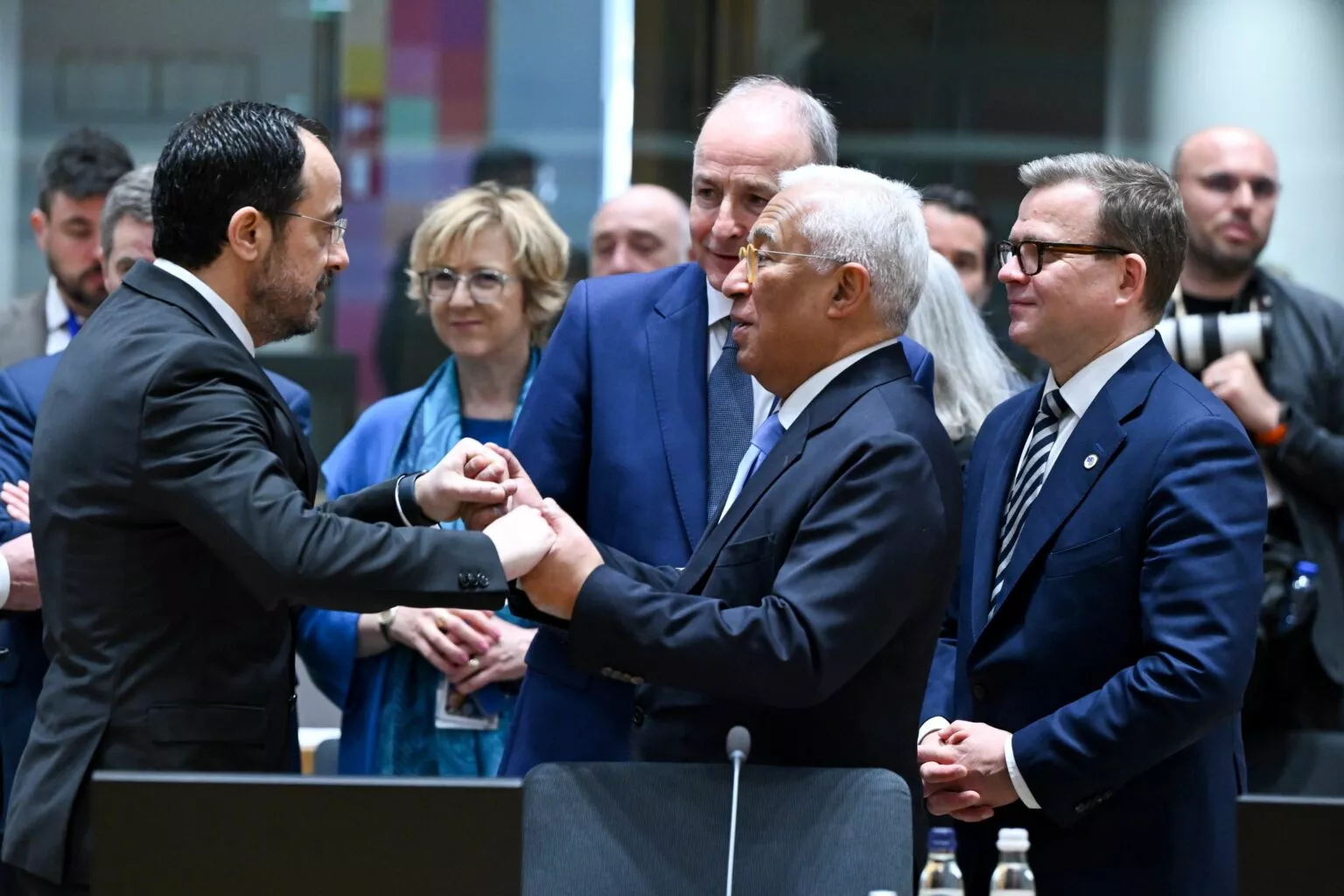
Arriving at Thursday’s European Council, Christodoulides openly voiced his disagreement with suggestions that the new war in the Middle East was not an EU matter. Before the summit began, he also held talks with Kallas and appears to have told her that such remarks did not help efforts to promote dialogue in the region.
Nicosia has in recent weeks argued strongly that leaders across the wider Middle East expect the EU to move closer to the region, not step back because of the crisis. Speaking at the European Policy Centre, Christodoulides said Europe could not sell arms to Middle Eastern countries while objecting to working with states in the region.
During the discussion on the Middle East, Christodoulides stressed the need for the EU to send a clear message about the importance of the region and the need for an international initiative to de-escalate the war. “The EU must play an active role in the effort to end the conflict. The countries of the region with which we are in contact expect an initiative from the EU to bring this situation to an end,” he said.
According to sources close to the summit, Kallas later voiced support for Cyprus over the incident involving the British Bases. During the same discussion, the heads of government of Greece, Ireland, France, Spain, Germany, the Netherlands and Italy also backed Cyprus on security and on its push to discuss mechanisms for activating Article 42(7).
Christodoulides and Greek Prime Minister Kyriakos Mitsotakis asked the EU to examine whether it should draw up a roadmap for implementing the mutual defence clause, according to two EU diplomats and a senior European government official. They said Kallas also raised the matter.
European Commission President Ursula von der Leyen and German Chancellor Friedrich Merz had already proposed clarifying how Article 42(7) — the EU equivalent of NATO’s Article 5 defence clause — would work in practice and how to make it operational.
Nicosia’s pressure and diplomatic activity helped open the debate on Article 42(7), including how it should be triggered, who decides on the first response and what form that response should take.
Following discussions in Brussels on March 18 and 19, the issue of activating Article 42(7) is set to appear on the agenda of the informal European Council to be held in Cyprus on April 23 and 24.
Cyprus also attached particular importance to three paragraphs in the European Council conclusions: paragraph 6 on the Middle East, paragraph 17 on Gaza and paragraph 48 on European defence and security.
Paragraph 6 states that the EU stands firmly with member states close to the region, welcomes support provided by member states, especially through the deployment of military assets in the eastern Mediterranean and in support of Cyprus, recognises Cyprus’ intention to begin talks with Britain over the UK bases in Cyprus and is ready to provide assistance if necessary.
Paragraph 17 expresses regret over the continuing humanitarian situation in Gaza and calls on Israel to allow immediate, unimpeded and sustained large-scale humanitarian aid access throughout Gaza, including through the Cyprus sea corridor as a complement to land routes. It also calls on Israel to reverse its decision on the NGO registration law, reopen Gaza’s border crossings and fully comply with its obligations under international law, including international humanitarian law, while ensuring the protection of civilians at all times.
Paragraph 48 underlines the situation on the EU’s eastern borders, taking into account the threats posed by Russia and Belarus, as well as the risks facing member states directly affected by the situation in Iran and the Middle East. It repeats that defending all of the EU’s land, air and sea borders contributes to Europe’s security as a whole.
In its own assessment of the spring European Council, Nicosia concluded that regional developments dominated the discussions because of their impact on competitiveness, defence and security, migration and multilateralism.
The Cypriot government also argues that the swift and practical response by member states to Cyprus’ request could serve as a starting point for a deeper discussion on Article 42(7), focusing on how and when it is activated, who decides on the initial response and how far that response should go.
Government officials in Nicosia said “the practical solidarity of partners and the inclusion of relevant references in the conclusions confirm that the security of Cyprus is an integral part of the collective security of the European Union”.
The report also said Christodoulides used his interventions and contacts with EU institutional leaders to stress practical European solidarity with Cyprus, present the island as a pillar of stability in the eastern Mediterranean, prepare for the informal European Council in Cyprus on April 23 and 24, and push for stronger mutual assistance mechanisms under Article 42(7).
For Nicosia, practical European support for Cyprus now serves as a guide for strengthening Article 42(7). The report highlighted the immediate response of member states including Greece, France, Italy, Spain and the Netherlands, stronger statements from EU institutions and governments that Cyprus’ security is also EU security, the deployment of military assets in the eastern Mediterranean and broader efforts to strengthen EU defence capabilities.
The Middle East crisis was the most important issue on the European Council agenda and was closely linked to other items, including competitiveness and energy prices, security and possible migration flows.
During his interventions, Christodoulides condemned the attacks and expressed full solidarity with Gulf countries. He stressed the need for a specific EU initiative to de-escalate the crisis and referred to efforts to promote talks between Israel and Lebanon. He also said diplomacy remained the only viable path to reducing tensions.
On Cyprus’ role, the president said the island was a bridge between the European Union and the Middle East and a factor of stability. He also highlighted risks arising from the crisis, including higher energy prices, inflation and disruption to supply chains.
For Nicosia, the developments also create momentum for Cyprus’ effort to join the Schengen area. Christodoulides said Cyprus’ accession to Schengen was a strategic necessity for the EU and added that the country had made decisive progress in its technical preparation and readiness.

