


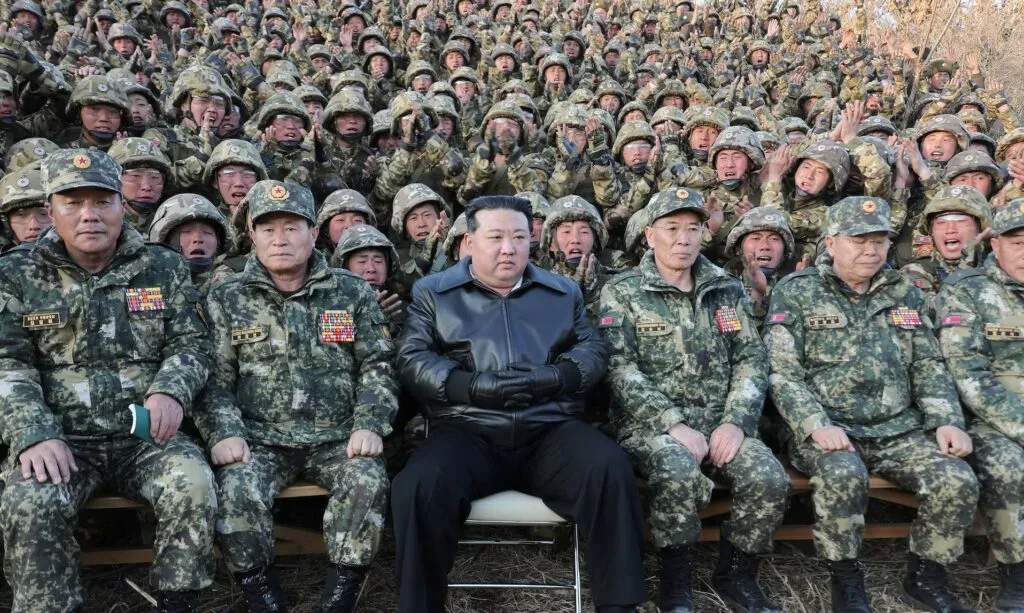
Last week’s international news — that North Korea’s dictator Kim Jong-un has chosen his 13-year-old daughter, Kim Ju-ae, as his designated successor — sent me hurtling back nearly twenty years, to a distant March in 2007. I was in Seoul, representing the Cyprus Journalists’ Union at an international conference on peace and reconciliation in the Korean peninsula, organised by South Korean journalists. The country was then ruled by Kim Jong-il, Kim Jong-un’s father — who had already quietly anointed his son as heir.
Around 200 foreign journalists were hosted in the South Korean capital for three or four days, and we were given the opportunity of a brief excursion into North Korean territory, to the Mount Kumgang border region, barely 60 kilometres from Seoul. The visit had been arranged with the agreement of both governments, during a fleeting, fragile thaw — a moment when the two Koreas had, improbably, managed to cultivate something resembling goodwill between them. It didn’t last. Before long, the North Korean regime snapped back to its default setting: extreme rhetoric, hatred, hostility.
Nothing has changed since in that dead country — a country that has lost its soul and tries to convince itself it is still alive by blasting anachronistic patriotic marches through the loudspeakers of its barracks, police stations, schools and political re-education centres. Marches that proclaim a joy that doesn’t exist and a happiness that was never real. The US State Department’s 2025 annual trafficking report, published in September 2025, puts it in stark terms: between 80,000 and 120,000 dissidents and their families are held in concentration and forced labour camps in the Democratic People’s Republic of Korea, with an indeterminate number imprisoned in other facilities.
From the windows of the buses that ferried us into the Kumgang mountain region — after we had been subjected to invasive searches by stone-faced North Korean soldier-automatons, with cameras strictly forbidden — we caught glimpses of a world suspended in destitution. Emaciated peasants ploughing black, barren earth behind ancient wooden ploughs. Skeletal animals grazing on parched, exhausted ground. A surreal landscape beside bare white granite mountains, strung with electrified wire and ringed by vast minefields.
We ended up at a cultural centre, where we watched a breathtaking performance by the Moranbong acrobatic troupe from Pyongyang. Two hours of extraordinary, almost unbelievable physical feats — young artists trained from childhood in a brutal, heartbreaking pursuit of perfection. Polished to a gleam. Deployed as the supposedly joyous, radiant shop window of an inhuman regime.

