


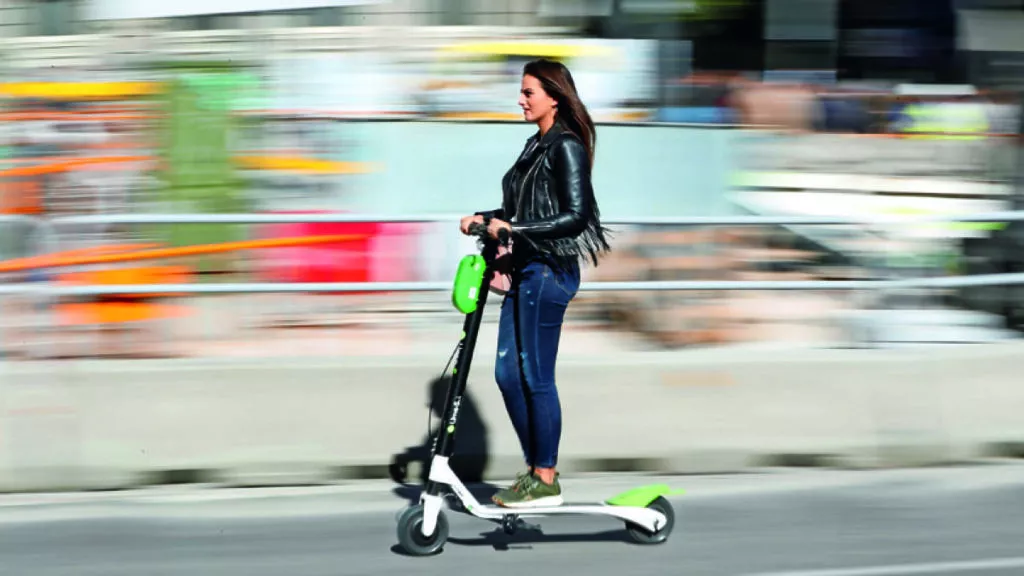
Authorities are grappling with the surge in electric scooters on the roads, as uncontrolled use and weak enforcement drive up traffic collisions and put riders, drivers and pedestrians at risk.
Electric scooters have become a popular mode of transport in recent years, particularly in urban centres. But the lack of meaningful checks and limited user awareness has led to dangerous practices, including riding on high-speed roads, ignoring traffic signs, carrying a second passenger and failing to wear protective gear.
Two proposals are now on the table. One comes from the former chair of the House Transport Committee, Marinos Mousioutas, who calls for scooters to be banned from Cypriot roads. The other comes from Stavros Papadouris, president of the Movement of Ecologists – Citizens’ Cooperation, who proposes creating a registry, issuing number plates and introducing third-party insurance for the devices.
What the law says
Under current legislation, electric scooters may use roads where the speed limit for motor vehicles does not exceed 30 kilometres per hour. They may also travel on cycle lanes and on areas that form extensions of cycle paths where cyclists and pedestrians share space. Their use in squares or pedestrian streets is allowed only by decision or approval of the competent municipality or community.
The law permits use by individuals aged 14 and over. Helmets are compulsory for all riders, while at night riders must also wear a high-visibility vest.
Each device must be equipped with essential safety features, including a functioning braking system, front and rear lights, a bell and suitable tyres. Scooters circulating legally must, by design, not exceed a speed of 20 kilometres per hour in order to reduce the risk of accidents in urban areas.
Fatalities and injuries
Police data underline the scale of the problem. Between 2019 and 2025, two people died in scooter-related road collisions. From 2021 to 2025, there were 13 serious injuries and 12 minor injuries.
In 2021, serious injuries and one minor injury were recorded. In 2022, one rider died and four people were seriously injured. In 2023 and 2024, a total of four injuries were recorded. In 2025, injuries among scooter riders increased, with five serious and nine minor injuries.
7,575 complaints
From 2019 to 2025, authorities filed 7,575 complaints against scooter riders. Most concerned the following offences:
3,061 for riding in non-permitted areas.
2,215 for riding without a properly fastened helmet.
935 for failing to wear appropriate high-visibility markings.
510 for riding outside their designated lane.
296 for riding without lights in operation.
Papadouris: Scooters reaching 80km/h on the roads
Mr. Papadouris told “F” that the legislation on scooters was based on the assumption that proper infrastructure would be built and police checks carried out. “We gave it time, but there have been two deaths and many road collisions involving scooters,” he said.
He argued that a major gap remains because scooters in circulation are not registered. “The registry at the Road Transport Department αφορά motor vehicles – those with engines, such as motorcycles, cars and lorries,” he said.
His proposal provides for a separate registry covering such devices. “Today it is scooters, tomorrow it will be something new. Abroad, many types of personal transport are not considered motor vehicles,” he said, noting that registries operate in countries such as Germany.
He stressed that although the legislation sets a maximum speed of 30 kilometres per hour, police have identified scooters capable of reaching 80 kilometres per hour. “If someone orders a scooter from China, it will arrive without any checks,” he said.
He also raised the issue of liability. If a scooter rider causes a collision, he said, they bear no responsibility because they do not fall under the relevant legislation. His proposal provides for a registry for non-motorised vehicles, the issuing of number plates and the identification of each scooter’s owner.
Scooter riders would also be required to take out third-party insurance. He noted that delivery companies that use scooters widely have secured insurance through private arrangements. “So there is a way, insurers are willing to cover them. What remains is the registry,” he said.
Mr. Papadouris added that scooters can be used in criminal acts and that riders frequently pass red-light cameras without being identified and fined.
He said police would be given the power to impound scooters temporarily when they are used unlawfully. “The purchase cost of a scooter ranges from €300 to €2,000. The fine is €85. Confiscation would impose a greater cost than the fixed penalty,” he said.
He added that the Greens support micromobility, but not at the expense of safety. “Unfortunately, the state has not built the infrastructure needed for users to travel safely from home to work,” he said.
On the proposal to abolish scooters altogether, he said the two approaches are “completely different”, one seeking a total ban and the other pursuing regulation through registration. He made clear that even if a ban proceeds, he will insist on passing legislation to create a registry for personal mobility devices.

