


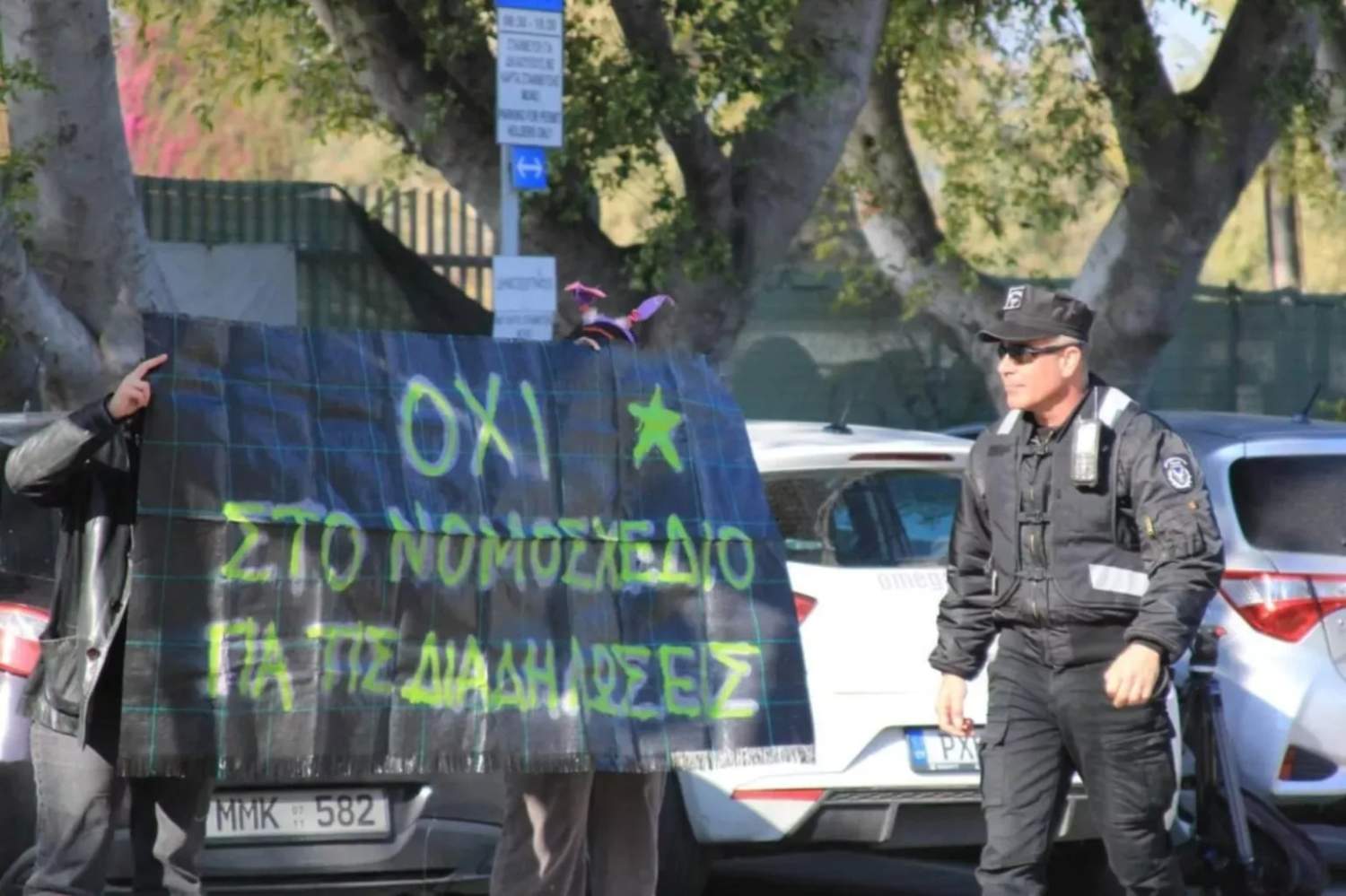
Cyprus will no longer require permits for protests and will strip away organiser liability under amendments to last year’s assemblies law, changes driven by criticism both inside and outside the country.
Parliament is set to pass the revised bill despite opposition from AKEL, which has tabled its own proposal to abolish the assemblies law entirely, Justice Ministry spokesperson Phaedra Gregoriou told MPs.
The amendments allow protesters to wear balaclavas during demonstrations, according to MP Irene Charalambidou, who worked with the Justice Ministry on the changes. Police can only demand mask removal to verify identity if someone carries a knife, club or other offensive weapon.
Police powers to dissolve entire assemblies have been curtailed. Officers can now remove individual troublemakers rather than breaking up gatherings—the old authority held by the police chief. Dissolution becomes a last resort, with police allowed to use proportionate force.
A police registry tracking gatherings sparked accusations of “profiling” from AKEL. Charalambidou defended the provision, saying the OSCE requested the registry to document assemblies where incidents occurred.
AKEL MP Aristos Damianou acknowledged the changes his party demanded but criticised lingering requirements: “We’re satisfied that all competent authorities agreed and made the changes we were calling for. Obviously, it took pressure from the OSCE, because there’s persistence on designating an organiser for spontaneous events.”
MPs clashed over spontaneous protests. Gregoriou clarified that organisers can voluntarily notify police seven days beforehand—stating time, place and purpose—but face no consequences for failing to do so. Spontaneous assemblies don’t require designated organisers.
The law bans protests inside public buildings but permits them outside the premises.
Read more:

