


The labour sector is at the centre of an intense transformation. The digital transition, the search for quality jobs, population ageing and pressures on pension funds are leaving a profound mark on society and the economy.
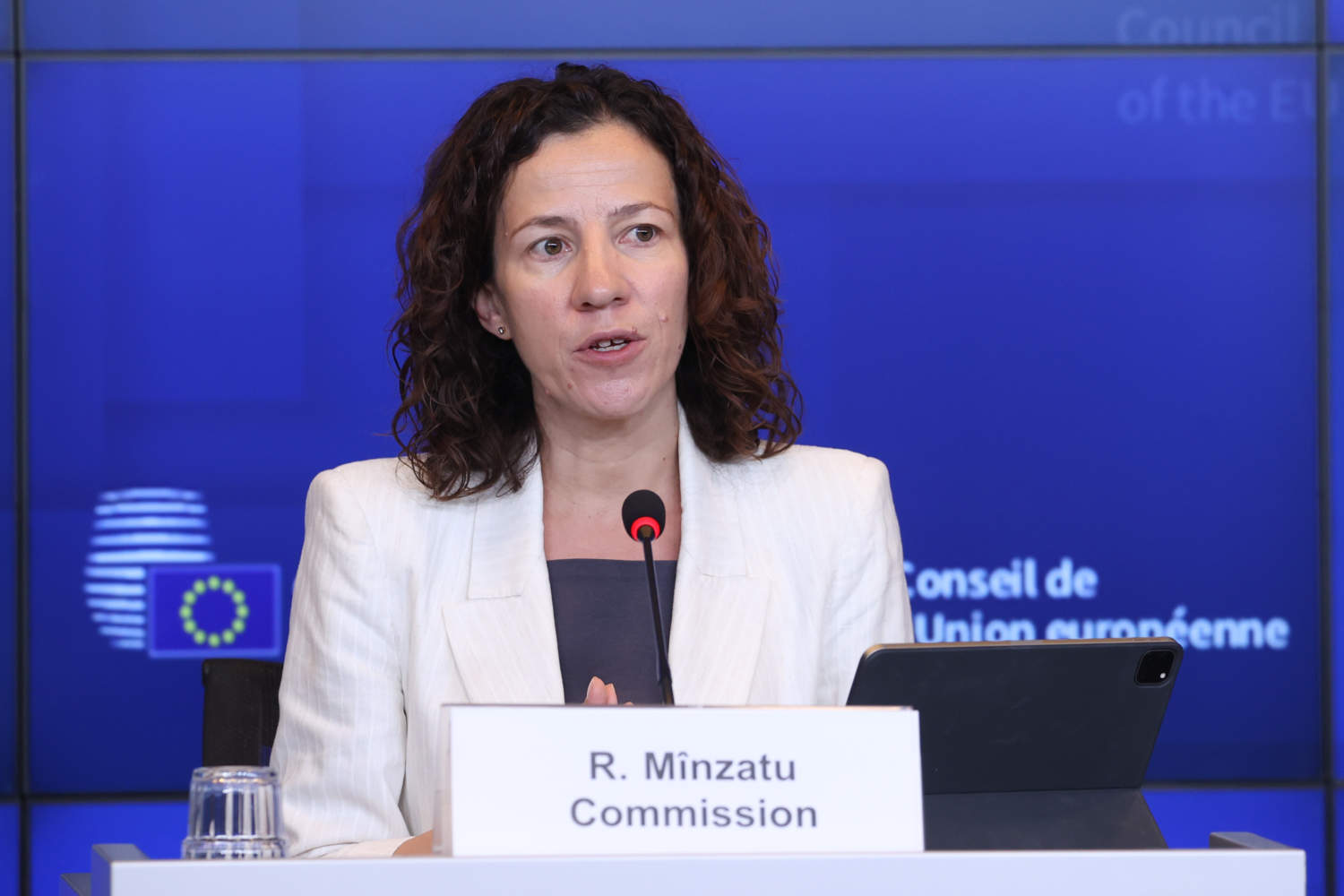
In her interview with Phileleftheros, European Commission Vice-President for Social Rights and Skills, Quality Jobs and Preparedness, Roxana Mînzatu, discussed the challenges facing her portfolio and how the European Union is seeking to find the necessary answers.
As she explained, whilst AI raises concerns about job losses, the key challenge is managing the transition properly. Beyond AI, the European Union faces serious shortages in workforce and skills, which are affecting growth and social cohesion.
The same applies to Cyprus, the European Commissioner explained, emphasising that these shortages are evident in our country.
At the same time, great emphasis is being placed on social protection and quality jobs, which are essential pillars for a resilient and competitive Europe. Fair wages, safe working conditions, social security and work-life balance are not regarded as obstacles, but rather as prerequisites for sustainable development.
This framework also encompasses policies supporting young people, tackling insecurity in seasonal work and ensuring viable pension systems in an ageing Europe.
Artificial Intelligence is playing an increasingly significant role in our lives. Some say that it will cause many job losses, while others believe it will create different new ones. What is your opinion?
This ultimately depends on how well this transformation is managed. What is certain is that AI is already reshaping the way we live and work, and will continue to do so. The IMF estimated that up to 60% of jobs could be exposed to changes because of it. This also points to the huge task ahead of making sure workers and future generations have the skills they need for the jobs of the future.
Used responsibly, AI can bring real opportunities for innovation, productivity and competitiveness, to the benefit of both businesses and workers. Europeans understand both the promise and the risks. Surveys show that most people see AI’s positive potential, but also the need for its use to be carefully managed, with strong safeguards for privacy, transparency and workers’ rights. Our line is clear: AI must assist workers, not replace human judgment or control people’s work.
With the AI Act, the EU adopted the world’s first comprehensive framework for AI. We have also set clear rules on algorithmic management used in the platform economy. Later this year, we will propose a Quality Jobs Act to allow Europe to lead in the responsible use of digital technologies, while empowering workers.
Besides AI, what are the other challenges in the labor sector in the EU?
Labour and skills shortages are holding back growth, innovation and productivity across the EU. To address them, we need stronger skills foundations starting from early education, more adults taking part in lifelong learning, better circulation of skills across Europe and being able to attract and retain talents in Europe. These are the main goals of the Union of Skills strategy we launched as one of the very first initiatives of this Commission.
In countries like Cyprus, these challenges are particularly visible, which is why European action matters. We are working closely with the Cypriot authorities to strengthen skills among both young people and adults. Strong cooperation between the world of work and education and training is also essential for a future-ready workforce. Across Europe, we see serious shortages in vocational and technical professions – electricians, plumbers and skilled trades. These are good, stable jobs, and they deserve greater recognition. That is why this year we will present a European Strategy for Vocational Education and Training as part of the Union of Skills.
Skills shortages and mismatches are affecting many European economies. How can EU policies help workers adapt to rapid technological change, particularly digitalisation and artificial intelligence?
Around 90% of EU workers use digital devices, and nearly one in three already uses AI tools like chatbots. Yet just over half of adults have basic digital skills. Even more worrying, teenagers – the so-called digital natives – don’t seem to be faring much better. We will only be able to reap the benefits of the digital transition if our people are empowered with the right skills. And we need to look especially at groups that are more at risk of falling behind.
The EU is backing this transition with over €150 billion investment in skills, with more than €15 billion from the European Social Fund Plus for adult learning and digital upskilling. The Union of Skills brings all this together, supporting training, lifelong learning and skills recognition across Europe. Targeted initiatives, including skills academies in AI, quantum technology, cybersecurity and semiconductors will help address these critical skills gaps.
In times of economic uncertainty (like we live nowadays), social protection systems are under pressure. How can EU member states strengthen safety nets without harming competitiveness?
Strong social protection and a dynamic, competitive economy are not opposing objectives; they are mutually reinforcing. Strengthening social Europe to protect people and improve their quality of life is the way to provide stability in times of uncertainty. This means ensuring access to quality jobs, fair working conditions and strong, modern social protection systems. It also means promoting a fair and inclusive economy, because inequality undermines both growth and social cohesion.
Social protection goes far beyond providing a basic safety net for those in need. Well-designed income support during unemployment, sickness or parental leave helps people maintain their living standards or find work that better matches their skills. This is especially important in times of crisis, as the response to the pandemic showed clearly.
Many studies suggest that the EU is ageing at a rapid pace. What measures need to be taken to ensure that pension programmes do not collapse? Do you have any recommendations for Cyprus?
Public pension policies must balance three objectives: fiscal sustainability, adequate incomes and social fairness. Addressing all three together makes reform more credible and acceptable. A clear principle should apply: working longer or contributing more should lead to higher pension rights. This strengthens the link between work and benefits and supports longer working lives, including for groups with lower labour market participation.
Encouraging people to work longer must go hand in hand with supportive labour market policies. Retirement should be more flexible, moving away from rigid age limits and offering gradual and voluntary retirement options. Many Member States are already moving in this direction. And reforms must be gradual, predictable, and well communicated. Pension awareness and financial literacy are crucial to help people save for adequate pensions.

The most important is not just to have a have a job but to have a quality job. How do you define quality jobs and how can EU policy ensure fair wages and decent working conditions across member states?
Quality jobs are at the heart of a strong and competitive social Europe. They benefit workers by providing fair pay, safe and healthy working conditions, protection from stress, exploitation and other risks, employment security, work-life balance, gender equality, access to training and career development, and strong social protection. They also benefit companies, helping to drive innovation, increase productivity, and attract and retain talent. There is no single definition of a quality job, but these principles guide EU policy.
The Quality Jobs Roadmap, presented in December 2025, sets out how the EU can improve job quality across all sectors, from job creation to good working conditions, modernisation and fair transitions. We will follow up this year with a proposal for a Quality Jobs Act, to ensure that employment in Europe keeps pace with a modern economy, creating jobs that are not only abundant, but decent, fair, and future-ready.
Many Cypriot workers are employed on fixed-term or seasonal contracts. How can EU labor policy improve job security in countries with strong seasonal industries?
This is the case especially in sectors like tourism and shipping. Ensuring that these workers have adequate protection and employment security is a priority for EU labour policy. Strengthening job quality also contributes to reducing labour shortages.
I see two key initiatives at the EU level to protect seasonal workers. First, the ongoing revision of the rules on social security coordination, which is a priority of the Cypriot Presidency. This would improve the continuity of coverage, so that short, seasonal stints still count towards pension, unemployment, and health benefit entitlements. And it would strengthen the recognition of rights, so that workers are not penalised for mobility or gaps between contracts. This can help reduce the insecurity inherent in fixed-term and seasonal jobs and support more stable career and life planning for workers.
Second, later this year we will introduce a European Social Security Pass as part of a Fair Labour Mobility Package. This will reduce bureaucracy and make it easier for mobile workers to exercise their social security rights abroad.
Many young Europeans feel insecure despite being highly educated. What can the EU do to improve job stability and career prospects for them?
Our education and training systems are struggling to keep pace with the fast transformations of our society and the evolving competences and skills employers need. As a result, many graduates have a hard time finding their way into the labour market. We have to improve the way schools, universities, training centres and businesses work together to deliver the right skills with speed and scale. We have set out the vision in the Union of Skills, but putting this vision into practice is a collective responsibility. The EUR 5 billion Erasmus+ calls launched at the end of last year is one step in this direction. This year, we will move ahead with a 2030 Roadmap on the future of digital education and skills to make sure that all graduates are equipped with the digital and AI skills they need.
We also have the Youth Guarantee to fight youth unemployment and inactivity. It ensures that every young European under 30 receives a high-quality offer of employment, continued education, apprenticeship or traineeship within four months. And it’s been having a real impact. Since 2013, almost 57 million young people have benefited from the Youth Guarantee.
In Cyprus, we are supporting youth employment, skills development and social inclusion with EUR 222 million in funding from the European Social Fund Plus, which is being implemented in the country with the Thalia Programme. And under the next EU budget starting in 2028, we will encourage all Member States to adopt ambitious national plans, including on social priorities, for which we have earmarked EUR 100 billion for social investment.
Migration and labor shortages are sensitive topics. How will the EU manage to find the workforce it needs without risking a rise of far-right, anti-immigration parties?
On the one hand, we need to attract skilled talent from abroad. The political agreement in November 2025 to establish the EU Talent Pool marks an important step forward. This will be the first EU-wide platform to make it easier to recruit jobseekers outside the EU. It will make the EU more attractive globally while promoting fair recruitment standards for international migration. And we are working on common rules for simpler procedures to handle the recognition and validation of qualifications and skills of third country nationals.
On the other, we must also avoid migration becoming a source of exploitation and a way to decrease social standards in Europe. This is why it is essential to increase enforcement and controls, and to have more clarity on the existing rules. One example: we will propose to strengthen the European Labour Authority’s capacity to run joint and concerted inspections and expand its mandate to third country nationals. We want to empower the Authority to enforce rules for non-EU nationals entering and staying in the EU for seasonal work, deter the employment of third-country nationals that have entered the EU illegally, and protect those migrants who are exploited by ensuring they receive the wages they are owed and have access to justice .
The cost of living has risen sharply in Cyprus, particularly housing costs. How does the EU social agenda address in-work poverty and affordability challenges?
The rising cost of living, especially housing, is not just an economic challenge, but a social one that affects the cohesion of our societies. Across Europe, housing affordability is under growing pressure and Cyprus is no exception.
That is why we have presented the first European Affordable Housing Plan. It provides Member States with financial tools to strengthen the housing sector, reduce construction and rental costs, and support people in all countries.
And we are backing these priorities by real investment. In Cyprus, through the European Social Fund Plus, we are investing €104 million to promote social inclusion, €40.5 million to fight child poverty, and €17 million to support the most deprived. Cyprus is also planned to receive funding through the Social Climate Fund to improve energy efficiency in housing.
Beyond housing, the EU is tackling poverty directly. This year, we will present the EU’s first-ever Anti-Poverty Strategy, aiming to lift at least 15 million people out of poverty by 2030 and help eradicate severe poverty by 2050.

