


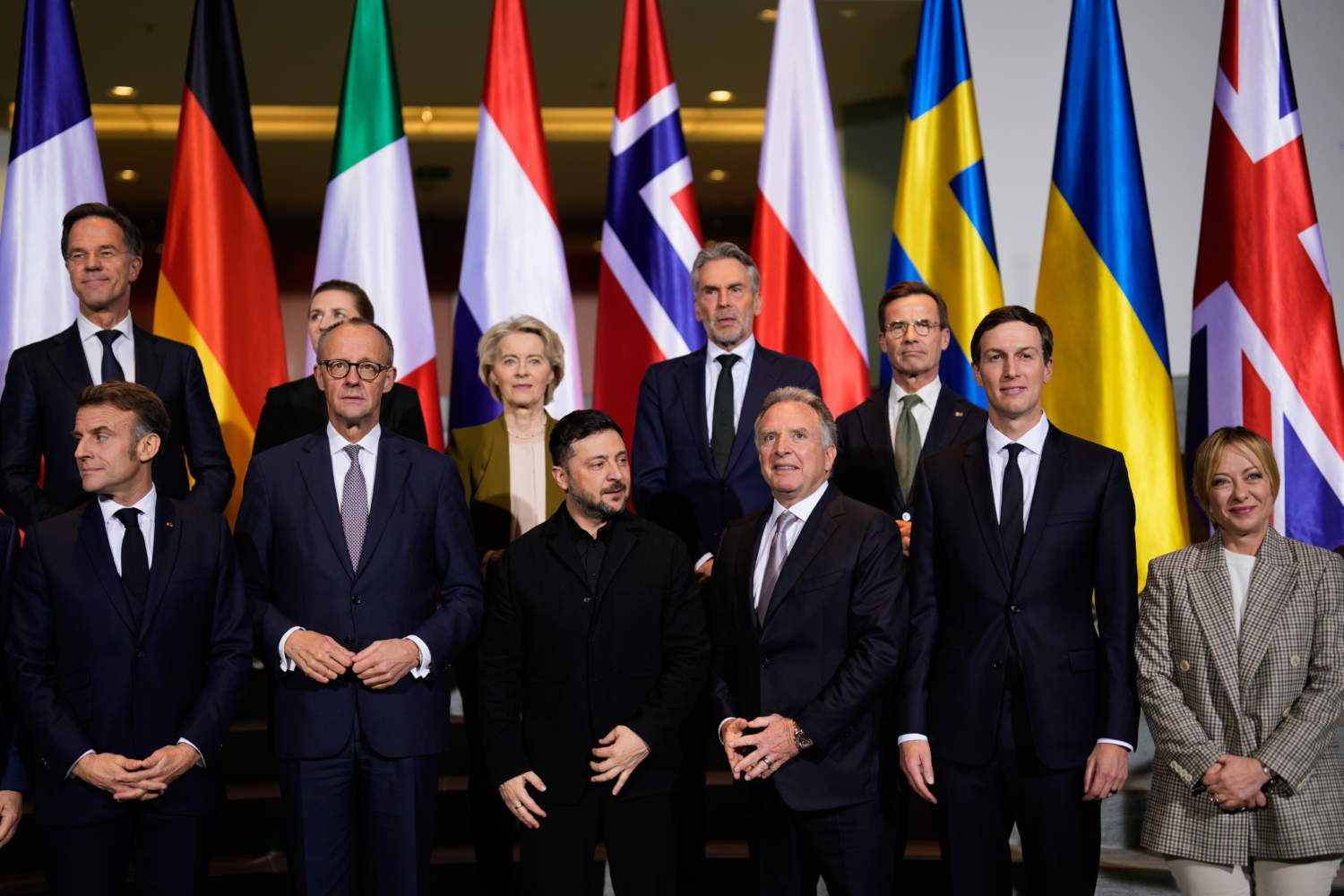
European leaders have pledged to deploy a multinational military force in Ukraine and provide sweeping security guarantees as negotiators reported major progress towards ending the war, though disagreements over Russian-occupied territory remain unresolved.
Nine European heads of government signed a joint declaration on Monday evening committing to “sustained and significant support” for an 800,000-strong Ukrainian peacetime army and a European-led force operating on Ukrainian soil. The statement represents the most detailed security architecture yet proposed for post-war Ukraine.
Ukrainian President Volodymyr Zelenskyy said progress had been made on “many issues” during two days of negotiations in Berlin involving US envoys Steve Witkoff and Jared Kushner. German Chancellor Friedrich Merz said that “perhaps for the first time” since Russia’s full-scale invasion began, reaching a ceasefire now appears possible.
“It is important that we were heard,” Zelenskyy said alongside Merz. “I have a deep understanding of the details of this war and it is very important that our colleagues from the United States heard all these details.”
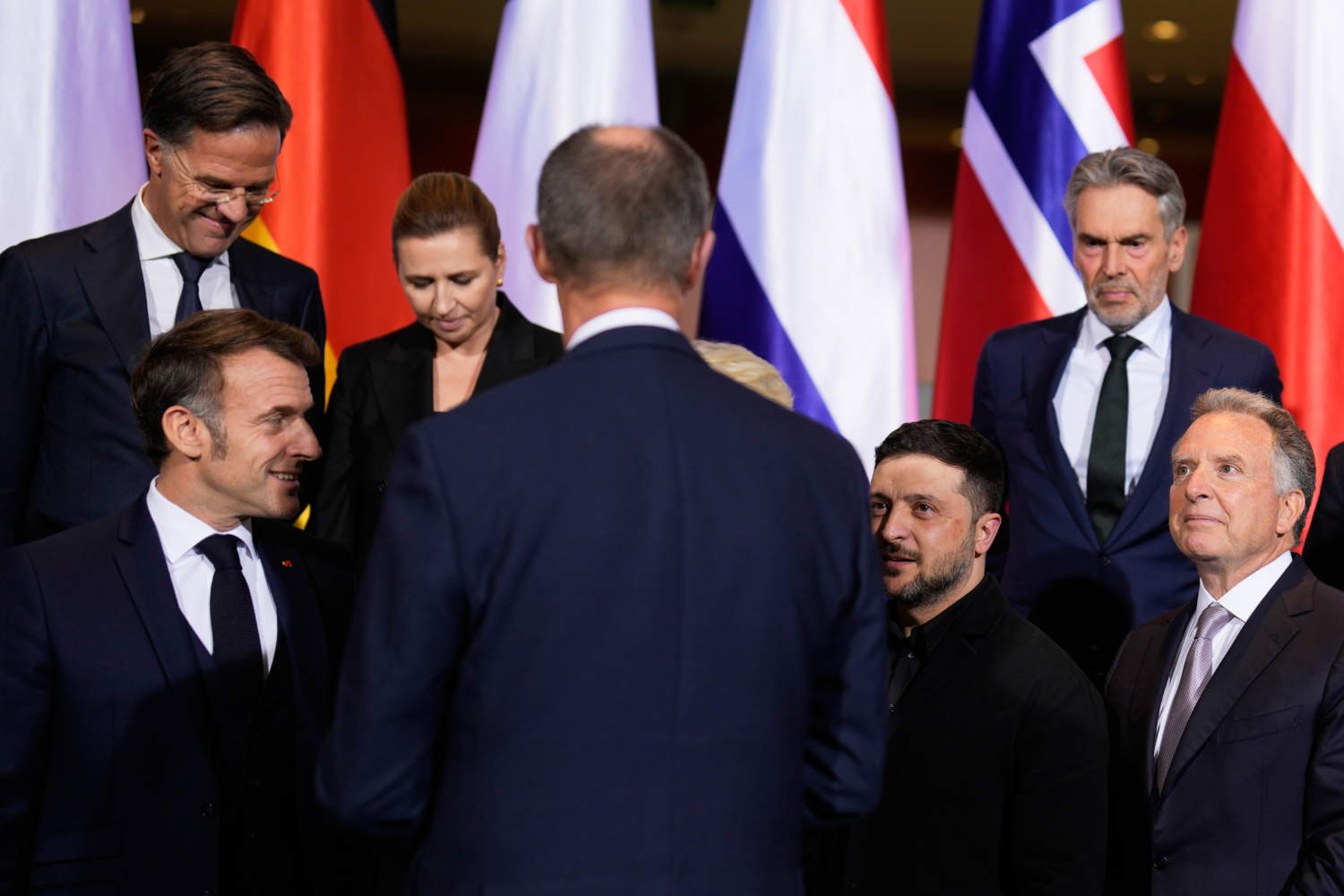
The talks marked a notable shift in tone from the Ukrainian president, who sounded more optimistic about both a potential settlement and Washington’s role as mediator. He pushed back against speculation that the US was pressuring Kyiv to make concessions, insisting America was simply conveying Russia’s demands rather than making its own.
“I do not believe that the United States of America has made any demands. I see the US as strategic partners,” Zelenskyy said. “We perceive this as the demands of the Russian Federation.”
US officials reportedly claimed that roughly 90% of outstanding issues between the warring parties have been resolved, with territorial questions remaining the key obstacle. The American delegation said it had developed “Article 5-like” security guarantees—referencing NATO’s collective defence provision—that satisfied both Kyiv and European capitals, though they declined to provide operational details.
Merz praised Washington’s proposals, saying “what the US has offered here in terms of material and legal guarantees is really significant”.
The European commitment would see member states provide “armed force, intelligence and logistical assistance, economic and diplomatic actions” in the event of renewed Russian aggression. The proposed multinational force would build on the “Coalition of the Willing” currently led by France and Britain.
A US-led mechanism would monitor and verify any ceasefire agreement, whilst European nations would provide a “legally binding commitment” to restore peace if fighting resumes—though each country would determine its own response. The package also includes maintaining the freeze on Russian Central Bank assets and supporting Ukraine’s path to European Union membership.
The statement was signed by leaders from Germany, Denmark, France, Italy, the Netherlands, Norway, Poland, Sweden and Britain, along with European Commission President Ursula von der Leyen and European Council President António Costa. It remains open for other nations to endorse.
“In any deal, nothing is agreed until everything is agreed and all parties must work intensively towards a solution that could assure a lasting end to the fighting,” the leaders said.
Despite the optimism, Zelenskyy acknowledged that occupied territories remain “a painful” issue where Ukraine and Russia hold fundamentally different positions. “Of course, we have different positions with Russia on the territories,” he said, adding that Moscow wants to seize as much land as possible.
The European statement stressed that any territorial decisions must be made by the Ukrainian people “once robust security guarantees are effectively in place,” and promised to support a referendum if Zelenskyy chooses to hold one. “International borders must not be changed by force,” the declaration states.
European leaders challenged Moscow to “show willingness to work towards a lasting peace” by accepting the White House’s proposed framework and establishing a ceasefire—something President Vladimir Putin has repeatedly refused.
Russia’s initial response was cautious. Deputy Foreign Minister Sergei Ryabkov said Moscow had not yet received details of the proposals and was awaiting a briefing from US negotiators. The Kremlin stressed it would not accept a ceasefire that simply gave Ukraine time to rearm, Reuters reported.
A source close to the Berlin negotiations told Euronews that US participation was crucial given Washington’s unmatched military and intelligence capabilities. “The US will be the backstop and provide intelligence, air support capabilities that nobody else can,” the Euronews source said, noting operations would centre on Ukrainian forces backed by the European multinational contingent.
“Each nation will speak to what they’ll do in Ukraine as part of this, but it’s expected to be multi-domain: land, sea, air, cyber and space,” the Euronews source added.
The diplomatic momentum comes as EU leaders prepare for a critical Brussels summit this week to decide how to raise €90bn for Ukraine’s budgetary and military needs through 2026 and 2027. The leading proposal—a zero-interest loan backed by frozen Russian Central Bank assets—faces opposition from Belgium, which holds most of the funds, and reservations from Italy, Bulgaria, Malta and the Czech Republic.
“I understand the concerns. I don’t share the concerns,” Merz said. “But I very much hope that Belgium, the country most impacted by this decision, will take a step in the right direction with us. It’s expedient to support Ukraine.”
Zelenskyy is continuing his European tour ahead of the Brussels meeting, addressing the Dutch parliament on Tuesday and meeting with Prime Minister Dick Schoof. Separately, Finland is hosting the first Eastern Flank Summit in Helsinki, bringing together Nordic and Baltic leaders with counterparts from Bulgaria, Poland and Romania.
Top European officials also met in The Hague on Tuesday to formally establish an International Claims Commission for Ukraine, which will assess and decide claims for reparations from Russia’s invasion. The body builds on an existing Register of Damages that has already received more than 80,000 claims from individuals and organisations.
(With information from The Guardian and Euronews)

