


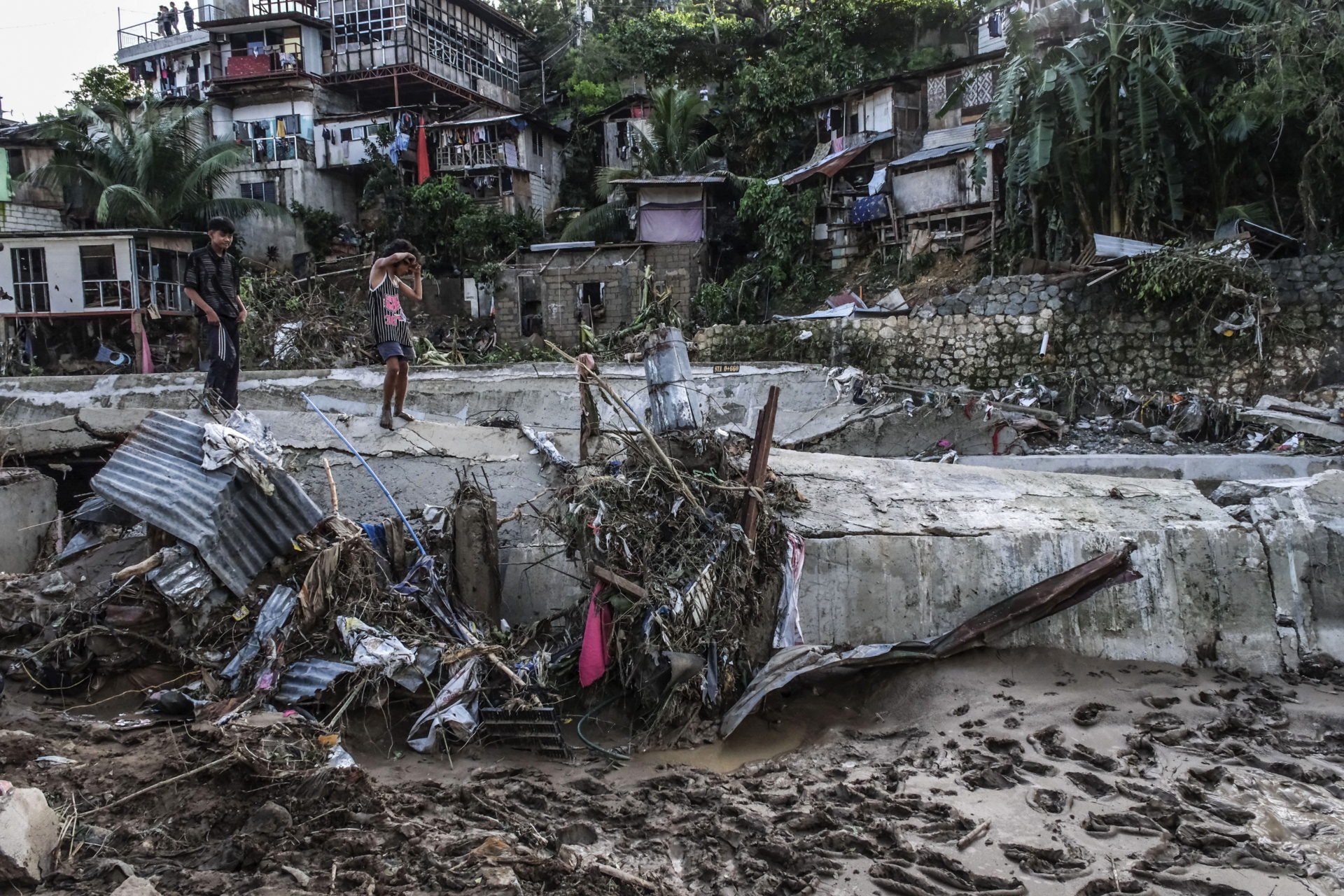
Philippine President Ferdinand Marcos Jr declared a state of calamity on Thursday after Typhoon Kalmaegi killed at least 114 people and submerged towns across the central Philippines.
Cebu island bore the brunt of the disaster, with 71 deaths reported by national authorities. Provincial officials recorded another 28 deaths not included in the national count, according to AFP. Another 127 people remain missing and 82 were injured.
Marcos said he acted both because of Kalmaegi’s destruction and because another storm, Typhoon Uwan, is due to strike this weekend.
“Almost 10 regions, around 10 to 12 regions, will be affected. So if that many areas are involved, with that kind of scope, then it’s a national calamity,” he told local media.
The declaration allows government agencies to tap emergency funds and speed up delivery of relief supplies. Under Philippine law, a state of calamity covers disasters involving mass casualties, major property destruction and breakdown of normal life.
Drowning caused most deaths as the storm dumped huge volumes of water that rushed down slopes into populated areas. Small buildings were washed away across Cebu’s residential districts, which are now blanketed in mud. Local authorities called the destruction unprecedented.
More than 400,000 people fled their homes on Cebu, which has 2.5 million residents, the national disaster agency said.
Jel-an Moira Servas, a business owner in Mandaue city, told the BBC the water reached her waist within minutes. She grabbed her family and whatever light items they could carry—food and electronics—before escaping.
“Right now, the rain has completely stopped and the sun is out, but our houses are still filled with mud, and everything inside is in shambles,” she said. “We don’t even know where to start cleaning. I can’t even look at it without crying.”
The death toll includes six military helicopter crew members who died when their aircraft crashed on Mindanao island on Tuesday during a relief mission.
Carlos Jose Lañas, a 19-year-old volunteer rescuer, told the BBC the scale shocked even those who had prepared for major flooding.
“This is the worst flood I’ve ever experienced,” he said. “Almost all the rivers here in Cebu overflowed. Even emergency responders did not expect this kind of scenario. The rescue operation was too overwhelming for the emergency responders around Cebu, because there were a lot of people asking for help.”
Kalmaegi—called Tino locally—is the 20th tropical cyclone to hit the Philippines this year. The archipelago nation regularly faces powerful storms.
Two typhoons struck just a month ago, killing more than a dozen people and damaging infrastructure and crops. Super Typhoon Ragasa, known locally as Nando, hit in late September, quickly followed by Typhoon Bualoi, locally called Opong.
Before that, an unusually heavy monsoon season triggered widespread flooding that sparked public anger over incomplete and poorly built flood defences blamed on corruption.
Kalmaegi left Philippine territory at 00:30 local time Thursday morning and has gained strength, with maximum sustained winds rising from 150 km/h to 155 km/h. The storm is now heading for central Vietnam, where flooding has already killed dozens in recent days.
Vietnam expects landfall later Thursday and has cancelled or rescheduled more than 50 flights. The country has been dealing with a week of record rainfall that burst riverbanks and swamped popular tourist areas.
Thailand is also preparing for impact, with officials warning of possible flash flooding, landslides and overflowing rivers.
(Source: BBC)

