


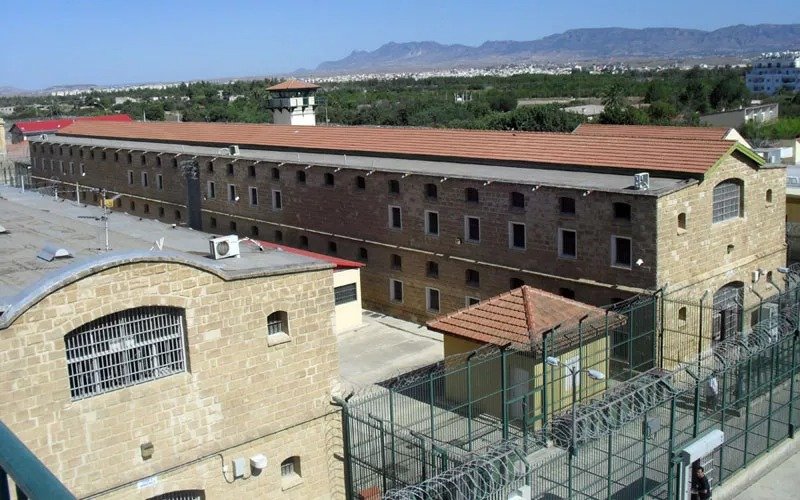
Cyprus will activate a new system to detect and disable mobile phones inside Central Prisons by the end of November, the justice minister has announced, tackling a problem that has plagued the facility for a decade.
The system is currently undergoing pilot testing and will be fully operational by early 2026, Justice and Public Order Minister Marios Hartsiotis told Phileleftheros. The exact launch date will not be disclosed for security reasons.
The government has signed two confidential contracts for the specialised detection and deactivation system, which will be deployed in two interconnected phases. The first phase enters full operation within November 2025, whilst the second phase is scheduled for completion in early 2026.
“The two subsystems are closely interconnected, with one supporting and enhancing the function of the other, ensuring maximum effectiveness and reliability of the overall system,” Hartsiotis said.
The installation proved challenging because Central Prisons borders residential areas within the urban fabric and abuts the buffer zone. This required careful planning, delicate handling and special technical and legal specifications to ensure telecommunications networks for citizens remain unaffected whilst achieving maximum system effectiveness, according to the minister.
The system uses a network of sensors that activate when they detect illegal mobile phones operating inside wings and other prison buildings.
When an unauthorised device attempts to connect to a mobile network or emits a signal, the system creates a simple heat map showing on a control screen which zone contains suspicious activity, almost in real time.
Staff receive alerts and can head directly to the correct location to find the illegal device.
This capability will largely spare prison management from constant cell searches and disruption, and will stop leaks to inmates about surprise police raids, according to information obtained by Phileleftheros.
The new system will disable only the area where illegal mobile phone use occurs, rather than the entire prison facility as the previous system envisaged—which had drawn objections from residents, Cyta and even the British High Commission.
The government is also pushing forward legislation to criminalise possession and use of mobile phones by inmates, visitors and staff, carrying severe penalties. The bill is currently before parliament.
Hartsiotis said the new deactivation system, combined with recent legislation, completion of a new closed-circuit monitoring system and implementation of mobile phone identification laws, represent steps towards a more secure prison environment that meets society’s needs and rule-of-law principles.
“The Ministry of Justice and Public Order remains committed to its pledges for a definitive solution to an issue that has persisted since 2015,” Hartsiotis said.
Efforts to solve the mobile phone problem began in 2015 but remained unresolved. Installing an effective mobile blocking system without affecting the Agios Andreas area became a challenge for the government, particularly after court rulings showed prisons as the location where crimes were being ordered.
The system’s operation is expected to strike a blow against organised crime, as Central Prisons inmates have at times been connected to criminal elements operating in society.
The previous system was installed in October 2020 after multiple delays, with efforts having begun in 2015. After the 5G network arrived, an agreement was reached to upgrade the existing system to cover that network as well.
Following unsuccessful attempts and problems with management, the installed system was deemed inadequate, and the contract was terminated in 2023.
Read more:

