


Reporter covering demonstration for Il Manifesto describes “amateurish” police response as disproportionate use of force
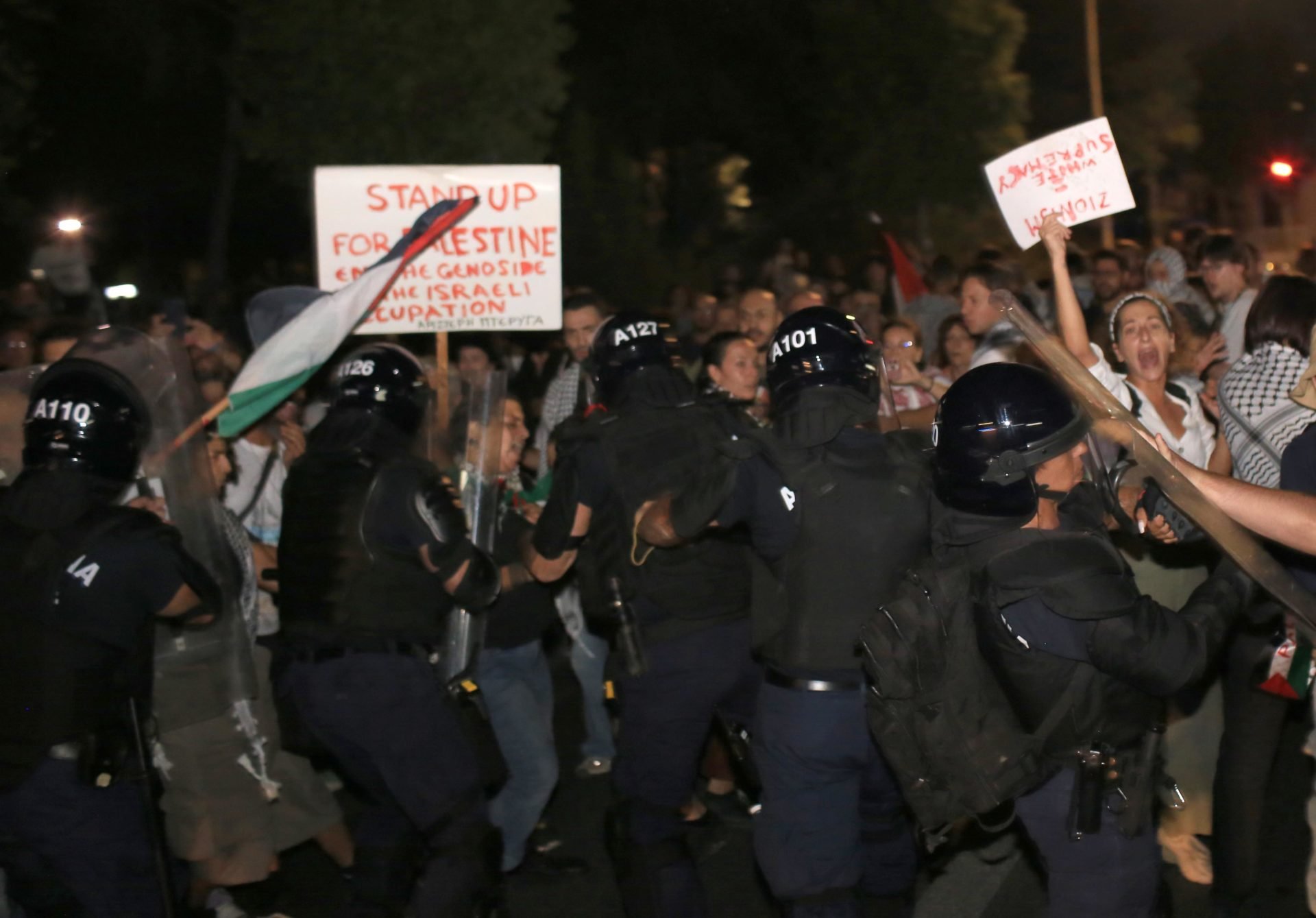
An Italian journalist covering Thursday’s protest outside Cyprus’s Foreign Ministry has described the police intervention as an “unprovoked attack” characterised by disproportionate force and a complete absence of communication with demonstrators.
Massimiliano Sfregola, a freelance journalist reporting on the demonstration for Italian daily Il Manifesto, was amongst those affected by pepper spray during the incident. Speaking on Friday, he recounted that he was still experiencing irritation and itching in his right hand more than 12 hours after the events unfolded. The ongoing pain prevented him from completing his report on the Nicosia demonstration for the Italian outlet, which had commissioned coverage of the protest as part of a feature examining the global wave of demonstrations following Israel’s interception of the Gaza-bound flotilla.
“It was a deliberate attack by police. It was unprovoked and completely without reason,” Sfregola stated, adding that in years of attending and covering demonstrations across Europe, he had never witnessed such an “amateurish approach”.
The protest, organised in response to Israel’s interception of the Global Sumud Flotilla bound for Gaza, brought together what Sfregola described as a peaceful gathering of concerned citizens. “There were no potentially high-risk groups involved. There were no banners or chants that could have been antisemitic. There was absolutely nothing,” he said. “It was one of the softest demonstrations in terms of numbers, and it was full of kids and elderly people.”
Sudden escalation
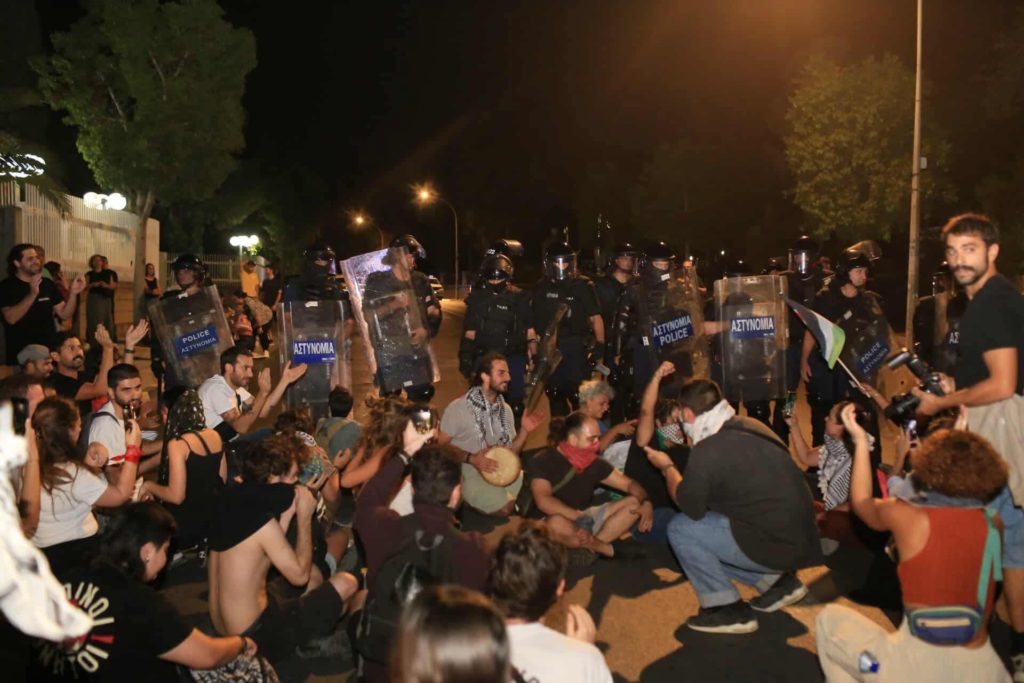
According to Sfregola’s account, the demonstration consisted primarily of people listening to speeches and statements when officers from the Rapid Response Motorised Unit (MMAD) arrived without warning. “Out of the blue, we saw the special unit arriving. Everybody was asking, ‘Why the hell is this special unit coming?'” he recalled.
The journalist said the most provocative action by demonstrators was turning towards the police line and chanting “Free Palestine” whilst waving Palestinian flags. “That was exactly the most extreme stuff that was seen,” he said.
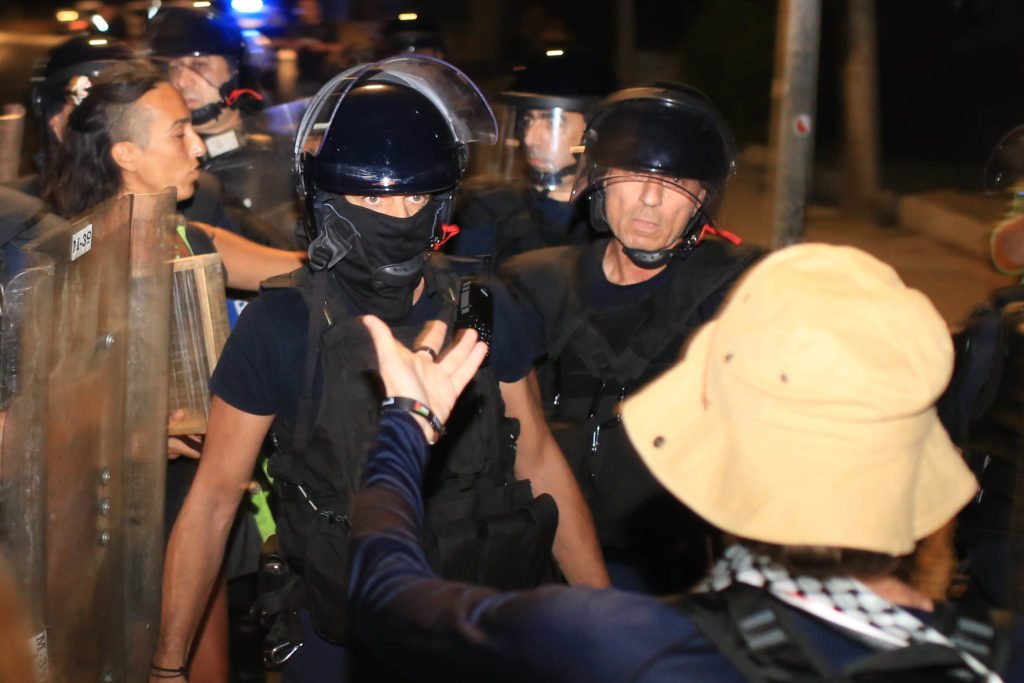
What followed, according to Sfregola, was a police intervention that violated basic principles of crowd management. “They didn’t attempt any kind of communication. They were well equipped with every anti-riot equipment, but they didn’t have a megaphone, so no one knew why they were there,” he explained. “They didn’t give any communication like, ‘Clear the streets. We’re going to start an action.’ Nothing. They started out of the blue.”
“Pepper spray so strong ‘skin peeled off‘”
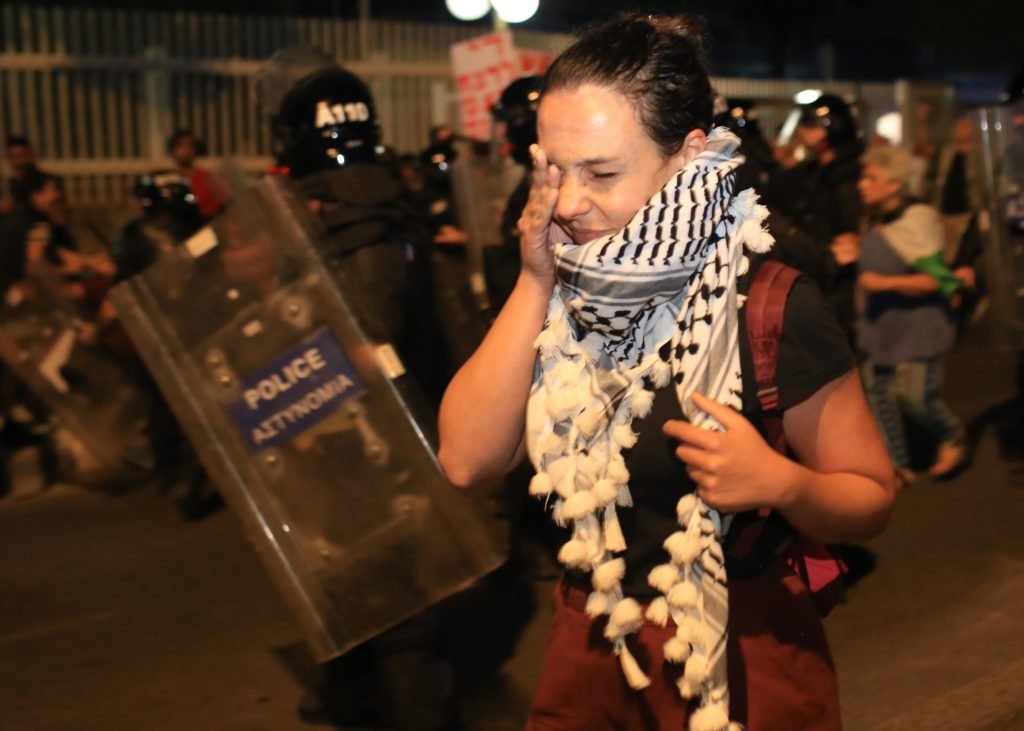
Sfregola, who had positioned himself on the pavement near a park to film the police action, was hit by pepper spray despite being on the sidelines. “The spray was used 360 degrees. It was not targeting one person. It was pretty random. The purpose was to create damage to everybody that was there,” he said.
The journalist recounted what followed after the crackdown: “You saw people falling on the floor, touching their eyes. No one knew what to do. People were crying. I saw elderly people who were desperate because they’d started having panic attacks.”
Sfregola helped a young woman who had collapsed on the ground with a panic attack, dragging her away from the street to the pavement to ensure she would not be in the firing line if police advanced again. “The first minutes, I was mostly concerned with trying to help this girl,” he said. “If it [the pepper spray] was hitting so hard to me, who wasn’t on the front line, I don’t want to imagine those on the front line.”
The journalist reported that the chemical spray used was particularly aggressive. “I had my arms itching and burning all evening,” he said, noting that he spoke with people who had “the first layer of skin peeled off” from exposure to the spray.
He said that the severity of the chemicals deployed was entirely disproportionate. “We know that pepper spray can be a bit aggressive, but again, it was totally unnecessary to use. There was no danger, no kind of danger that required the police to use that.”
Police response
Responding to media questions after the protest, police said they wanted to disperse the demonstration to manage traffic. “Nothing justified the use of violence just to clear the road to let cars pass, because there’d been no communication whatsoever,” Sfregola argued.
Following the police intervention, demonstrators spontaneously sat down on the ground, transforming the gathering into a sit-in. Within half an hour, people had begun to clear the street voluntarily.
Questions of proportionality
Sfregola was not the only journalist affected by the police action. Beisan Ibraheem, a reporter for the Dialogos media group, was injured during the demonstration, prompting condemnation from the Cyprus Journalists Union. According to the union, Ibraheem identified herself as a journalist four times. Yet, police officers continued using force against her, pushing her and throwing her to the ground twice, whilst also spraying pepper spray in her face.
Sfregola stressed that regardless of any legislation governing demonstrations, the principle of proportionality in police responses is enshrined in European human rights law. “Proportionality means if you have thugs in front of you, you have to protect the safety of officers. If you have a peaceful demonstration with kids and elderly people, you can’t attack a demonstration with what is basically civil society,” he said.
“This is stated in the European Convention on Human Rights. It’s superior to the law,” he added. “You can’t do it.”
The journalist declined to speculate on whether the police response represented deliberate policy or poor operational management. “It could have either been very poor public order management, which means simply an amateurish approach due to poor or lack of assessment of the situation, or it could be something else, but I don’t think I have enough elements to say that,” he stated.
“I think that someone should really be held accountable for it. The high-ranking officers should probably explain something,” he added.
Left-wing opposition party AKEL has called for a new demonstration outside the Ministry of Foreign Affairs today at 6 pm to protest against police brutality.
(Pictures: MATTPRESS)
Read more:

