


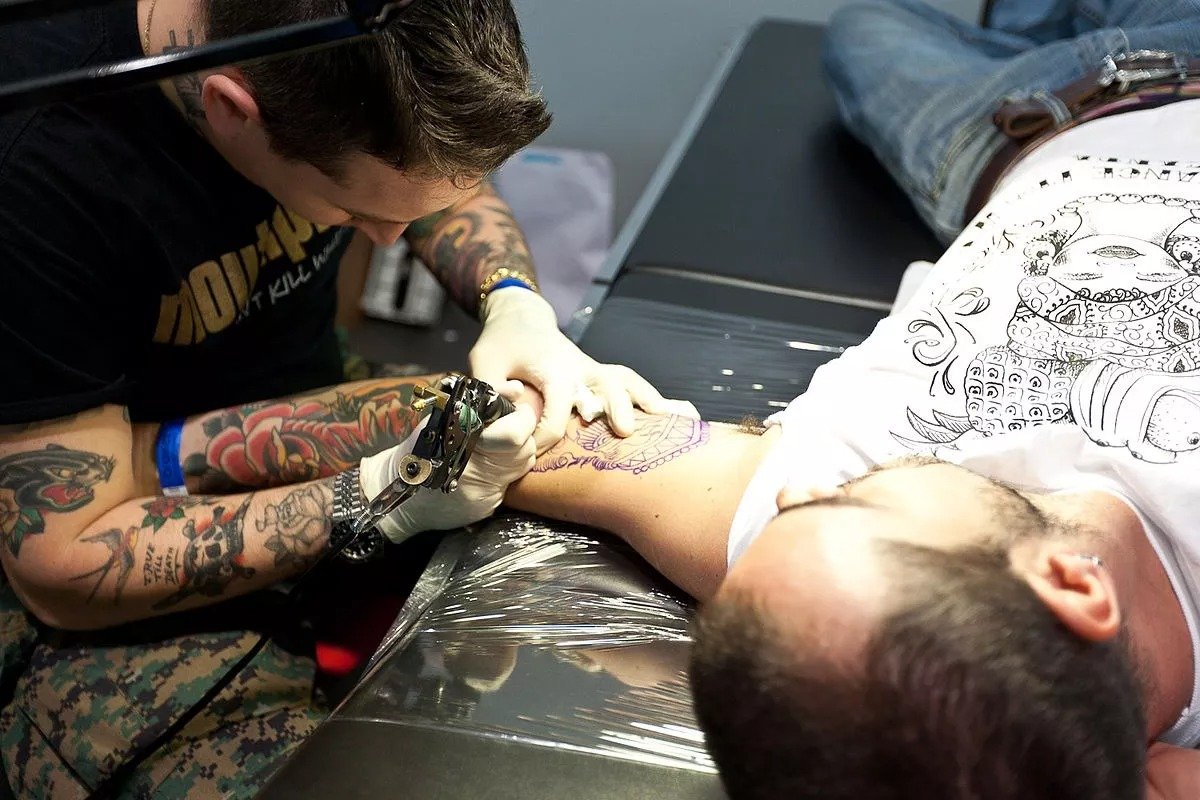
Cyprus is overhauling regulations for tattoo and piercing artists four years after initial legislation, introducing stricter health standards and studio requirements whilst opening the profession to mobile operations and outdoor events.
Studios will be required to have full sterilisation equipment, whilst artists must hold diplomas and undergo health screening for HIV, hepatitis and syphilis. Home-based operations will be banned.
The Health Ministry has prepared draft legislation amending the Registration of Body Tattooists and Body Piercers Law (20(I)/2021), which has been placed under public consultation.
According to the ministry, the amendments arose from four years of implementation experience, which highlighted the need to improve provisions for effective enforcement.
The legislation introduces tighter hygiene standards, updated technical specifications, and enhanced supervision to protect public health.
It also simplifies licensing procedures and aligns with European regulations on infectious waste management, accessibility for people with disabilities and data protection.
Home-based tattoo studios banned under new rules
The draft law prohibits the use of residential properties or auxiliary buildings as tattoo or piercing studios.
If complaints are received or credible information exists, the Supervisor of Inspection will prepare a file with all available information and forward it to police, requesting escort for inspectors to investigate and take necessary measures to terminate illegal activity.
Any tattoo or piercing event or similar activity in public or private spaces is banned unless written permission is secured from the competent authority. Event organisers must submit applications and pay the prescribed fee.
Health inspectors will have powers to suspend studio operations for up to four days if serious health deficiencies, omissions or conditions are found that could endanger client health, staff or public health.
The suspension may be extended one or more times for four days or less to allow improvements or disinfection. Studio owners must take all appropriate action to address the reasons for suspension.
Mobile studios and outdoor events allowed with permits
The legislation will permit special temporary licences upon application from licensed studios, allowing EU citizens who legally practise as tattoo or piercing artists in another member state to provide services in Cyprus for up to 30 days per calendar year.
Events or gatherings in open spaces where tattoo or piercing artists offer services to the public, either for payment or free, will be permitted in specially configured spaces to promote the art of tattooing or body piercing.
Mobile studios will be allowed for providing tattoo or piercing services. These include vehicles and portable, mobile or temporary commercial structures such as caravans, mobile kiosks, mobile constructions, motorised vehicles and trailers used to provide these services in outdoor spaces or public events.
Instead of the single registry that exists today, four registries will cover approved tattoo and piercing studios as well as registered tattoo and piercing artists.
Health screening and qualification requirements
Licensed tattoo and piercing artists must hold certificates for hepatitis B and C testing, HIV testing, syphilis testing (VDRL or RPR), and chest X-rays.
They must also have completed their 20th year of age, possess a clean criminal record and have no convictions under child pornography laws.
For tattoo applications, applicants must hold either a diploma from a recognised tertiary education institution or a degree from a university in Cyprus or abroad in a field related to the application, plus certification of one year’s practical training as an apprentice tattooist under a registered tattooist in a licensed studio.
Alternatively, applicants may present a training certificate of 90 hours’ regular attendance from an institution certified as a Vocational Training Centre by the Human Resource Development Authority or from recognised tertiary education institutions in Cyprus, plus certification of 18 months’ practical training as an apprentice tattooist under a registered tattooist in a licensed studio.
The legislation introduces definitions including “competent authority”, “event”, “mobile studio” and “special temporary licence” to facilitate interpretation and more effective enforcement.
Fees will be determined through an annex for examining various applications, including operating licences and other administrative procedures.
Read more:

