


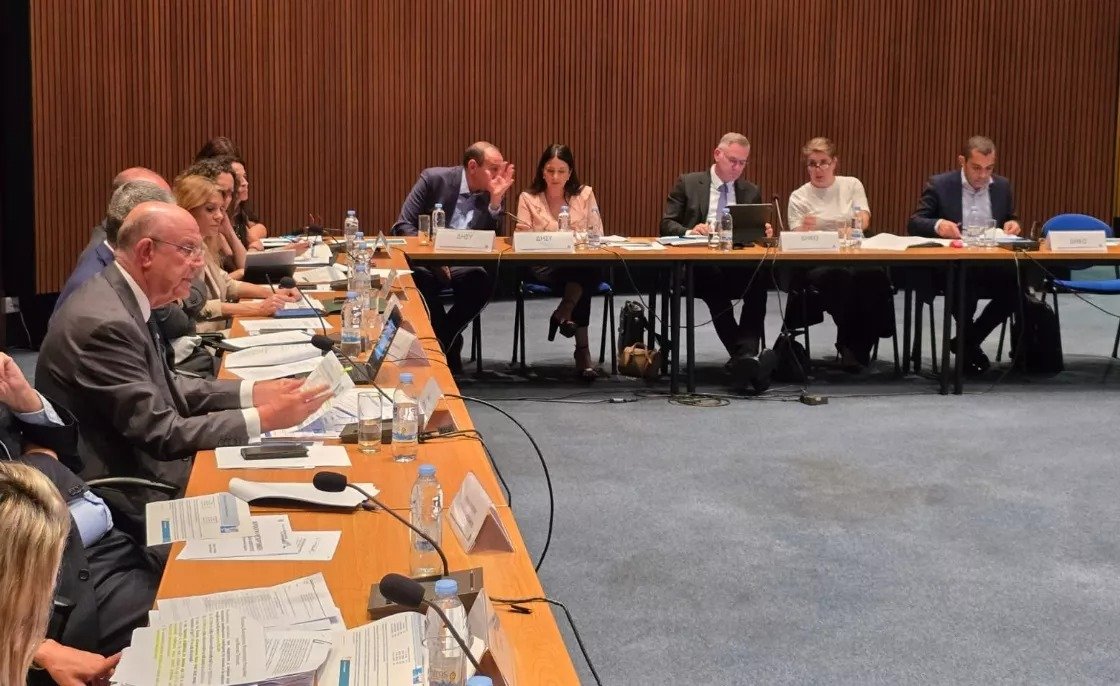
A party alliance is forming to approve tax reform piece-meal from Parliament, despite last Monday’s meeting with Finance Minister Makis Keravnos giving the impression that all was proceeding well and the climate had changed in favour of approving the reform.
The positive image from Monday lasted only a few hours, as some parties began showing their cards yesterday, revealing different intentions. DISY, DIKO and EDEK appear to favour voting on tax reform in two installments.
Three parties propose splitting reform into immediate benefits and delayed enforcement
The scenario gaining ground involves approving only provisions in the six bills concerning tax rates before year-end, leaving stricter legislation and anti-evasion measures for 2026.
This would approve regulations increasing tax-free income to €20,500 and granting tax deductions for each child, student and housing loan, as well as home renovation expenses, raising tax-free income to €24,500 for beneficiaries.
The three parties also favour approving, within 2025, changes to tax brackets, increasing corporate tax to 15% from the current 12.5%, abolishing deemed dividend distribution, and reducing the special defence contribution from 17% to 5%.
The second installment of reform, particularly anti-evasion measures, DISY, DIKO and EDEK wish to approve between January and February 2026.
Anti-evasion measures face professional association opposition with 432 objections
The main reason the three parties favour this scenario is delays in the Finance Ministry depositing legislation in Parliament and tight timeframes set for approval.
Regarding the reform’s second part concerning anti-evasion measures, which faces reactions from some professional associations, particularly lawyers and accountants, with 432 observations total, the three parties want to examine it extensively without time pressure.
They estimate that due to publicly expressed disagreements, the Finance Committee will become a space for consultation and confrontation.
Therefore, the three parties will attempt to transfer this difficult discussion to early 2026.
Party officials told Phileleftheros that specific provisions against tax evasion must be discussed in detail to remove any shadows and reservations about excessive powers for the Tax Commissioner.
Finance Ministry warns against piecemeal approach creating implementation problems
A competent source told Phileleftheros that tax reform should be approved in its entirety, as piecemeal solutions will not produce proper results.
The government camp’s concern is that if reform is divided, discussion of the second part will coincide with the pre-election campaign period for the May 2026 parliamentary elections.
Yesterday, Finance Minister Makis Keravnos and the Cyprus Employers and Industrialists Federation (OEV) disagreed with the possibility of approving reform in installments after a meeting.
Keravnos stated that he and OEV share the same view that tax reform should proceed as a comprehensive proposal to both the Council of Ministers and Parliament.
OEV President Giorgos Pantelides said any division of reform would create grey areas, adding that “we will not achieve the basic objective we set for tax stability”.
The six bills are before the Law Office for technical review. Consultations continue between the Finance Minister and Tax Commissioner with many affected bodies.
The goal is for texts to receive the green light from the Council of Ministers within October and be deposited in Parliament’s plenary.
Keravnos stated: “As a government, we are prepared. Legal processing proceeds at a rapid pace; therefore, I am optimistic because tax reform will help our businesses and will help workers, it will help the middle class and lower strata because the basic objective of every tax reform must be better distribution of the tax burden”.
Read more:

