


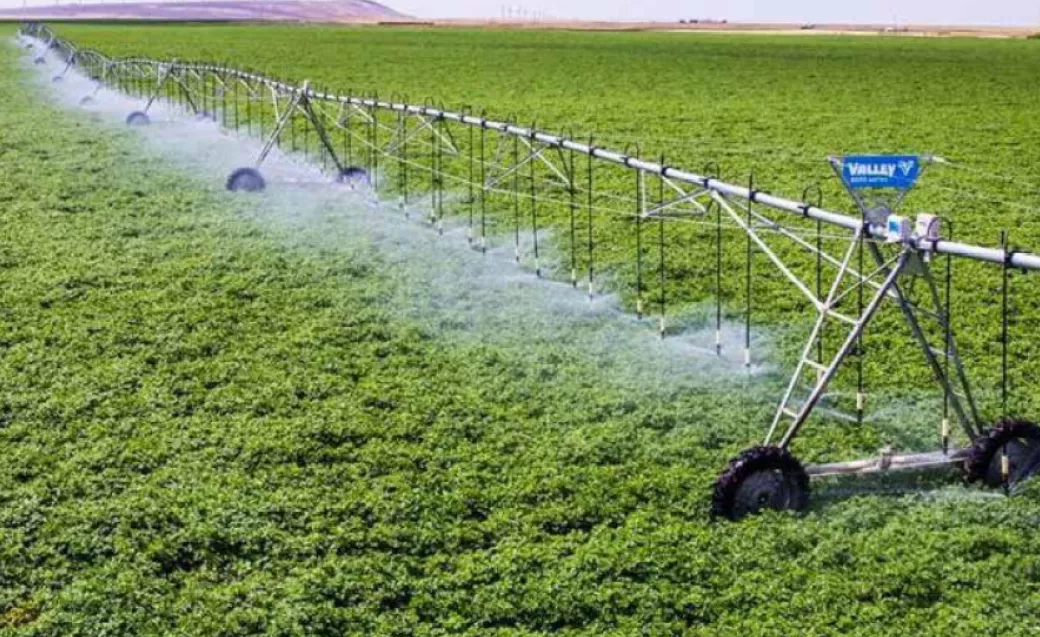
A new era in water resource management is being established in Cyprus as significant infrastructure projects for recycled water reuse and storage advance rapidly across key areas of the island, including Larnaca, Western and Eastern Nicosia, Limassol, and free Famagusta.
These projects aim to fully utilise water produced from tertiary sewage treatment through construction of dams, tanks, and irrigation networks for agricultural use, primarily during summer months.
Recycled water previously discharged into the sea will be redirected to farmers, freeing substantial quantities of fresh water in reservoirs that can now be used to meet growing population water supply needs.
The significance of water reuse becomes clearer considering that in 2023, 90% of recovered water produced in Cyprus—totalling 28.2 million cubic metres—was utilised for irrigation or aquifer enrichment.
This represents the highest percentage in the European Union and amongst the world’s leading rates.
Progress in developing critical infrastructure now enables maximisation of recycled water use whilst minimising losses.
According to the Water Development Department, recovered water discharge into the sea was reduced to just 1.45 million cubic metres in 2023, down from 4.7 million in 2020.
This progress results from increased demand and project implementation in strategic Cyprus locations.
Despite seasonal demand variations and drought-related challenges, the Republic of Cyprus’s strategy for integrated water resource management focuses on meeting future needs.
The Ministry of Agriculture, Rural Development and Environment continues consistently implementing projects that enhance irrigation water availability, strengthening agricultural production and primary sector sustainability.
The Water Development Department emphasises the objective of “utilising every last drop of recycled water” whilst fully complying with European Regulation 2020/741 requirements for water reuse.
Larnaca and Famagusta developments
Larnaca province completed a 4.5 million cubic metre capacity storage dam at Tersefanou in August 2023, functioning as winter water storage for summer use.
Transfer pipeline construction has been progressing since early 2025 and is expected to complete by late February 2027, whilst irrigation networks serving the broader agricultural area are anticipated within 2027.
Regarding the free province of Famagusta, recovered water utilisation from Paralimni and Ayia Napa sewage treatment plants remains under study.
Priority involves extending tertiary treatment and constructing transfer infrastructure towards the Sotira area to strengthen the Kokkinochoria Irrigation Project.
Projects are expected to enter implementation phase in coming years. At present and until late 2025, advancing any preparatory studies remains impossible.
Ready tank in Western Nicosia, delays in Eastern areas
The Western Nicosia project, centred on Anthoupolis Sewage Treatment Plant, targets storage and utilisation of surplus recycled water quantities. Basic infrastructure has been completed to date, including a 500,000 cubic metre tank.
Completion of the remaining network, including branches to Mammari and Gerolakkos, is expected by November 2025.
The necessary infrastructure creation serves irrigation of new cultivations in Deftera, Paliometocho, Agioi Trimithias, Gerolakkos, and Mammari areas.
In Eastern Nicosia, Phase A includes creating storage and balancing tanks with total capacities of 1.5 million and 13,000 cubic metres respectively.
Environmental investigation is progressing; however, state land allocation procedures have delayed implementation.
Regarding the 13,000 cubic metre balancing tank, allocation of part of State Plot 127 (formerly 103), Sheet 31/33 in Agios Sozomenos remains pending, despite procedures beginning considerable time ago.
The plot has also been requested by the Racing Club for their own planning and by the Agriculture Department for livestock area creation.
Although correspondence has noted that the earthen tank location was selected using purely technical and hydraulic criteria and cannot be relocated, and can be constructed and operated without affecting either Racing Club plans or livestock area creation, securing related allocation approval from the Department of Lands and Surveys has not proved possible.
Phase B provides for irrigation network extension towards Tseri, Pera Chorio-Nisou, and Lympia areas.
Finally, the broader Limassol area implements projects connecting existing infrastructure with the new Western Limassol Sewage Treatment Plant, whilst planning storage and water transfer projects from Moni and Polemidia treatment plants.
Preparatory studies are under evaluation for future implementation, targeting irrigation needs coverage in Eastern and Western Limassol.

