


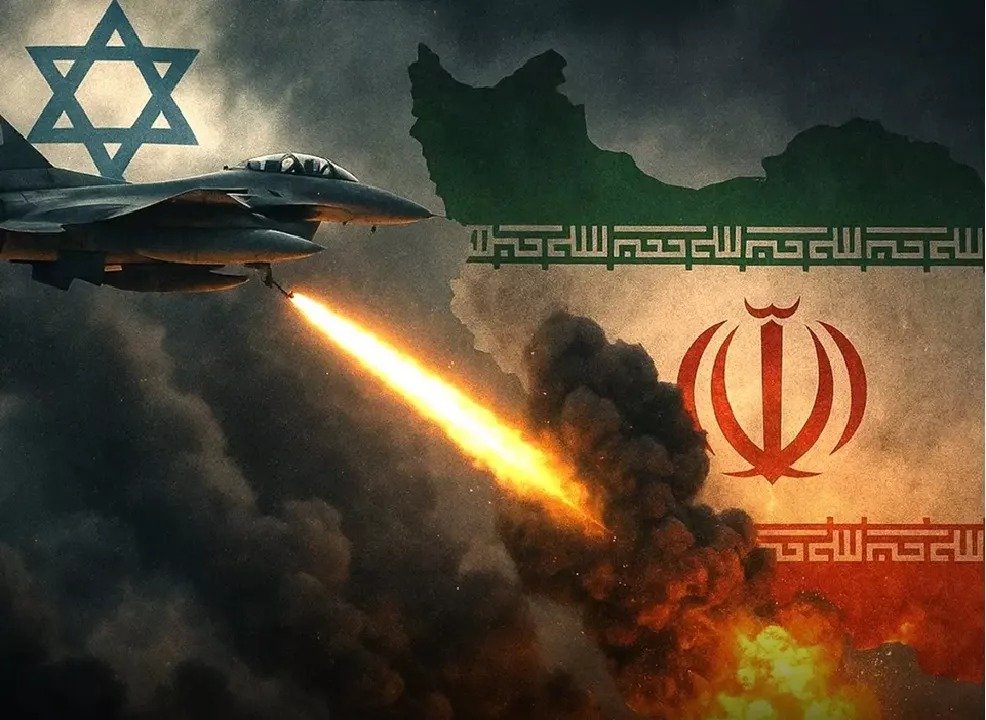
Cyprus is playing its own role in international efforts to end clashes between Israel and Iran, as attacks from both sides complicate attempts to de-escalate the conflict or acknowledge ongoing diplomatic communications.
Tehran on Friday, following contact between Cyprus and Iran’s foreign ministers, announced it had asked the Republic of Cyprus to use its influence as a European Union member state to halt Israeli attacks against Iran.
President Nikos Christodoulides said on Sunday he would convey a message from Tehran during his communication with the Israeli Prime Minister. However, amid a new wave of attacks, Iran’s foreign ministry quickly announced that Cyprus had not been asked to convey any message to Israel.
Diplomatic circles noted that Iran’s reaction was not unexpected given the prevailing situation and continuing Israeli attacks.
Israeli media reports suggested Iran had asked three countries – Italy, Azerbaijan and Cyprus – to send messages to Israel, whilst Tehran attempts to use Russia, Qatar and Oman as channels for messages to the United States.
Clear message to all parties
The Republic of Cyprus conveys messages arising from all contacts at all levels regarding the need to avoid further escalation and deploy diplomacy to find solutions and resolve differences, said Government Spokesman Konstantinos Letymbiotis regarding President Christodoulides’s contacts amid Middle East developments.
“This message is common from our contacts and we convey it clearly to all interlocutors, especially to those directly involved and particularly regarding the EU, which can and should play a role,” he said.
As an EU member state and regional state maintaining excellent relations with all regional states, conveying these messages forms part of the stabilising role Cyprus can play, he concluded.
Questions over EU response
In his statements, President Christodoulides revealed the European Union’s inability to be present with determination in another international crisis.
The President said he asked the European Council President, who will be in Canada for the G7 summit, to ensure that the new Middle East crisis occupies the attention of the leaders of the seven economically powerful nations.
During his conversation with Antonio Costa, Christodoulides expressed dissatisfaction that the EU was slow to react. We saw a joint statement issued yesterday after the telephone call with the European Council President. There were one or two states that disagreed with the wording, whilst at the same time we requested through the Foreign Minister that an extraordinary Foreign Affairs Council meeting be held.
“It is not possible for the EU to claim a geopolitical role, to see all these developments and not have at least – it is the minimum – a convening of the Council of Foreign Ministers. Therefore, we have requested from the EU through the Foreign Minister and I believe a Foreign Affairs Council will take place”.
Presidential contacts
President Christodoulides held telephone communications with Israeli Prime Minister Benjamin Netanyahu, Egyptian President Abdel Fattah al-Sisi, UAE President Sheikh Mohamed bin Zayed Al Nahyan and Greek Prime Minister Kyriakos Mitsotakis as part of continuing contacts with regional and EU leaders “aimed at contributing to reducing tension in the wider region,” according to the spokesman.
Foreign Minister Konstantinos Kombos began a marathon of telephone communications with regional counterparts from Friday morning.
During his conversation with EU High Representative Kaja Kallas, he requested an extraordinary EU foreign ministers’ meeting on the regional situation.
Kombos wrote on his X account that he spoke with counterparts from Israel, Iran, Palestine, Egypt, Oman, Bahrain, Lebanon, Iraq and Jordan.
Read more:

