



For many decades, the specter of the far-right seemed to be a thing of the past for Europe, particularly after the Second World War. However, in recent years, by rhetorically leveraging increased migration flows, identity politics, and the economic crisis, the rise of far-right forces has been remarkable, achieving electoral successes in many countries.
Once relegated to the fringes, far-right parties now participate in or lead governments, shape policies, and successfully impose their agenda. The re-election of Donald Trump and the ease with which he finds imitators create favourable conditions for a further ascent of far-right movements.
In his interview with Phileleftheros, Fernando Casal Bertoa, Professor of Comparative Politics at the University of Nottingham, emphasised that the success of populist, far-right parties is simultaneously a failure of traditional parties.
While each country, he explained, has specific characteristics that favour the rise of the far right, the primary reason is the inability of traditional parties to address and resolve issues such as migration, climate change, the economic crisis, and corruption.
He specifically referenced Cyprus, highlighting ELAM’s success in securing a parliamentary presence, albeit small, and in surpassing powerful, traditional parties in the recent European elections.
Fernando Casal Bertoa believes that the rise of the far right can be curbed, though he acknowledges that this would require significant consensus from traditional parties. This path, however, is not easy, as far-right parties are very adept at identifying existing problems much better than traditional parties and proposing solutions that sound appealing to voters, even if these solutions are impractical.
Social media, of course, plays a significant role in this, not only due to the lack of control over fake news but also because of the unproductive dialogue that characterises platforms like Facebook and TikTok. “By acting as echo chambers and reinforcing voters’ existing views, these platforms hinder any form of critical thinking and constructive discussion,” he stressed.
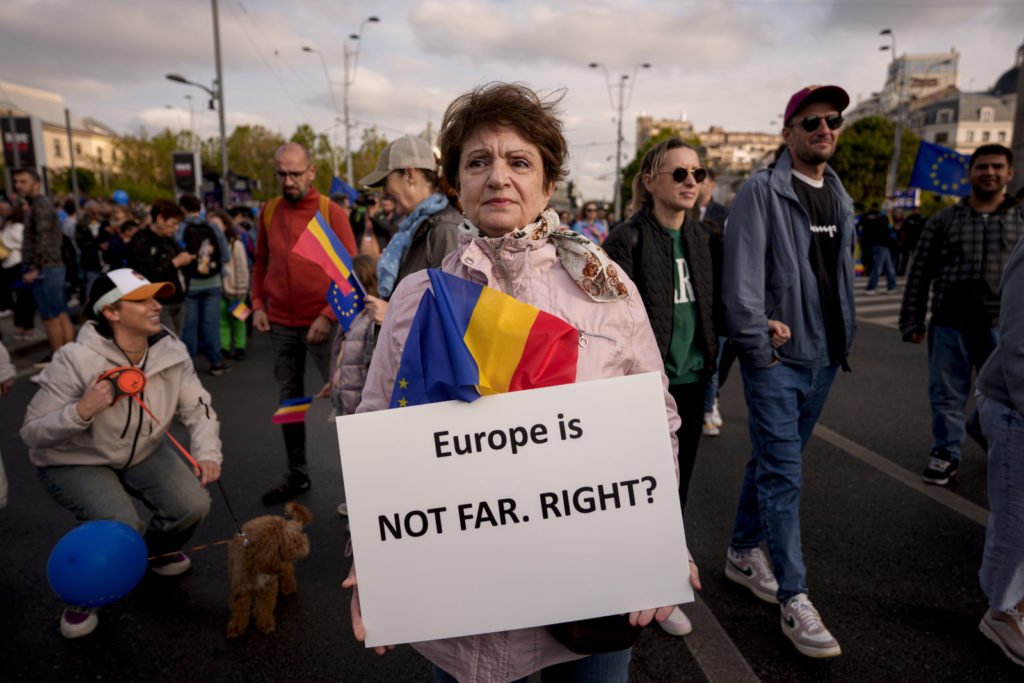
Poland became an example within the EU as a “blockade” against the far-right wave during the 2023 parliamentary elections. How did the situation change within two years and now a populist, nationalist candidate has won?
Well, to be fair, it could have gone the other way. The difference between the two candidates was just less than one point. This was clearly reflected during the first round when Trzaskowski, the runner-up in the second round, won by less than two points. A similar thing happened 5 years ago when current President Andrzej Duda defeated Trzaskowski, the eternal runner-up it seems, by just 2 points.
And we shouldn’t forget that in 2023, PiS, who supported both Nawrocki and Duda, won the elections, just they didn’t get enough seats to form a parliamentary majority. So, I wouldn’t say things have changed that much: Poland continues to be a very divided society (almost half-half) between those more conservative, traditionally religious and even nationalists, mostly in the rural areas; and those more liberal, secular and progressive, mostly in the cities.
Perhaps the only thing that has really changed is that while in 2023 there was a hope that the new government would change things for the better, this has proved more of an illusion.
On the one hand, because of the ideological differences among the members of the coalition government (formed by liberals, socialist, Christian-democrats and agrarians); on the other, because of the presidential veto (which the government can’t oppose as it lack the necessary -two-thirds – majority).
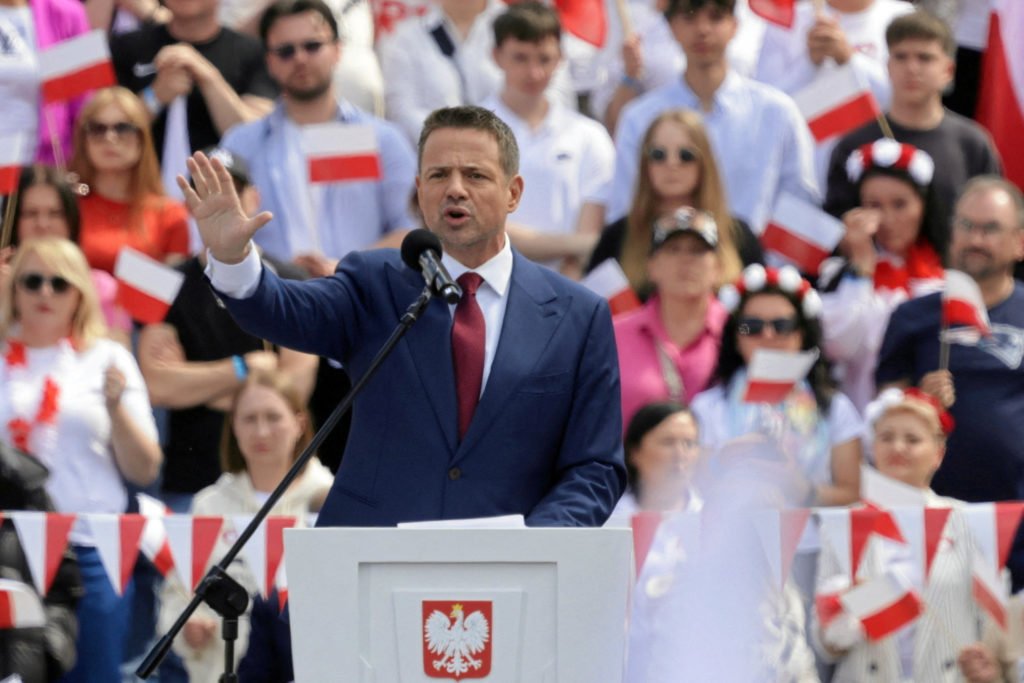
Nawrocki’s campaign slogan was Poland First. Do you think he will copy Donald Trump’s style of presidency and not only his slogan? And what does this mean for Poland?
For sure, the relationship between Trump and Nawrocki will be as amicable as with Duda. In this context there will be a continuation. Moreover, Nawrocki has a point of “naughty boy” (think of the scandals during the last days of the campaign) that Trump always finds attractive.
But we shouldn’t forget that, with the except of its veto power and the capacity to represent the Polish state in foreign policy matters, the powers of the president are very limited. So beyond blocking the government’s legislative reforms and show the different approaches to Ukraine’s integration into NATO or the development of the EU, the only way Nawrocki’s presidency can follow Trump’s is in its vocal criticism of the government.
In recent years, populist and far-right parties in Europe have been on the rise. Ηow big this rise is?
At the beginning of this decade, the percentage of votes for those parties was on average 21%. If we take into consideration that before the beginning of the current century it was well below 15%, then we can say that the rise has been rather significant. And since then it hasn’t stopped. Poland is just the last straw, but only last May radical-right populist parties have managed to obtain first place in local elections in UK, second place in presidential elections in Romania as well as parliamentary elections in Portugal.
What are the main factors contributing to the rise of far-right and populist parties in Europe?
There are many, and some are country specific. However, I would say that the major factor is the incapacity of traditional mainstream political parties to face and solve important problems like immigration, climate change, the economic crisis or corruption.
Another important issue too is the way leftist parties, but also many centre-right parties, have confronted cultural change, leading in many countries to what has been perceived as the tyranny of minorities (be it sexual, racial, etc.). A reaction to what has been called “wokeism” is certainly behind Trump’s and Nawrocki’s victories in US and Poland, respectively.
Why is this rise being recorded even in countries like Cyprus, where until recently the presence of far-right parties was very limited?
The perils of globalization, I would say. Although, to be fair, Cyprus seems more of an exception to me as the only far-right party currently in parliament, the National Popular Front (ELAM), remains marginal with just 4 seats, and in the last presidential elections it got only 6% of the vote.
Only in the second-order European Parliament elections, characterised by its protest voting, ELAM featured a bit better with 11% of the voted, overpassing the once powerful Democratic Party (DIKO). This doesn’t mean that Cyprus might go the Portuguese way, once considered an outlier in Europe and now with one of the most successful far-right parties in Western Europe.
What strategies could be effective in addressing the challenges posed by these political movements? Can the rise of these parties and politicians be stopped?
I firmly believe that those parties can be stopped. In an article published in the Journal of Democracy in 2021, my co-author (Jose Rama) and I maintained that the best way to face the populist challenge is by helping mainstream political parties to regenerate in a way that help them to recover voters’ trust.
For that it is necessary that they reform becoming, among other things, more responsible, responsive, transparent and organizationally strong.
One way to do that is by coming together in order to reach over-arching and long-term compromises on basic policies like immigration, pension reform, education, institutional strengthening, especially of the judiciary…so to avoid the type of zero-sum politics that the populists are so good at.
What role does media and especially social media play in shaping the narratives of far right parties?
Social media has had certainly an important role in the success of far-right parties. Not just the lack of control over fake news, but also the type of non-constructive debate characteristic of social platforms like Facebook, X (formerly known as Twitter), TikTok, etc.
By acting as echo chambers these platforms have not but exacerbate each voter’s own idea, preventing any type of critical thinking and constructive debate. The fact that such platforms, especially TikTok, has been permeated to foreign influence, especially by autocratic Russia and China, which favour far-right parties with the aim of creating political instability, has made things worse.
Moreover, on the other hand, the excessive coverage traditional media has made of these parties has also helped to their success: e.g. Trump’s presidential campaign in 2016 or Vox’s campaign during the 2016 regional elections in Andalucia.
Is there demographic data on which categories of voters are most attracted to far-right parties? Is it men, women, the elderly, the younger?
I would say that, in general, it depends on each country. If one there has been one constant in recent years is that electorates are not only very fragmented, but also very volatile.
If we look at the Polish case, for example, we can see that among Law and Justice (PiS) supporters, the number of elderly is quite high, but for example, the far-right Confederation attracts a huge number of young voters. In the UK, the percentage of elderly people voting for Brexit was quite high, but for example in Spain VOX is particularly strong among younger males.
A very interesting study by Wouter van der Brug, Sarah Hobolt and Sebastian Popa using data from the last EP elections shows that “younger voters who favour strong, authoritarian leadership are more likely to support far-right parties, but primarily in countries where such parties are already in government”.
What I would add though, is that radical-right parties tend to be more successful in rural than in urban areas.
Are there specific policies or rhetoric commonly used by these parties to attract support?
No doubt. These parties are usually Eurosceptic, anti-immigration, anti-LGBT+, making political hobbyhorses of issues like corruption, climate change and, more recently, the Ukrainian war.
In general, everything that is anti-systemic, even anti-vaccination policies, suits them. This is due to their anti-establishment character. That’s why also many of their leaders, but also voters, are very fond of conspiracy theories and fake news.
How do far-right, populist parties influence mainstream politics and policy-making in Europe?
Well, they can do it directly when in government. Hungary and Poland are clear examples. But they can also do it indirectly.
The British case is perhaps the most striking example, with UKIP’s pressure on the Conservative Party leading to Brexit or currently Reform UK’s astonishing results in local elections leading to Labour’s more than surprising proposal to tighten immigration.
The latter is something we have seen in many other European countries (e.g. Denmark, Sweden, etc.) where governing mainstream parties, even from the left, have adopted more restrictive migratory policies after feeling the “electoral breath” of populist parties on their backs.
What are the potential risks or benefits associated with the rise of these parties for European democracies?
I think one of the main benefits is that populist parties are very good at identifying problems. Thus, it is clear that in many European democracies (UK, Spain, Germany, France, etc.) immigration is a problem. The same can be said in terms of the corruption of the political elites (e.g. in Spain the wife, the brother, the former number 2, the current number 3 and the Public Prosecutor of Pedro Sanchez are being prosecuted by the courts).
The problem is, however, that the solutions proposed by these parties are in many instances completely unattainable, when not illogical (e.g. regarding the war in Ukraine). This is due also to their radical and/or extremist nature.
They tend to have a Manichean vision of the world that leads then to think either in black or white when we know that politics have many shades of grey. At the end of the say, as Bismarck once said, politics is not but the art of the possible, the attainable.
In line with the above, another benefit could be that, threatened by such parties, mainstream political parties decide to reform and return to the path they used to walked until recently when socialist parties represented the interest of the poor, now completely abandoned in favour of the middle classes, and when the conservative parties represented the more traditionalist voters, now partially abandoned for the sake of wokeism and the politically correct.
Unfortunately, the risks outnumber the benefits, especially in terms of the functioning of democracy. Thus, in an article I published in Representation in 2020, my co-author and I show how every increase in the level of support to anti-establishment parties decreases the quality of democracy in a country, and not just in its liberal dimension, but also in terms of equality, representation, participation, etc.
Hungary are perhaps, with Serbia but also Poland (between 2015 and 2023), the clearest examples of how media freedom and judicial independence suffer when populist parties are in power.
Trump’s recent attacks to universities and political development agencies are not but a precent of what can happen if AfD or National Rally will access to govern in Germany or France.

