


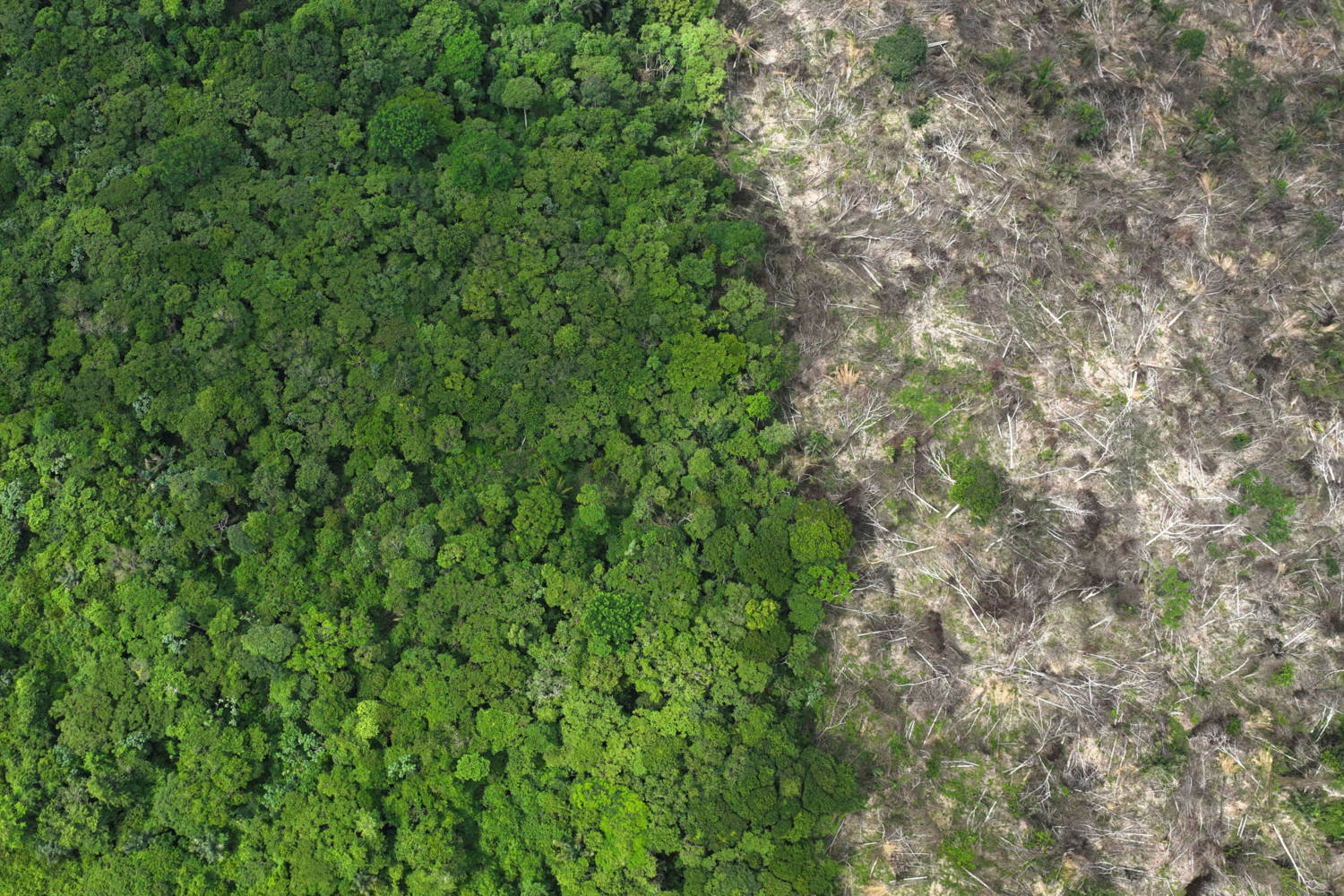
Forest destruction worldwide has hit unprecedented levels in 2024, with an area the size of Italy lost to fires, agriculture, logging and mining, according to alarming new data from the University of Maryland.
Fire has become the leading driver of tropical forest loss for the first time since global records began, with experts describing the findings as “frightening” and “a global red alert”.
Brazil accounted for 42% of all primary rainforest loss in the tropics, losing more than 25,000 sq km amid record droughts in the Amazon. The destruction reached rates far exceeding those recorded under former president Jair Bolsonaro.
Bolivia ranked second behind Brazil in overall loss for the first time, with primary forest destruction increasing nearly fivefold since 2020 to more than 14,000 sq km.
The Democratic Republic of the Congo and Congo-Brazzaville also reported their highest recorded levels of pristine rainforest loss.
“Rising global temperatures are making forests hotter and drier, and as a result, more likely to burn. Given human ignition, even remote rainforests can burn uncontrolled,” said Prof Matt Hansen, co-director at the University of Maryland’s Glad Lab, who led the analysis.
The findings come less than four years after more than 140 world leaders pledged to halt deforestation by 2030 at the Cop26 climate conference in Glasgow. Forest loss must now fall by 20% annually from 2024 levels to meet this target.
Of the 20 countries with the largest areas of pristine forest, 17 are losing trees at a faster rate than when the 2021 Glasgow deal was signed.
Elizabeth Goldman, co-director of Global Forest Watch, described the update as “unlike anything we’ve seen in over 20 years of data” and “a collective call to action for every country, every business and every person who cares about a livable planet”.
Despite the record loss, Indonesia and Malaysia maintained relatively low rates of primary forest destruction, with Malaysia dropping out of the top 10 for the first time.
Prof Peter Potapov, co-director of Maryland’s Glad Lab, warned of a “dangerous feedback loop” where extreme fires release carbon that intensifies climate change, fuelling even more extreme fires.
(information from The Guardian)

