


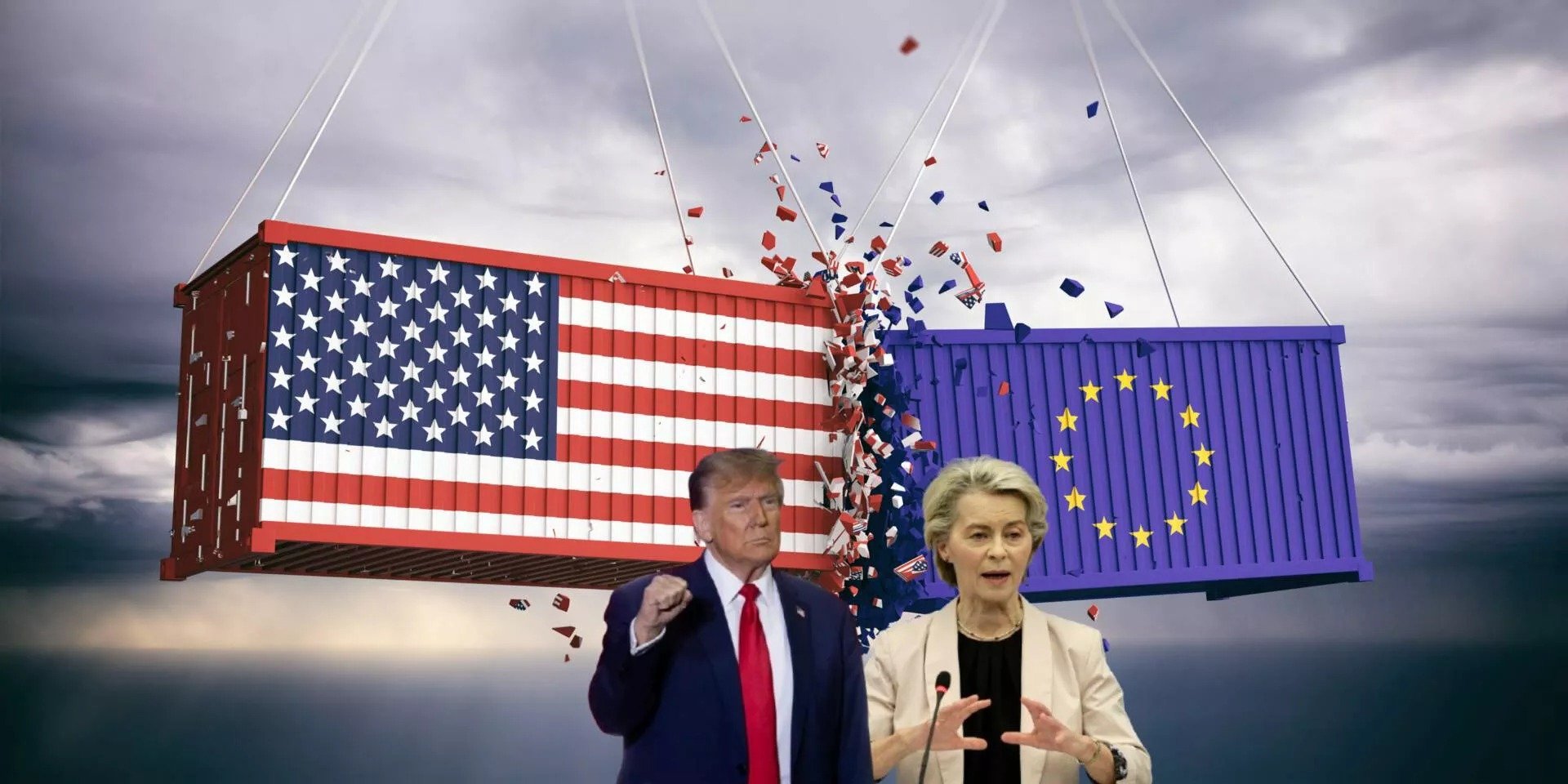
The 20% flat-rate tariff imposed by President Donald Trump on the European Union has created a complex pattern of economic winners and losers across the 27-member bloc, according to analysis published by the Financial Times.
The analysis reveals significant disparities in how the tariffs affect individual EU member states, despite being uniformly applied across the entire bloc. These variations stem from each country’s unique trade relationship with the United States and their export product mix.
In 2024, the United States maintained its largest trade surplus in goods with the Netherlands (55 billion dollars), while simultaneously recording an 87 billion dollar trade deficit with Ireland during the same period. Despite these dramatically different trade balances, both countries face the same tariff rate under Trump’s policy.
For Greece and Cyprus, the analysis indicates that if tariffs were applied based on bilateral trade relationships rather than as a bloc-wide measure, they would face a lower 10% rate. In stark contrast, Slovakia and Slovenia would be subject to much steeper 47% tariffs under such a country-specific approach.
The impact is further complicated by temporary product exemptions, which create varying effective tariff rates across EU member states. Ireland’s focus on pharmaceutical exports, which currently enjoy temporary exemption from the tariffs, means its effective tariff rate remains below 5% for now.
Slovakia, however, faces additional duties on automobiles and auto parts, resulting in an effective rate significantly higher than the headline 20%.
European Union countries are seeking to present a unified front in response to Trump’s tariffs, with plans to approve an initial set of targeted duties worth up to 28 billion dollars on US imports ranging from dental floss to diamonds.
This move positions the European Union as the third major economic region after China and Canada to impose retaliatory tariffs against the United States, raising concerns about a potential global trade war that could increase prices for billions of consumers and push the global economy into recession.
Trump’s tariffs cover approximately 70% of European exports to the United States—valued at 532 billion euros based on 2024 figures—and include copper, pharmaceuticals, semiconductors, and timber.
The European Commission is expected to propose today a list of US products that will face additional duties in response to Trump’s steel and aluminum tariffs. The list reportedly includes US meat, cereals, wine, wood, and clothing, as well as chewing gum, dental floss, vacuum cleaners, and toilet paper.
Bourbon whiskey has attracted particular attention and caused divisions within the EU regarding its inclusion in the retaliatory measures. The Commission will seek maximum support among member states for any tariffs imposed to maintain pressure on Trump and compel negotiations.
The first EU-level political meeting following Trump’s sweeping tariff announcement takes place today in Luxembourg, where trade ministers from the 27 member states will exchange views on the impact of Trump’s tariffs and coordinate response strategies.
Among EU members, there are divergent opinions on how Europe should react. France has advocated for a package of measures beyond tariffs, with French President Emmanuel Macron suggesting European companies suspend investments in the United States until the situation clarifies.
Ireland, which sends one-third of its exports to the United States, has called for a measured response, while Italy, the EU’s third-largest exporter to the US, has expressed reluctance to impose tariffs on American goods.
The first EU tariffs on US products will be put to a vote on Wednesday and are expected to pass unless an unlikely qualified majority of 15 EU members representing 65% of the EU population opposes them.
European Commission President Ursula von der Leyen will also hold separate discussions on Monday and Tuesday with executives from the steel, automotive, and pharmaceutical sectors to assess the impact of the tariffs and jointly determine next steps in this evolving trade dispute.
Read more:

